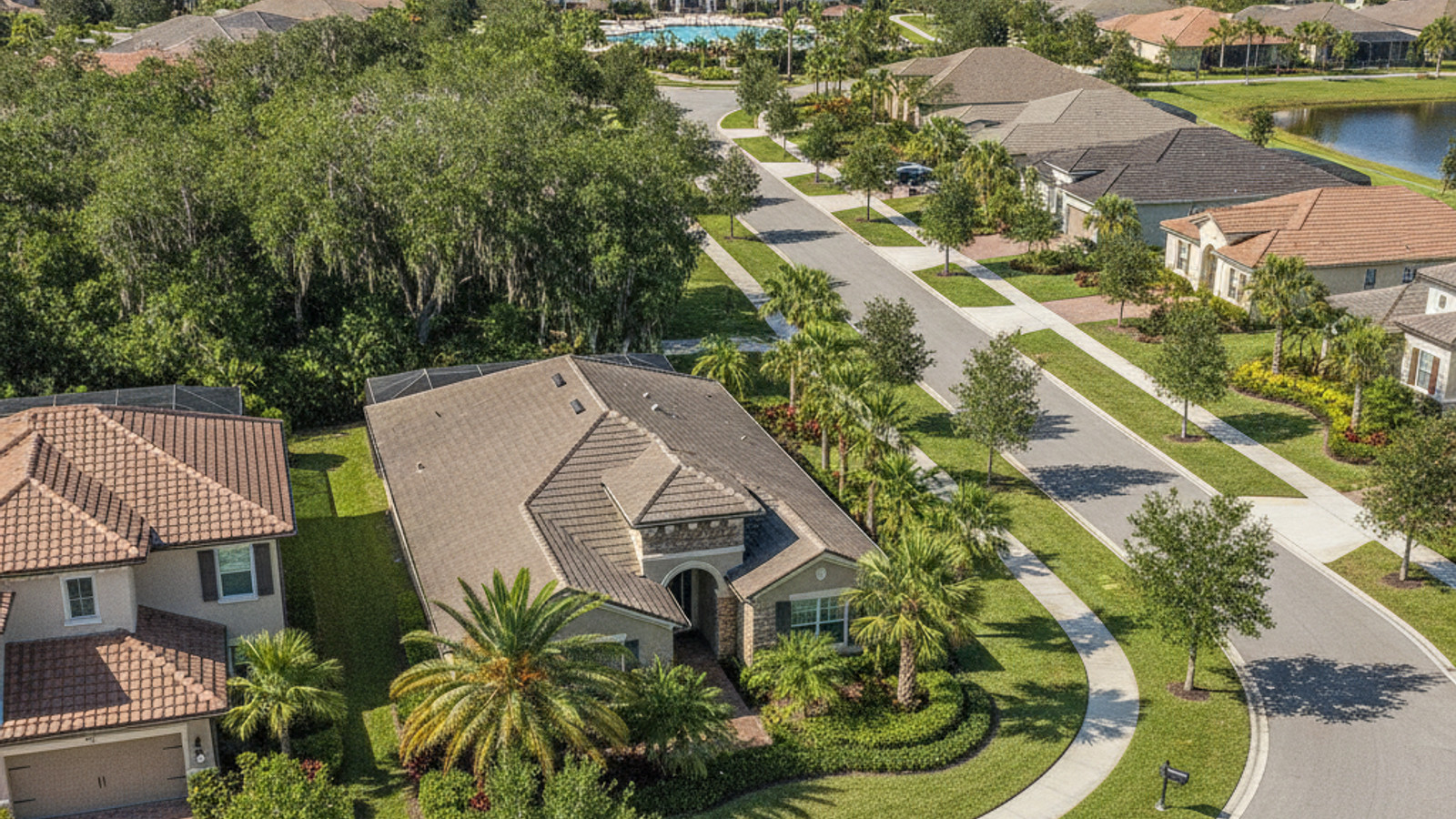
Riverland is a 4,000-acre master-planned community in Port St. Lucie, FL, built by GL Homes. It's made up of multiple age-restricted neighborhoods designed specifically for active adults - and if you're considering living in Riverland, you're entering a market with its own rulebook: specific association rules, fee structures, and property types that don't look like a typical Florida purchase.
Data from mid-2026 puts the median sale price for homes in the Riverland area at roughly $408,858. Homes are averaging 63 days on the market before selling, and with 17 homes actively listed as of June 2026, you've got a reasonable amount to look at. That said, nearly 44% of recent sales closed above asking price, so don't assume you're walking into a buyer's market.
Senior Living Options in Riverland
Riverland isn't a medical campus or a care facility - it's a collection of 55+ active-adult neighborhoods where you buy a single-family home and pay monthly association dues for access to shared recreational amenities. The whole model is built around independent living and neighborhood activities, full stop.
These neighborhoods operate under the federal Housing for Older Persons Act (HOPA), which includes the 80/20 rule: at least 80% of occupied units must have at least one resident who is 55 or older. The community enforces this strictly to keep its legal age-restricted status intact.
Active-Adult and Independent Living
Independent living in Riverland means owning a private home inside a managed community. You handle your own daily routines, meals, and healthcare. The homeowners association handles the infrastructure - clubhouses, fitness centers, walking paths, that kind of thing.
GL Homes built this development exclusively around the independent, active-adult model. If you want a packed activity calendar with sports leagues, social clubs, and fitness programs, that's exactly what's here.
Assisted Living and Continuing Care Options
Riverland itself has no assisted living facilities or Continuing Care Retirement Communities (CCRCs) within its gates. The master plan is standard residential homes - no medical staff, no daily living assistance.
If you think you'll eventually need memory care or nursing services, you'll need to look at dedicated assisted living facilities in the broader Port St. Lucie area. Those facilities typically charge entrance fees and monthly rents that cover meals, medication management, and personal care - a completely different cost structure from what you're looking at here.
Exploring the Valencia Neighborhoods
The 4,000-acre Riverland footprint contains several distinct neighborhoods all carrying the Valencia name: Valencia Cay, Valencia Grove, Valencia Walk, Valencia Parc, and the newer Valencia Vista. Each phase was built at a different time, which means you're looking at a mix of resale homes and new construction depending on where you look.
All of these neighborhoods connect to the shared master-plan amenities, but each enclave has its own gates and specific home designs. Buyers commonly end up comparing the established landscaping you get in Valencia Cay against the more modern floor plans available in Valencia Vista - it's often a trade-off between character and customization.
Luxury and New Construction
The newer phases - Valencia Vista and Valencia Parc - give you the option to choose custom finishes and lots. You're generally looking at modern energy-efficient designs, open floor plans, and upgraded outdoor living spaces.
New construction does come with its own math, though. Lot premiums and upgrade costs add up, and you need to build those into your budget from the start. Resale homes in Valencia Cay or Valencia Grove offer a more predictable final price and you can move in right away, though you may need to plan for some cosmetic updates.
Low-Income and Affordable Senior Housing Alternatives
The Valencia neighborhoods in Riverland are market-rate, single-family homes with mandatory association dues. There's no low-income senior housing or subsidized apartments here.
If you're looking for affordable housing in the Port St. Lucie MSA, eligibility is based on federal income limits. In 2025, the Department of Housing and Urban Development set the "Very Low Income" threshold at $33,150 for a single person and $37,900 for a two-person household. Seniors pursuing Section 202 subsidized housing generally need to earn below those 50% median income limits.
The Cost of Retiring in Riverland, FL
The purchase price is only one piece of the budget. You're also looking at monthly association dues, property taxes, and homeowners insurance. One thing worth knowing: most Riverland neighborhoods don't carry Community Development District (CDD) fees, which is a real financial advantage over some other master-planned communities in Florida.
With the median home price sitting just under $410,000 and homes selling at nearly 100% of list price, sellers aren't handing out steep discounts. If you find a floor plan you like, come in prepared to make a strong offer.
Monthly HOA Fees and What They Cover
HOA fees in Riverland generally run between $354 and $482 per month, depending on the neighborhood. Valencia Cay dues are around $394 monthly. Valencia Parc runs $408 to $427. Valencia Walk comes in higher, at $467 to $482 per month.
Those fees cover lawn care, landscaping, irrigation, and gated security. They also get you access to the community's amenities and clubhouses - which, in a community this size, is a substantial amount of infrastructure being maintained on your behalf.
Medicare and Assisted Living in Florida
Because Riverland is an independent living community, you're responsible for your own healthcare and any in-home support you arrange privately. If you later need to move to an assisted living facility elsewhere in Port St. Lucie, the payment structure shifts considerably.
Medicare doesn't cover room and board in an assisted living facility. It will pay for approved medical services - physical therapy, doctor visits - but the monthly rent and personal care costs fall to you or your long-term care insurance. It's worth understanding that distinction before you assume Medicare has you covered down the road.
Why Buyers Choose the Port St. Lucie Area
Riverland sits within the Port St. Lucie Metropolitan Statistical Area, and the local infrastructure genuinely supports the volume of 55+ residents who have moved here. Accessible retail, dining, and medical services aren't an afterthought - they're built into the surrounding area.
The community is near the Tradition Town Center, which puts grocery stores, pharmacies, and everyday conveniences within a short drive. Day-to-day errands don't require much planning.
Healthcare Access and Local Hospitals
For most buyers evaluating a 55+ community, proximity to medical care ranks at the top of the list. The closest hospital to the Riverland neighborhoods is Cleveland Clinic Tradition Hospital, located about a mile north of the community.
The area around Tradition Town Center also has numerous specialist offices, urgent care clinics, and outpatient medical services - so routine care is close even when you're not dealing with something that requires a hospital.
Evaluating the Pros and Cons
The immediate draw is access to a large network of social clubs, fitness programs, and well-maintained amenities - and the included lawn care and landscaping genuinely reduce the physical demands of owning a home as you get older.
On the other side of the ledger: mandatory monthly fees that will likely increase over time, and strict community rules around exterior modifications, parking, and age restrictions. Neither of those is a dealbreaker for most buyers who choose this lifestyle deliberately, but you should go in with clear eyes.
Frequently Asked Questions
Do both spouses have to be 55 or older to buy a home in a Riverland 55+ community?
No. The 80/20 rule requires that at least one person in the household is 55 or older. A younger spouse can live in the home, provided the community's specific age minimum for secondary residents is met.
What are the average monthly HOA fees for Riverland, FL retirement communities and what exactly do they cover?
Monthly fees range from about $354 to $482 depending on the neighborhood. Those dues cover lawn care, landscaping, irrigation, gated security, and access to all community amenities.
How long is the typical waitlist or build time for new construction homes in Riverland?
Build times for new construction in neighborhoods like Valencia Vista vary based on the builder's current schedule and lot availability. Check directly with the GL Homes sales office for current construction timelines.
What are the main differences between the various Valencia neighborhoods located within Riverland?
The primary differences are the age of the homes and the specific monthly fee amounts. Valencia Cay is an older phase with fees around $394 per month, while Valencia Walk is newer with fees running between $467 and $482.
Am I allowed to rent out my Riverland home to seasonal tenants if I only live in Florida part-time?
That depends on the specific HOA rules for your Valencia neighborhood. Review the HOA documents carefully to confirm minimum lease terms and age requirements for tenants before you assume seasonal renting is permitted.
Can residents use personal golf carts to travel between their homes and the Riverland Paseo Greenway?
Golf cart usage is subject to the master association's rules. Verify the current community guidelines on where personal carts can be driven within the 4,000-acre master plan before you buy one.