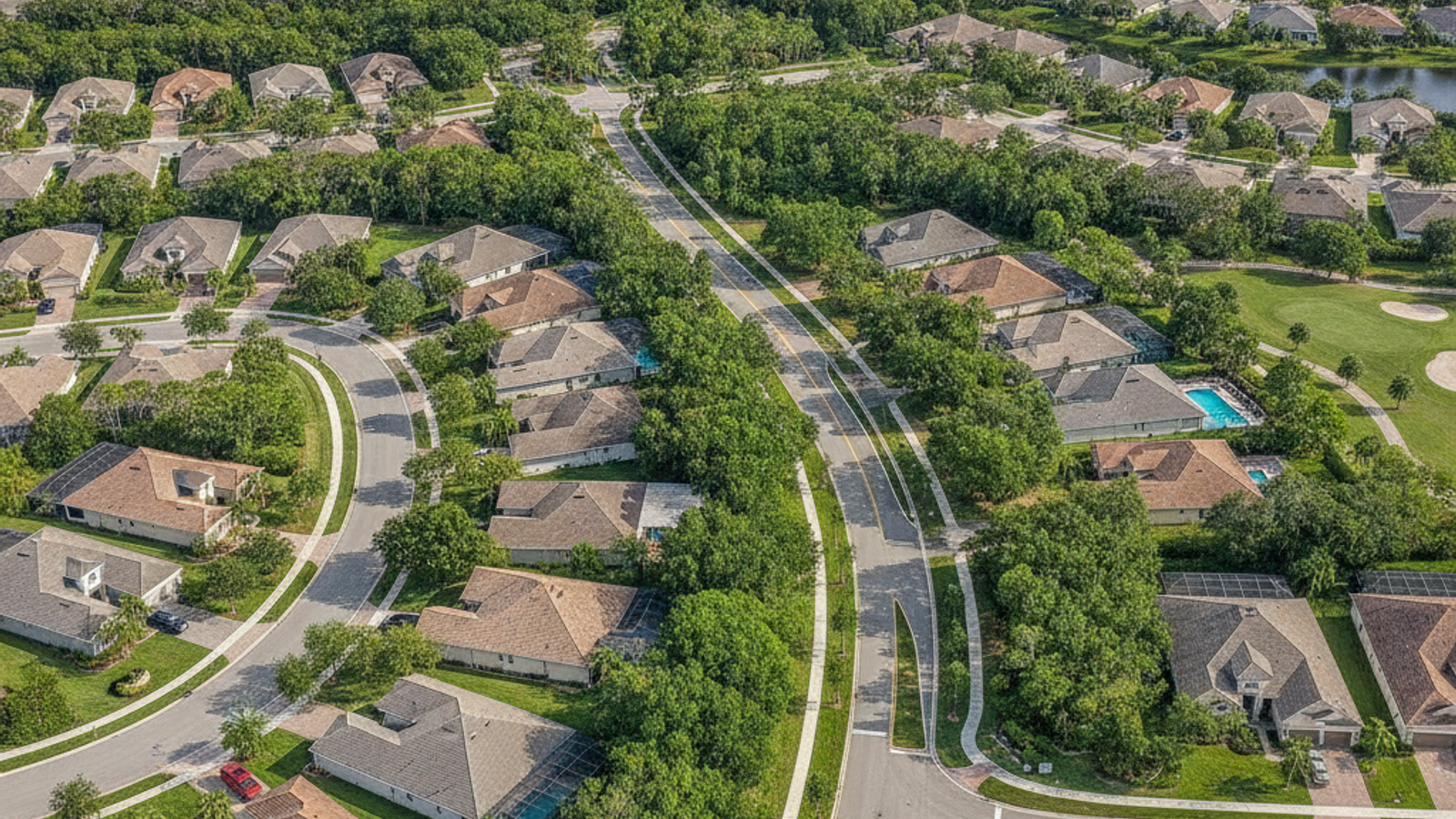
The median sale price for homes in Riverland, FL sits around $408,858, with homes spending roughly 63 days on the market. If you're a first-time home buyer in Riverland, FL looking at this master-planned 55+ community in Port St. Lucie and you've been plugging numbers into one of those national online calculators, I'd encourage you to take those results with a grain of salt. Generic tools almost always underestimate Florida insurance rates and St. Lucie County's property taxes - sometimes by a wide margin.
Getting a real handle on your purchasing power means looking at your gross monthly income alongside the actual local carrying costs. Lenders will evaluate your full financial picture to decide how much they're willing to loan you. Build a budget that accounts for both the purchase price and the ongoing monthly expenses, and you won't have any unpleasant surprises down the road.
Figuring Out Home Prices and Income Rules in Riverland
Riverland currently has roughly 17 active listings, giving buyers a limited but reasonably steady pool to work with. At a median sale price of around $408,858, most buyers will need a mortgage to cover the bulk of the purchase. Lenders look at your gross monthly income and your existing debt load to set your maximum loan amount.
Mortgage underwriters use standard financial formulas to assess your ability to repay. They want to see your housing costs and other monthly obligations fit comfortably within your income - and knowing those formulas yourself helps you set a realistic price ceiling before you ever walk through a door in Port St. Lucie.
Current Riverland Real Estate Prices
The median sale price in Riverland is approximately $408,858, though larger lakefront properties can push higher. Homes are selling in about 63 days and, on average, closing at 99.8% of list price. That last number matters: sellers are essentially getting what they're asking, so plan for the full list amount rather than counting on a meaningful discount.
The market sees about 9 homes sold per month, which works out to a 5.6-month supply - a fairly balanced position between buyers and sellers. You'll have some time to think, but well-priced homes aren't sitting around indefinitely.
The 28/36 Rule for Income and Debt
Most lenders use the 28/36 rule to determine how much you can borrow. The first number means your total housing payment - principal, interest, taxes, and insurance - shouldn't exceed 28% of your gross monthly income. The second number, 36%, is your total debt-to-income ratio: every monthly obligation you have, including the new mortgage, car payments, and credit card minimums, should stay under 36% of your pre-tax income.
Some loan programs will accept a higher DTI, but staying close to that 36% benchmark is a reasonable way to avoid stretching your budget past the point of comfort.
Factoring in St. Lucie County Taxes and Florida Insurance
St. Lucie County's total 2025 millage rate was approximately 21.79 to 22.85 mills, depending on the specific taxing district. That's the highest county-level millage rate in Florida, and it has a direct effect on your monthly carrying costs. National calculators typically default to a 1% tax rate - which will leave you meaningfully underprepared for the real tax bill in Riverland.
Homeowners insurance is the other variable that catches out-of-state buyers off guard. Florida's insurance market operates differently than the rest of the country, with premiums that reflect localized weather risk. Your lender will require an active policy, and those premiums run through your monthly escrow account right alongside taxes.
Property Taxes in St. Lucie County
The 21.79 to 22.85 millage rate means property taxes will form a substantial piece of your monthly payment. Based on 2025 figures, it's the highest rate in the state - though average per-taxpayer bills sometimes land below the state average because local home values offset the higher percentage. Ask your lender to run estimates using the exact millage rate for whichever Riverland neighborhood you're focused on.
There's one other thing to understand about Florida property taxes: when you buy, the assessed value will eventually reset to your purchase price. The previous owner's tax bill tells you almost nothing about what you'll pay. If you don't budget for that reassessment, your monthly payment in year two can be noticeably higher than it was in year one.
Homeowners Insurance and Escrow
2025 data shows Florida's average annual homeowners insurance premium ranges from $3,815 to $8,292, which includes wind coverage - a standard mortgage requirement in this state. Florida homeowners generally pay three to five times the national average for insurance. That's not a footnote; it's a major line item that deserves real attention in your budget math.
Your lender collects one-twelfth of your annual property tax and insurance costs each month alongside principal and interest. Using these actual local figures - rather than national defaults - gives you a much more accurate picture of what you can genuinely afford.
Down Payments and Closing Costs in Riverland
Buyers in the Port St. Lucie area have access to several down payment assistance programs worth knowing about. The Florida Hometown Heroes Housing Program offers up to $35,000 as a 0% interest second mortgage for eligible full-time Florida workers. The Florida Assist program provides up to $7,500 as an interest-free second mortgage. These aren't obscure programs - they're real money that can meaningfully reduce what you need at the closing table.
You'll also need cash for closing costs, which typically run 2% to 5% of your total loan amount, covering lender fees, title insurance, appraisal charges, and prepaid escrow funds. Add that to your down payment, and you have the full cash picture for finalizing a purchase.
Minimum Down Payment Requirements
You don't need 20% down to buy in Riverland. Conventional loans often allow as little as 3% to 5% depending on your credit score and income. FHA loans require a minimum of 3.5% down, which makes them a common choice for buyers with less cash saved. If you're an eligible veteran or active-duty service member, VA loans offer the option to buy with 0% down.
Putting less than 20% down usually means you'll carry private mortgage insurance (PMI) each month. Factor that cost into your monthly budget if you're going with a lower down payment.
Florida Down Payment Assistance Programs
Beyond Hometown Heroes and Florida Assist, the Florida Homeownership Loan Program offers up to $10,000. The St. Lucie County HOME Consortium provides up to $50,000 in deferred, 0% interest down payment assistance for eligible buyers in unincorporated areas. That's a substantial figure, and it's worth finding out early whether you qualify.
Each program has specific income limits and eligibility requirements. Some are geared toward first-time homebuyers; others focus on profession or household income. Working with a lender who actually knows these St. Lucie County programs - not one who has to look them up - is how you make sure you're not leaving money on the table.
Getting Pre-Approved by a Local Lender
A mortgage pre-approval is a formal commitment from a lender stating exactly how much they'll let you borrow. You'll need recent pay stubs, two years of tax returns, and bank statements. The lender pulls your credit report to verify your debts and calculate your exact debt-to-income ratio. It's a straightforward process, and it's the single most useful thing you can do before you start looking at homes.
A pre-approval letter tells sellers you're serious and that your funds are verified. In a market where homes are spending about 63 days on the market, being positioned to make an immediate offer matters. Get the letter before you schedule your first tour.
Working with a local lender in the Port St. Lucie area tends to make the whole process smoother. Local professionals understand St. Lucie County's specific tax rates and Florida's insurance requirements in a way that out-of-state banks often don't. That localized knowledge means your pre-approval actually reflects what it costs to own a home here - not what it costs somewhere else.
Frequently Asked Questions
What income do I need to qualify for an average-priced home in Riverland, FL?
It depends on your current debts and your down payment. With a median sale price of $408,858, lenders will use the 28/36 rule to ensure your total housing payment stays under 28% of your gross monthly income. Buyers with minimal debt and a larger down payment can qualify with a lower salary than those carrying high credit card balances or auto loans.
How do property taxes and Florida homeowners insurance impact my monthly housing budget in Riverland?
They increase your monthly payment substantially. St. Lucie County's 2025 millage rate of 21.79 to 22.85 mills is the highest county-level rate in the state, and Florida insurance premiums range from $3,815 to $8,292 annually. Your lender will divide these yearly costs by twelve and add them directly to your monthly mortgage bill through an escrow account.
What hidden costs or HOA fees should I factor into my affordability calculations for Riverland communities?
Yes, you should always account for homeowners association (HOA) fees in master-planned communities like Riverland. Lenders include these mandatory monthly fees in your debt-to-income ratio when calculating your maximum loan amount. You should also budget for closing costs, which typically run 2% to 5% of your total loan amount.
Which neighborhoods or property types in Riverland offer the most affordable options for buyers on a tight budget?
It depends on the specific floor plan and location within the community. While the median sale price is $408,858, properties situated away from the lakefront tend to be priced lower. Buyers looking to minimize costs should focus on standard interior lots rather than premium water-view homes.
How long does a mortgage pre-approval last while I search for a house in the Riverland market?
A standard mortgage pre-approval usually lasts for 60 to 90 days. Since homes in Riverland are currently spending about 63 days on the market, your pre-approval should cover a typical search window. If your search runs longer, your lender will need to pull a fresh credit report and review updated pay stubs to renew the letter.
If interest rates change while I'm house hunting in Riverland, how will that affect my maximum purchase price?
It will directly change your borrowing power. If rates go up, your projected monthly payment increases, which lowers the maximum home price you can afford under the 28% housing ratio rule. If rates drop, your monthly payment decreases, and you can qualify for a higher purchase price.