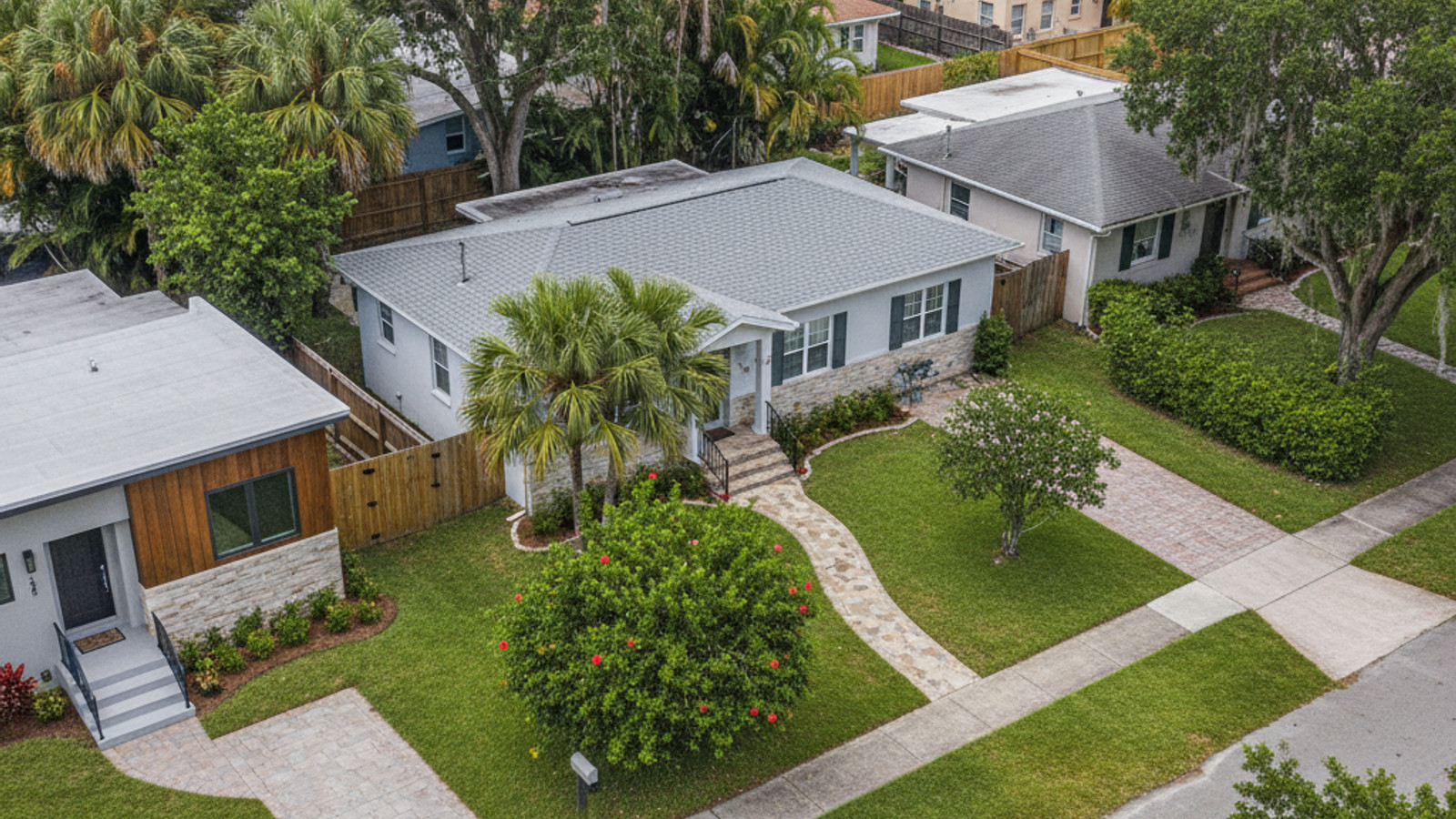
Purchasing a property requires navigating both market prices and the complex landscape of upfront costs. Many buyers looking at the Riverland neighborhood in Fort Lauderdale assume they must cover the entire down payment and closing costs out of pocket.
Fortunately, multiple localized and state-level funding options exist specifically to bridge this gap. By utilizing financial assistance and homebuyer programs in Riverland FL, purchasers can significantly reduce their initial cash burden and secure a more manageable monthly mortgage payment.
Riverland Real Estate Market and Upfront Costs
The current 2026 housing market in Riverland presents a distinct opportunity for buyers utilizing purchase assistance. Median single-family home prices in the neighborhood currently range from approximately $415,000 to $475,000.
These typical property values fall comfortably below the $636,806 maximum purchase price limit established for Broward County assistance programs. This pricing dynamic makes the neighborhood a highly practical target for buyers relying on local grants and deferred loans to enter the market.
Beyond the purchase price, the area offers objective features that add long-term value to a real estate investment. Properties here provide immediate proximity to major transit corridors like I-95 and State Road 84, alongside local transit routes and access to Riverland Woods Park.
Combining these accessible median prices with local down payment assistance programs drastically reduces the financial barrier to entry. Buyers who leverage these tools effectively can preserve their liquid savings while securing a property with strong foundational value.
Broward County Down Payment Assistance in Riverland
Buyers targeting Fort Lauderdale properties have access to the localized Broward County Homebuyer Purchase Assistance program. This initiative is explicitly designed to assist low-to-moderate-income buyers with the heavy upfront costs of real estate transactions.
Approved applicants can receive up to $80,000 in county-wide assistance to apply toward their down payment and closing costs. This funding is structured as a 0% interest, deferred-payment second mortgage rather than a traditional monthly installment loan.
To utilize these county funds, buyers are required to contribute a minimum of 3% of the total purchase price from their own verified funds. This specific requirement ensures the purchaser maintains a vested financial interest in the property from the very beginning.
The county mandates a 15-year affordability period alongside strict owner-occupancy requirements for the property. If the buyer remains in the home as their primary residence for the full 15-year term, the second mortgage is fully forgiven.
State-Level Florida Housing Finance Corporation Programs
In addition to county funds, the Florida Housing Finance Corporation provides robust state-wide assistance programs available to Riverland residents. These state-level options operate primarily as second mortgages that must be paired directly with a first mortgage loan.
Buyers can combine these state assistance funds with standard FHA, VA, or conventional first mortgages. Because these programs dictate specific underwriting guidelines, buyers must work exclusively with a state-approved loan officer to access the funds.
Florida Hometown Heroes Program
The 2026 Florida Hometown Heroes program provides up to $35,000 in assistance for full-time Florida workers. This funding is calculated as 5% of the total first mortgage loan amount and is issued as a 0% interest deferred second mortgage.
This program encompasses a massive variety of full-time eligible occupations across the state. While originally focused heavily on first responders and educators, the current guidelines allow many standard W-2 employees to qualify.
Florida Assist and HLP Options
Buyers who do not meet the occupational requirements for Hometown Heroes have strong alternative options. The Florida Assist program offers a fixed limit of up to $10,000, structured similarly as a 0% deferred second mortgage.
Another alternative is the Florida Homeownership Loan Program, which provides exactly 3% of the purchase price as upfront assistance. Comparing these options with a certified loan officer ensures buyers secure the maximum possible funding for their specific income profile.
Qualifying Requirements and Approved Lenders
Securing these funds requires strict adherence to educational and financial steps long before reaching the closing table. The most critical early requirement is the mandatory completion of a HUD-approved homebuyer education course.
Financial qualification relies heavily on standard underwriting criteria established by the program administrators. Applicants must maintain a qualifying credit score and demonstrate an acceptable debt-to-income ratio to ensure they can manage the primary mortgage payment.
Furthermore, buyers must work exclusively with an approved lender or a loan officer certified by Broward County or the state. Standard retail banks or uncertified brokers cannot originate these highly specialized loans.
Starting the pre-approval process early is an absolute necessity for anyone utilizing these programs. County funds are allocated on a strict first-come, first-qualified basis, meaning delays in paperwork can result in missed funding opportunities.
Frequently Asked Questions
What is the $35,000 down payment assistance program in Florida?
The $35,000 assistance refers to the Florida Hometown Heroes program, which aids full-time workers with upfront purchasing costs. It provides up to 5% of the first mortgage loan amount, capped at $35,000, as a 0% interest deferred second mortgage. Buyers in Fort Lauderdale can use these funds to cover their down payment and necessary closing costs.
What are the income limits for down payment assistance programs in Florida?
Income limits vary significantly depending on the exact program and the county where the property is located. Broward County programs typically restrict eligibility to buyers earning 80% or less of the Area Median Income. Conversely, state programs like Hometown Heroes often allow limits up to 150% of the local median income.
Are there any follow-up requirements after closing for homebuyer assistance programs?
Yes, nearly all assistance programs require the buyer to maintain the property as their primary residence. If you sell the home, refinance the first mortgage, or rent out the property, the deferred second mortgage immediately becomes due. Programs like the county assistance offer full forgiveness only after 15 years of continuous owner-occupancy.