


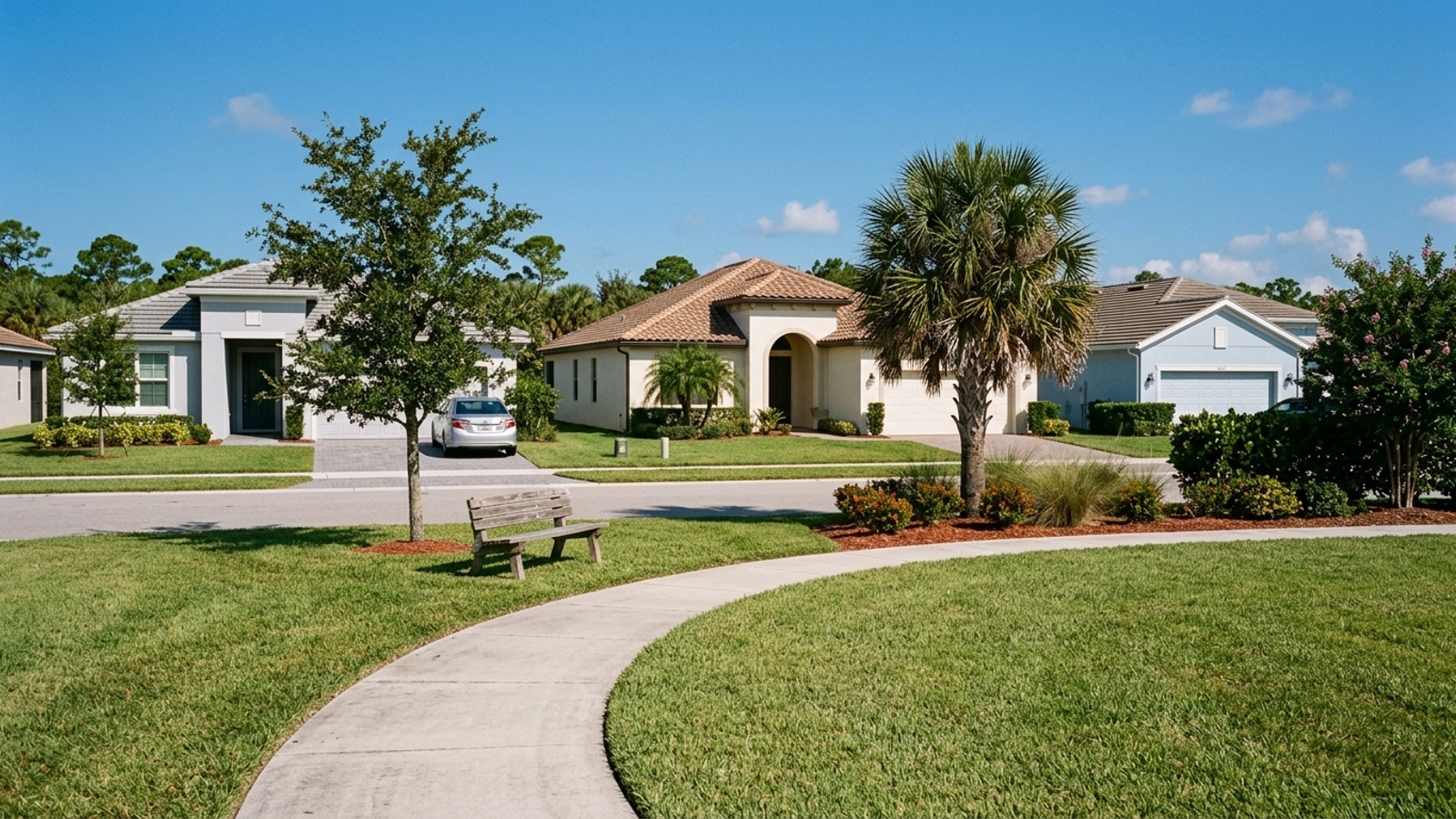
Buying a home in the Riverland area of Port St. Lucie means choosing between active new construction and a shifting resale market. With single-family homes dominating the area, who you hire to represent your side of the transaction dictates how much you pay and what terms you accept. Anyone researching the community can find additional details in the ultimate guide for Riverland.
The local market has cooled, giving buyers more room to negotiate. Finding the right representation comes down to identifying someone who understands builder registration rules and knows how to structure an offer below asking price on a resale property.
Key takeaway
Pick a buyer's agent who can show how their recent Riverland buyers did against list price and who will register you correctly with builder sales offices. With 5.4 months of homes for sale, negotiation is the job, not speed. If a candidate can't show recent Riverland closings, keep interviewing, and always get in writing whether they'll act as your single agent or as a transaction broker.
Who this guide is for
You're about to buy a resale or new-build home in Riverland and need to decide which agent to hire, and on what written terms, before you tour your first home or model.
Why your choice of representation matters in Riverland right now
The median Riverland home took 88 days to sell and closed at 97.3% of list price over the 90 days ending September 30, 2026. Prices dropped 7.7% during that same window, pushing the median down to $517,064 for single-family homes. Asking prices set months ago may not reflect today's reality, which means an agent's pricing judgment is worth real money.
Because the typical buyer recently paid below list price, a buyer's agent worth hiring is one who can prove they negotiate well on resales. You can review the full Riverland housing market data to see how these trends affect your specific price point.
Questions to ask when interviewing a buyer's agent
Since you're looking at Riverland specifically, experience with local homeowner associations and builder sales offices is just as important as negotiating skills. These four questions will help you separate a strong advocate from someone just looking to open doors.
Will you work as my single agent or as a transaction broker?
Under Florida law, the agent showing you homes is legally presumed to be a transaction broker unless you both agree otherwise in writing. A transaction broker provides limited representation and deals honestly, but they don't represent you in a fiduciary capacity.
A single agent owes you full fiduciary duties, including loyalty and confidentiality during negotiations. Ask this first, because it decides whether the person negotiating your price is fully on your side.
The downside is that a single-agent relationship can get complicated if the agent's own brokerage lists the home you want to buy. Ask how they handle that situation and whether they'd need your written consent to switch roles. Florida law requires your consent before an agent transitions from a single agent to a transaction broker.
How have your recent Riverland buyers done against list price?
Ask for closed sales rather than active listings. On a median-priced Riverland home of $517,005, the typical gap between list and sale price works out to about $14,000. That figure is an illustration of what good negotiation is worth here. If a candidate leads with how often they win bidding wars over asking price, remember that only 5% of recent Riverland sales closed above list.
What you give up when relying on these figures is a large sample size. An agent's personal Riverland numbers might rest on just a handful of deals. Ask how many closings their average is based on and over what period, and treat a strong ratio from three or four sales with caution.
How would you write an offer on a home listed 90 days or more?
With the median Riverland home sitting on the market for 88 days before selling, a listing that's been active for three months is ordinary, not distressed. A good answer covers how the agent checks price-reduction history, comparable closed sales, and community documents before suggesting a number. You rarely need to rush, which gives you time for inspections and document review.
The downside of a long listing is that it can signal a pricing problem the seller won't fix, or something in the association costs that keeps buyers away. Ask the agent what they'd check first, and always ask the HOA for current dues and review what the HOA fees cover. Check the property tax bill for any Community Development District assessments as well.
How do you handle new-build sales offices and registration?
Riverland has active new construction alongside its resale market. Builders commonly have broker registration rules, and visiting a model on your own first can determine whether your agent is allowed to represent you at all.
Bring your agent before your first visit and confirm the registration policy with the builder. The sales office represents the builder, so having your own representation helps you compare new home developments against resales with clear eyes. Builder base prices are often less flexible than resale prices, and an agent's value on a new build usually lies in negotiating incentives, lot choices, and upgrades, along with reviewing the contract. Ask the builder's sales office whether your agent must be with you at your first visit to be registered.
What to put in your buyer agreement
As of August 2024, real estate rules require an MLS participant working with a buyer to enter into a written agreement before touring a home, whether in person or virtually. Florida Realtors offers standard forms for this, which establish your relationship and outline the agent's duties. The terms are entirely negotiable.
Your agreement should clearly state your relationship type, noting whether the agent acts as your single agent or a transaction broker. Define the agreement's length, the cancellation terms, and the geographic scope. If you want to compare Riverland vs. Tradition or look into Stuart and Palm City, make sure the agreement covers those areas so you're not left unrepresented outside of Riverland.
The agreement also sets the agent's fee and details whether you'll ask the seller or builder to cover it in your offer. You can review how real estate commissions work to understand the math before you sign, and factor this into your buyer closing costs. This is not legal advice, so have an attorney review the agreement if you're unsure about any terms.
How to find and vet buyer's agents in Riverland
Start by checking local agents and verifying their license status. You can look up any disciplinary history on the Florida Department of Business and Professional Regulation license verification site. Once you have a few names, ask each candidate for a list of their recent Riverland closings.
Treat online portal directories as a starting list, not proof of results. Interview two or three agents to see how their approaches differ. Before those conversations, work out your affordability and budget so every interview focuses on real price points and what you can buy.
How to narrow your choice
Once you've interviewed a few candidates, weigh their answers against your specific plans. Use these questions to make your final decision:
- Are you shopping resale, new construction, or both? Resale buyers should focus on the list-price and long-listing answers. Anyone touching new construction should prioritize the sales-office question before visiting a model.
- Do you want someone who owes you full loyalty in negotiation? Ask the single-agent-or-transaction-broker question first and get the answer into the agreement.
- Is your search only in Riverland, or are you also weighing Tradition, Stuart, or Palm City? Set the agreement's geographic scope to match.
- Is your budget settled? Work out the math first so you know your limits.
If you want a resale that's been on the market a while at a price below asking, start with an agent who can show closed Riverland sales and their list-to-sale results. If you want a new-build home, start with an agent who'll come to your first sales-office visit and explain the builder's registration rules. If you want to compare other areas before committing, start with an agent whose written agreement covers every area you're weighing. When you're ready to talk to a local expert, you can reach out to the best real estate agent in Riverland for help.
Related guides: How much house can I afford in Riverland, Mortgage rates in Riverland, Port St. Lucie, Types of homes in Riverland, Port St. Lucie, Buyer closing costs in Riverland.
At a glance
- Median sale price: $517,005 (all homes, 90 days ending 2026-09-30); single-family $517,064 (same window)
- Year-over-year change in median sale price: -7.7% (all homes and single-family, 90 days ending 2026-09-30)
- Homes sold: 41 (all homes and single-family, 90 days ending 2026-09-30)
- Median days on market: 88 (all homes, 90 days ending 2026-09-30)
- Median sale-to-list ratio: 97.3% (all homes, 90 days ending 2026-09-30)
- Share of homes sold above list price: 5% (all homes, 90 days ending 2026-09-30)
- Months of supply: 5.4 (all homes, 90 days ending 2026-09-30)
- Inventory: 71 homes (all homes) / 72 (single-family), 90 days ending 2026-09-30
- Median price per square foot: $288 (all homes, 90 days ending 2026-09-30)
Frequently asked questions
How much would a real estate agent make on a $300,000 house?
For illustration only: at an assumed 2.5% fee, the gross commission is $7,500, and the agent's own share is lower after the brokerage split. No rate is standard, and all fees are negotiable between you and the agent. Riverland's median sale price is well above $300,000, so your actual fee will likely differ.