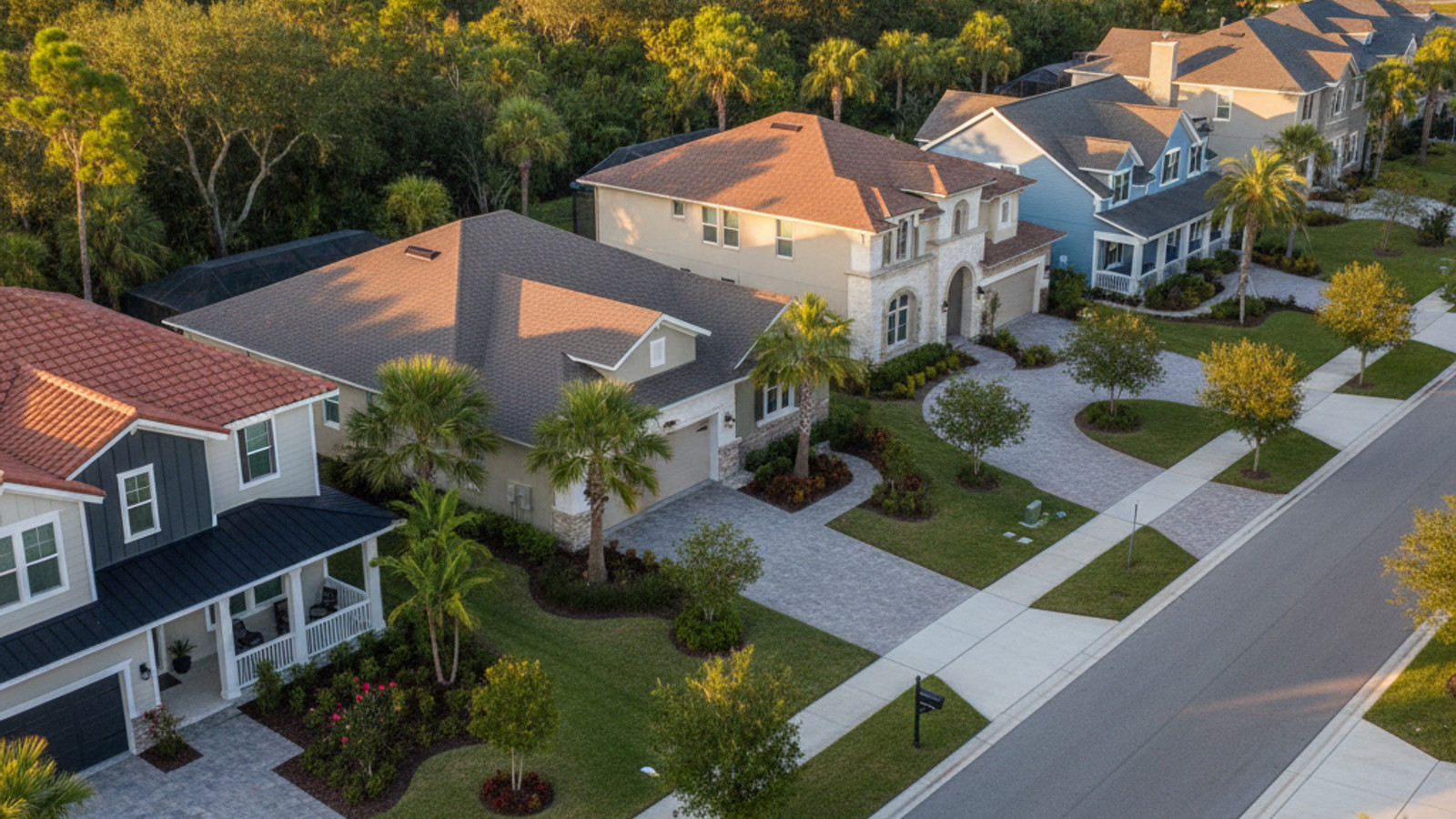
Port St. Lucie continues to attract buyers looking for master-planned convenience on Florida's Treasure Coast. Navigating the options often comes down to comparing the area's two largest developments to see which lifestyle aligns with your goals.
Making the right choice requires understanding how these massive communities function differently. Buyers need to weigh everything from builder variety to monthly carrying costs before signing a contract.
Comparing Real Estate and Property Types
Riverland and Tradition stand as the two most prominent master-planned communities in Port St. Lucie. The 2026 real estate landscape in these areas features extensive new construction alongside a robust resale market. Current pricing in both developments spans from the mid $300,000s up to over $1,000,000, depending heavily on lot position and custom upgrades.
Choosing between the two often depends on your preference for neighborhood cohesion versus architectural variety. Buyers who value a unified, seamless community design will likely prefer the single-builder environment of Riverland. Those who want more distinct architectural choices and diverse neighborhood layouts will find the varied developer options in Tradition much more appealing.
Riverland's Age-Restricted Neighborhoods
Riverland is exclusively dedicated to age-restricted 55+ living, masterminded entirely by GL Homes. The development features established and emerging subdivisions, including Valencia Cay, Valencia Grove, Valencia Walk, and the newer Valencia Parc. Properties here include single-family homes and attached club villas, all featuring modern floor plans and highly requested gas appliances.
The unified builder approach means the streetscapes maintain a consistent, premium aesthetic throughout the entire master plan. Square footage across these neighborhoods typically ranges from 1,300 to over 3,000 square feet, providing options for both seasonal residents and full-time occupants.
Tradition's Diverse Builders and Subdivisions
Tradition operates as a massive multi-builder environment, bringing together national developers like Mattamy Homes, Taylor Morrison, and GHO Homes. This structure creates a mosaic of neighborhoods, offering both 55+ enclaves like Telaro and Del Webb, alongside all-age communities such as Cadence and Seville. The variety of builders translates directly into a wider spectrum of architectural styles and custom package options.
Because multiple developers are competing within the same master plan, buyers can shop different build qualities and standard features without leaving the community. This dynamic environment means the housing stock feels less uniform, giving each subdivision its own distinct character.
2026 Cost of Living: HOA and CDD Fees Breakdown
Budgeting for a home purchase in Port St. Lucie requires a clear understanding of layered fee structures. Beyond the base property price, buyers must account for homeowner association dues and district taxes that fund the community infrastructure.
Community Development District fees, commonly known as CDD fees, are applied to the annual property tax bill to cover the cost of underground utilities and roads. When comparing the two developments, Riverland offers a much more straightforward fee structure, while Tradition requires buyers to navigate a complex web of master and sub-association dues.
Understanding Riverland's Fee Structure
Living in Riverland comes with a relatively consolidated monthly expense profile. The HOA fees for Riverland's Valencia neighborhoods average between $360 and $470 per month, depending on the specific phase and property size. This monthly assessment covers full lawn care, manned gated security, and access to the extensive master amenities.
In addition to the HOA dues, residents do pay CDD fees to fund the initial infrastructure development. Because the amenity package and maintenance are centralized under one association, buyers rarely encounter surprise assessments from overlapping neighborhood boards.
Tradition's Layered HOA Assessments
Tradition utilizes a layered fee structure that splits costs between a master association and individual neighborhood HOAs. The master Tradition association fee is approximately $200 per month, which maintains the public town center and shared landscaping. From there, individual neighborhood HOAs add an additional $200 to $500 or more per month.
These sub-association fees vary widely depending on whether the specific neighborhood features private clubhouses, gated access, or included lawn maintenance. Buyers must also factor in the CDD fees applied to properties across Tradition, which typically range from $1,500 to over $3,000 annually.
Master-Planned Amenities and Lifestyle Offerings
The recreational facilities and social hubs define the daily experience in these massive developments. Both master plans place a heavy emphasis on golf cart mobility and pedestrian connectivity, allowing residents to leave their cars at home.
The core difference lies in how these amenities are accessed and shared. Buyers seeking a highly active, private resort lifestyle will gravitate toward Riverland's centralized campus. Conversely, those who prefer a relaxed, town-centric experience with public events will find Tradition's decentralized model more appealing.
The Paseo Greenway and Riverland Facilities
Riverland's amenities are entirely private and connected by the Paseo Greenway, a 5-mile eco-friendly pathway restricted to pedestrians, bicycles, and golf carts. The centralized amenity campus is massive, offering residents unparalleled access to specialized recreational facilities. The private amenities available to Valencia residents are extensive and include the following major centers:
-
A 24-acre Sports and Racquet Club featuring a massive, tournament-ready pickleball facility.
-
A 5-acre Arts and Culture Center that houses a Creativity Hub and professional demonstration kitchens.
-
A 51,000-square-foot Wellness and Fitness Center equipped with state-of-the-art training gear and pools.
Tradition Square and the T-Trail System
Tradition takes an integrated town center approach, anchoring the community with public-facing amenities. Tradition Square serves as the bustling central hub, featuring regular community events, food truck rallies, and retail spaces. While individual neighborhoods have their own private clubhouses, all residents share this broader public infrastructure.
Connectivity is handled by the T-Trail system, which offers over 20 miles of paved paths connecting the various neighborhoods to the town square. For those who prefer not to walk or drive, the TIM autonomous shuttle service operates continuously throughout the development.
Evaluating Port St. Lucie Location Benefits
The geographic advantages of both communities make them highly competitive options on Florida's Treasure Coast. They are strategically positioned along major transit corridors, offering easy access to both local necessities and broader regional travel.
Choosing between the two locations comes down to which immediate conveniences matter most to your daily routine. Tradition offers a superior advantage for immediate healthcare access, while Riverland provides unmatched private access to daily grocery shopping without leaving the community footprint.
Commuting via I-95 and Florida's Turnpike
Tradition boasts immediate adjacency to I-95, with direct highway access available via the Tradition Parkway and Becker Road interchanges. This makes it incredibly convenient for residents who commute or frequently travel up and down the coast. Riverland is located just west of I-95, providing similarly rapid highway access without the immediate highway noise.
Regional travel is highly accessible from either development. Palm Beach International Airport is approximately a 45-minute drive south, while Orlando International Airport can be reached in under two hours.
Proximity to Healthcare, Parks, and Shopping
Tradition holds a distinct advantage when it comes to medical care, with the Cleveland Clinic Tradition Hospital located directly within the community bounds. Residents can easily access world-class healthcare, specialists, and emergency services just minutes from their front doors. The surrounding area also features local dog parks, multi-sport fields, and straightforward drive times to Treasure Coast beaches.
Riverland answers this with the Riverland Town Center, a commercial hub anchored by a Publix grocery store. Because this center connects directly to the Paseo Greenway, residents can handle their daily grocery shopping via golf cart without ever merging onto a public road.
Frequently Asked Questions
Do both Riverland and Tradition charge Community Development District (CDD) fees?
Yes, both developments apply CDD assessments to the annual property tax bill. These fees fund the initial underground infrastructure and roads for the communities. In Tradition, these fees typically range from $1,500 to over $3,000 annually, depending on the specific neighborhood phase.
Are golf carts permitted on the pathways in Riverland and Tradition?
Golf carts are highly encouraged and heavily integrated into both master plans. Riverland features the dedicated 5-mile Paseo Greenway, while Tradition offers the extensive 20-mile T-Trail network. Both systems allow residents to navigate to amenities and shopping without using a standard vehicle.
What are the age restrictions for living in Riverland versus Tradition?
Riverland consists entirely of 55+ active adult communities built by GL Homes. Tradition offers a mixed-use environment, featuring specific age-restricted neighborhoods like Telaro alongside numerous all-age subdivisions. Buyers must verify the specific age rules for their chosen neighborhood within Tradition before purchasing.