


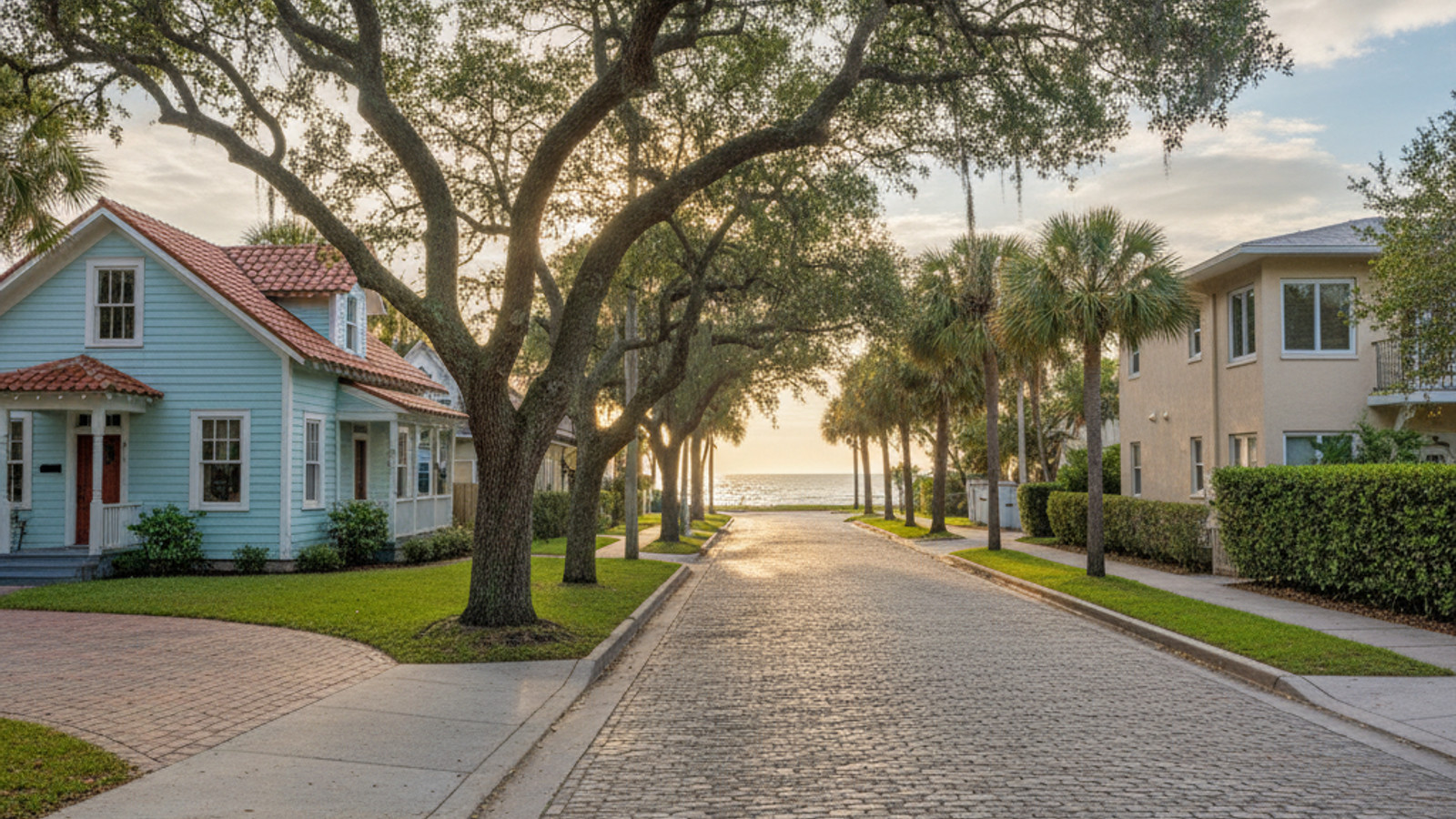
Riverland vs Fort Pierce is a home-type decision before it's a price decision. All 41 Riverland sales in the 90 days ending September 30, 2026, were single-family houses. Evaluating the pros and cons of living in Riverland adds context to this choice.
If you want a condo, an older house outside a master homeowners association, or a waterfront address, you're looking at Fort Pierce. That market splits clearly between mainland neighborhoods and the beachside on Hutchinson Island.
Key takeaway
Start with Riverland if you want a newer single-family house in a planned community and room to negotiate, as the median price there fell 7.7% from a year ago, leaving sellers pricing to a softer market. Choose Fort Pierce instead if you want a condo, an older home without a master HOA, or an address near the ocean or the lagoon, and expect to price it neighborhood by neighborhood.
Who this guide is for
You're deciding whether to focus your home search on a newer house in Riverland or on an older home, condo or waterfront property in Fort Pierce, and you want to know which one fits what you need before you start touring.
Comparing the housing options
Riverland is a master-planned section of southwest Port St. Lucie built out by builder communities such as the Valencia neighborhoods. Buyers here find 5.4 months of housing supply, which gives you room to negotiate on that specific product type. Fort Pierce is the St. Lucie County seat to the north, with an older mainland and a beachside on Hutchinson Island.
Riverland, Port St. Lucie
In Riverland, you're buying a newer detached house on a master plan with clubhouse-style amenities run through community associations. Resale homes here compete with brand-new builder inventory still being sold nearby, so the seller is pricing against new construction and against neighbors. The median price per square foot for all homes was $288 over the 90 days ending September 30, 2026.
The amenities come with HOA dues and possibly a Community Development District assessment on the tax bill, for as long as you own. Some Riverland communities are also age-restricted, so confirm the occupancy rules of the specific community before you choose a floor plan.
Fort Pierce mainland and downtown
Fort Pierce features older housing stock, and many mainland neighborhoods operate without a master-planned HOA. That means more freedom regarding sheds, exterior paint and parking, without the cost of an amenity package. The city also has a historic downtown situated on the Indian River Lagoon.
What you give up is the ease of a newer build. Older homes mean older roofs, plumbing and electrical systems, which drive four-point and wind-mitigation inspections and can raise insurance quotes or block coverage entirely. Lots near the lagoon may also sit in a FEMA flood zone, so check the flood map and get an insurance quote before writing an offer.
Fort Pierce beachside on Hutchinson Island
This area offers the options Riverland lacks: condos, plus some houses, located near the ocean and the Fort Pierce Inlet. Fort Pierce Inlet State Park puts a public ocean beach right at the mouth of the inlet. Riverland's recent sales include no condos, meaning a condo buyer chooses the beachside by default.
Parts of the island sit in unincorporated St. Lucie County rather than city limits, which changes the property tax bill. Florida's post-2022 condo safety laws require milestone structural inspections and structural integrity reserve studies for many buildings, and these rules can mean special assessments or higher monthly dues. Request the association's latest inspection and reserve study before you make an offer.
Home prices and negotiating room
The median sale price for a Riverland home was $517,005 over the 90 days ending September 30, 2026. The median sale-to-list ratio sat at 97.3%, meaning buyers have room to negotiate. A home listed near $531,000 that closes at that median ratio sells for about $517,000, roughly $14,000 under the asking price.
With a median of 88 days on the market, you usually have time for inspections and a second showing. Only 5% of those homes sold above list price, so bidding wars are the exception. Fort Pierce relies on a single city-wide median that blends mainland houses with beachside condos, making it a weak guide for any single property there.
You have to evaluate Fort Pierce prices neighborhood by neighborhood.
Taxes, insurance and association fees
The City of Fort Pierce set its adopted millage rate at 6.9000 mills for 2025, with the 2026 proposed rate matching that figure. Confirm whether a Fort Pierce address is inside city limits or in unincorporated St. Lucie County, because the location changes the total millage you pay. Beachside parcels and lagoon-front lots also require a FEMA flood map check.
In Riverland, review the specific community documents to understand HOA dues and exactly what each Valencia community covers. Look up the parcel on the St. Lucie County Property Appraiser site to see whether a CDD or other non-ad valorem assessment is on the tax bill. Riverland property taxes reset upon purchase, and you should factor those along with buyer closing costs and flood zones into your total budget.
Location and daily drives
Riverland's primary location advantage is quick access to Florida's Turnpike and I-95 heading south, which makes it practical for commuters heading toward West Palm Beach or other southern employment centers.
Fort Pierce trades that immediate highway access for proximity to the Indian River Lagoon, the inlet and the ocean. Driving from Riverland to downtown Fort Pierce or the Fort Pierce beaches takes time. Map your specific commute times and getting around Riverland routes before settling on a neighborhood.
How to choose between the two areas
The decision comes down to the property type you need. Work through these questions before you book a single showing:
- Do you need a detached house, or would a condo work? If it must be a house in a planned community, read the Riverland profile and the prices section. If a condo or beachside address is on the table, go to the Fort Pierce beachside profile, because Riverland's recent sales include no condos to compare.
- Are you comfortable paying HOA dues, and possibly a CDD assessment, for shared amenities and rules? If not, read the Fort Pierce mainland profile.
- How much does negotiating room matter to you? If you want time and negotiating power, the prices section shows how long Riverland homes sit and how far under asking they close.
- Is being close to the ocean, the inlet or a historic downtown more important than quick Turnpike and I-95 access? The location section compares the two.
Ann Chauss can pull current Riverland and Fort Pierce sales for the exact home type you want.
At a glance
- Riverland median sale price, all homes: $517,005 (90 days ending 2026-09-30)
- Riverland median sale price, single-family: $517,064 (90 days ending 2026-09-30)
- Riverland median sale price change, all homes: -7.7% year over year (90 days ending 2026-09-30)
- Riverland homes sold, all homes: 41, all of them single-family (90 days ending 2026-09-30)
- Riverland median days on market, all homes: 88 (90 days ending 2026-09-30)
- Riverland median sale-to-list ratio, all homes: 97.3% (90 days ending 2026-09-30)
- Riverland homes sold above list price, all homes: 5% (90 days ending 2026-09-30)
- Riverland months of supply, all homes: 5.4 (90 days ending 2026-09-30)
- Riverland active inventory, all homes: 71 (90 days ending 2026-09-30)
- Riverland median price per square foot, all homes: $288 (90 days ending 2026-09-30)
Common questions
Is Port St. Lucie bigger than Fort Pierce?
Yes. The U.S. Census Bureau's July 1, 2025 estimate puts Port St. Lucie's population at 268,062, while Fort Pierce sits at 51,737. Riverland sits inside Port St. Lucie, so a Riverland address is a Port St. Lucie address.
What is the closest major city to Fort Pierce, Florida?
West Palm Beach is roughly 68 miles away, about a 1-hour and 8-minute drive via I-95. Orlando is about 120 miles away, taking roughly 1 hour and 51 minutes via Florida's Turnpike.
Is Fort Pierce nice to live in?
It depends entirely on the home you want. Fort Pierce offers older homes without a master HOA, plus a historic lagoon-front downtown and beachside condos near the inlet. Confirm flood zones, insurance rates and condo association reports before deciding on a specific property.
Sources