


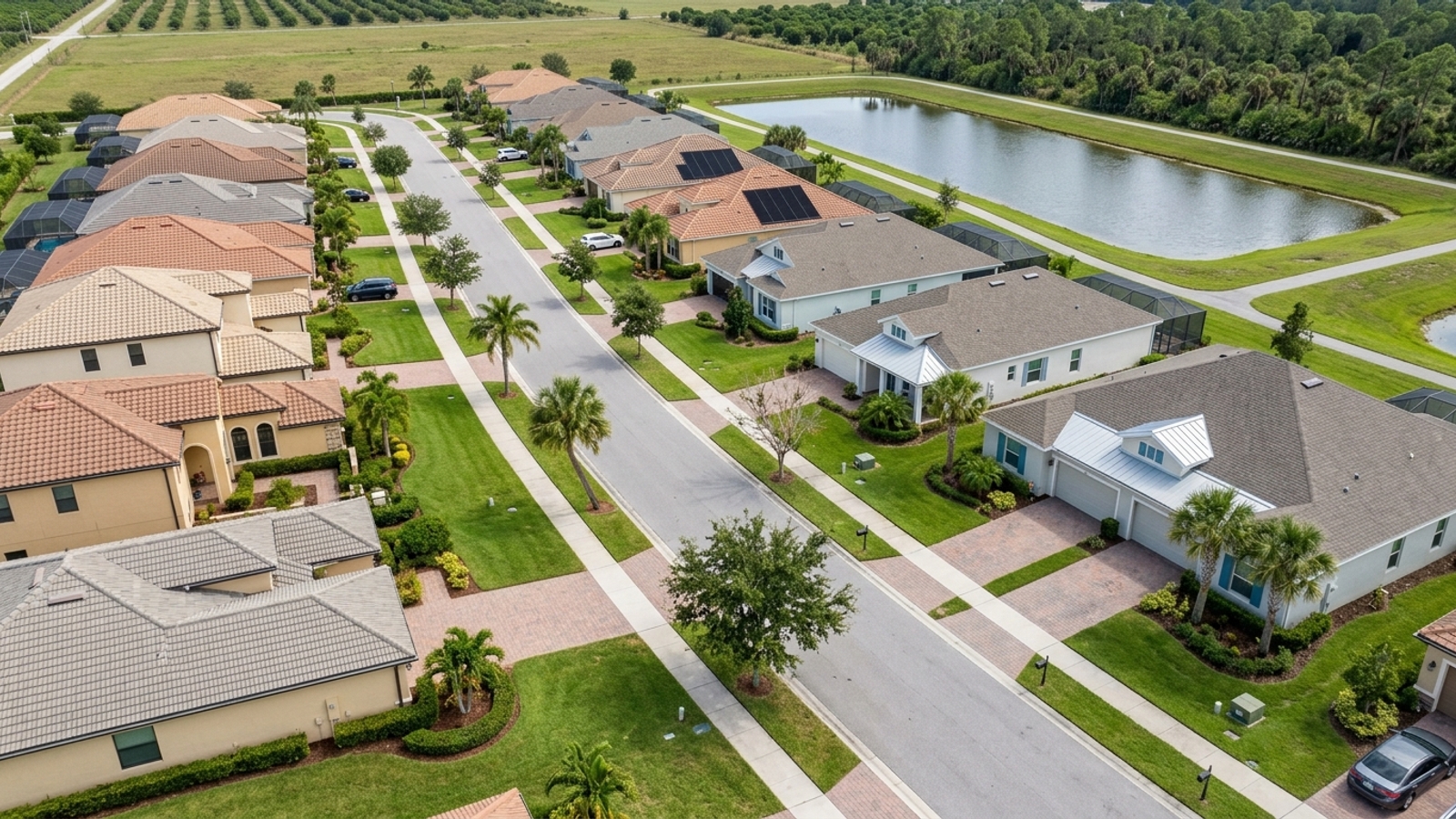
Start with the last 90 days of closed sales in your Valencia phase, check those numbers against GL Homes' current base prices, and you have the foundation for a defensible list price. Selling a home in Valencia, Riverland, FL, means you're competing on two fronts at once: other resales in your phase and the builder's brand-new inventory right down the street. Active listings for buying a home in Valencia at Riverland are available in our search portal.
Buyers have options, and they're taking their time. They'll compare your home against new construction before making a move. What you price it at on day one decides how long you'll be carrying the property and what you'll net at closing.
Key takeaway
Price a Valencia home from the last 90 days of sales and the builder's current Valencia Parc and Vista pricing, then expect to negotiate. Only 5% of Riverland homes sold above asking in the 90 days ending September 30, 2026, so a hopeful list price mostly buys you time on the market. If you can't carry the home through a typical listing period, compare a cash offer's net against your estimated net from listing before you choose.
Who this guide is for
You own a home in one of Riverland's Valencia communities and are deciding how to price it, when to list it, and whether a full listing will net more than a faster sale.
What selling a home in Valencia looks like in 2026
The median days on market for a Riverland home is roughly 88 days, based on 41 recent sales. Plan for about three months of showings and carrying costs before you get to the closing table.
Riverland currently has 5.4 months of supply. That's enough breathing room for buyers to compare properties and wait you out. These are Riverland-wide figures, and Valencia phases aren't broken out separately, which is exactly why phase-level comps carry so much weight when you set your price. Review our Valencia market report for the fuller numbers.
How to price a Valencia resale
Pricing starts with what a buyer will pay today, not what someone paid last year. The median sale price in Riverland dropped 7.7% year over year across all homes.
Buyers will weigh your asking price against recent neighborhood sales and the builder's current base prices. Anchoring your number to both keeps you from landing in territory where you look overpriced before the first showing.
Why last year's comps overstate your value
If a neighbor's similar home sold for $560,000 about a year ago and your home tracked the Riverland median, that year-over-year decline puts today's comparable value near $516,900. Starting from the old number means listing about $43,000 high. Weight sales from the last 90 days in your own phase and model.
Pull closed sales from the last 90 days in your own Valencia phase and similar models from the St. Lucie County Property Appraiser's sales search. That decline is a Riverland-wide median across 41 sales, not a formula you apply to your specific model. Some Valencia floor plans and lots will have held value better or worse than the median, so treat it as a sanity check on old comps rather than a line-item adjustment. Read our pricing strategy guide for more details.
How much room to leave for negotiation
On a $530,000 Riverland listing, the typical sale price lands about $14,300 below asking. The current sale-to-list ratio in Riverland is 97.3%. Use that gap to back into your list price from the net you need, not the other way around.
Decide before you go under contract how you'll handle repair requests and credits during the inspection period. Ask for original-list-to-sale figures on your comps. A home that sat and was reduced twice can still look like it sold close to asking.
How new Valencia phases set your price ceiling
The builder's current Valencia offering is the benchmark every resale buyer is measuring yours against. The median price per square foot in Riverland is about $288. GL Homes' Valencia Parc Signature Collection starts at $341,900 to build or $381,900 for an early move-in Areca plan, stretching past $1,027,900 for larger early move-in models. Valencia Vista Club Villas start in the $350s.
New-build buyers add lot premiums and options on top of those base prices. A resale's real edge is immediate move-in with everything already installed, so be specific about what your home includes that a base build doesn't. Check our new developments page for the builder side. Builder incentives can make a new home cheaper on a monthly basis than your resale, even at a higher price point, so check GL Homes' current offers on the day you set your price. They change.
Selling in each Valencia community
Which phase you're in changes who you're competing with. GL Homes built Valencia Cay and Valencia Grove first, followed by Valencia Walk, and then launched Valencia Parc in late 2023.
Buyers shopping the older phases are looking for different things than buyers walking through brand-new sections. Each community's strengths help you justify your price rather than just defend it.
Valencia Parc
GL Homes is still selling new homes in Valencia Parc, so a buyer can walk from your open house directly to a model home. Your pitch is a finished property available now versus a build wait. Lead with completed upgrades, landscaping, and move-in timing.
Compare your home to the builder's quick-move-in collections, which range from the $340s to the $700s and up. Check our Valencia Parc resale versus new prices page for a closer look.
It's hard to price above the builder's own quick-move-in homes on similar lots. Unless your upgrades and lot are clearly superior, the builder's price is effectively your ceiling.
Valencia Walk
Homes here are nearly new, and resales became the primary way into Walk once initial construction finished. Stress what separates your home from similar models: the lot, the view, any post-closing upgrades you've added.
Buyers will compare your property line by line with the one down the street. Many near-identical models can be listed at the same time, and small price gaps decide which home sells first. Pricing flexibility is limited, which means presentation matters more than it might elsewhere.
Valencia Grove
Buyers commonly cross-shop Grove against Cay, so price against both communities' recent sales. Compare your home's features to those in the older section to make your case. See our Valencia Cay versus Valencia Grove comparison for details.
Grove sits between the oldest and the newest phases, which means it can lose buyers in both directions. The listing needs to make a clear case on lot and upgrades to keep buyers from drifting toward one of the alternatives.
Valencia Cay
Valencia Cay was the first of the Valencia phases GL Homes built in Riverland. Mature landscaping and finished surroundings are its main selling points. Gather service records for major systems before you list.
Buyers comparing a Cay resale with a new build will ask about roof age, air-conditioning, and water-heater age. Without records and receipts, buyers price that uncertainty into a lower offer.
Getting the house ready to sell
Preparing your home for the market means balancing the cost of repairs against time. Buyers looking at Valencia resales expect homes to be in excellent condition, and spending money on major renovations rarely pays off, but fixing obvious defects protects your asking price. You'll need to decide whether to make these fixes or sell as-is.
Repairs and records buyers will ask for
Finish and fix rather than remodel, and review our pre-sale improvements page for guidance. Build a folder of permits, warranty transfer paperwork, service records, and appliance ages. Buyers comparing your home against a new-build warranty will ask for proof of maintenance, and if you don't have it, they'll assume the worst.
Check our home staging guide for tips on presenting the space. Every week spent on repairs adds to a listing period that already runs about three months, so fix only what a buyer or inspector will flag.
Selling as-is or taking a cash offer
Comparing a full listing against a cash offer comes down to net proceeds. The listing net is your expected price at the typical sale-to-list ratio, minus selling costs and about three months of carrying costs. The cash net is the offer minus its specific costs. Read our list-or-cash page for the full comparison.
An as-is contract doesn't remove your duty to disclose known material defects. Under Florida law, sellers must disclose facts materially affecting the value of the property that are not readily observable. Cash and as-is buyers price in their own repair and resale risk, so the certainty usually costs a meaningful discount. Get the cash number in writing before you compare it to anything.
Valencia paperwork that can delay closing
Selling a home in an HOA community involves documentation that has to be ordered and approved before the deal can close. Missing a deadline here doesn't just create friction; it pushes back your closing date.
Buyers also need to review mandatory disclosures about the property and the community. Getting these documents in front of them early keeps the transaction on track.
HOA estoppel and buyer approval
The estoppel certificate states the dues owed and fees due at closing. Florida law limits what an HOA can charge for an estoppel certificate to a base of $250 if no delinquent amounts are owed, and sets a 10-day deadline to deliver it. Ask the HOA management company for the estoppel fee, turnaround time, and how long the certificate stays valid.
Confirm with the HOA what buyer application, age-verification forms, and capital contribution apply to your sale, and how long approval takes. Age verification is required under the community's housing-for-older-persons status. Check our HOA fees page for what dues cover.
An estoppel certificate is only valid for a limited period, and buyer approval can take time. Order it early, but not so early that it expires before closing.
CDD, flood, and other disclosures
Community Development District (CDD) assessments appear on the property tax bill, so show buyers that line clearly and up front. Check your tax bill for the CDD assessment line and ask whether any bond portion remains. You'll also need to cover Florida's flood disclosure requirement. Check your home's flood zone on the FEMA flood map before completing it.
The buyer's property tax bill resets after purchase, which you can read about on our property taxes page. Review our seller disclosures page for the full checklist. Buyers who discover a CDD assessment late in the deal treat it as a surprise cost and try to renegotiate. Disclosing it early protects your price.
Costs and timeline to plan for
Budget for about three months of HOA dues, CDD assessments, insurance, and utilities while the home is listed. Understanding your seller closing costs lets you calculate your final net proceeds accurately, and factoring in commissions and days on market gives you a realistic picture of your timeline. Ann Chauss can pull Valencia-only closed sales for your phase and model to help you plan.
Questions to answer before you list
Before the sign goes in the yard, work through a few practical questions. Can you cover HOA dues, CDD assessments, insurance, and utilities for about three more months? If not, read the sections on selling as-is and planning your timeline before you set a price.
Are your comparable sales more than six months old? If so, start with the section on why last year's comps overstate your value. Is GL Homes still selling new homes in or next to your phase? If yes, read how new Valencia phases set your price ceiling and review your specific community's profile. Have you ordered the HOA estoppel certificate and checked the buyer-approval steps? If not, read the estoppel section before paperwork becomes the reason your closing date moves.
At a glance
- Median sale price: $517,005, down 7.7% year over year (Riverland, all homes, 90 days ending 2026-09-30, based on 41 sales)
- Median price per square foot: $288 (Riverland, all homes, 90 days ending 2026-09-30)
- Median days on market: 88 (Riverland, all homes, 90 days ending 2026-09-30)
- Sale-to-list ratio: 97.3% (Riverland, all homes, 90 days ending 2026-09-30)
- Homes sold above list price: 5% (Riverland, all homes, 90 days ending 2026-09-30)
- Months of supply: 5.4 (Riverland, all homes, 90 days ending 2026-09-30)
- Homes for sale: 71; homes sold: 41 (Riverland, all homes, 90 days ending 2026-09-30)
- Single-family homes track all homes almost exactly: $517,064 median, 72 listings (Riverland, single family, 90 days ending 2026-09-30). Valencia phases are not broken out separately.
Frequently asked questions
What not to do before selling a house?
Don't make exterior changes without HOA architectural approval, as the Valencia Cay Homeowners Association Rules and Regulations require prior written approval and a security deposit. Don't take on unpermitted work, remove fixtures you plan to keep without excluding them in the contract, or wait until you're under contract to order HOA documents. Review our pre-sale improvements page for better ways to prepare.
What not to say when selling a house?
Don't volunteer your bottom line, your moving deadline, or that you've already bought elsewhere to buyers or their agents. Never conceal or downplay known material defects, because under Florida's Johnson v. Davis ruling, sellers must disclose latent material defects that are not readily observable. Review our seller disclosures page for more details, and note that this is general information, not legal advice.