


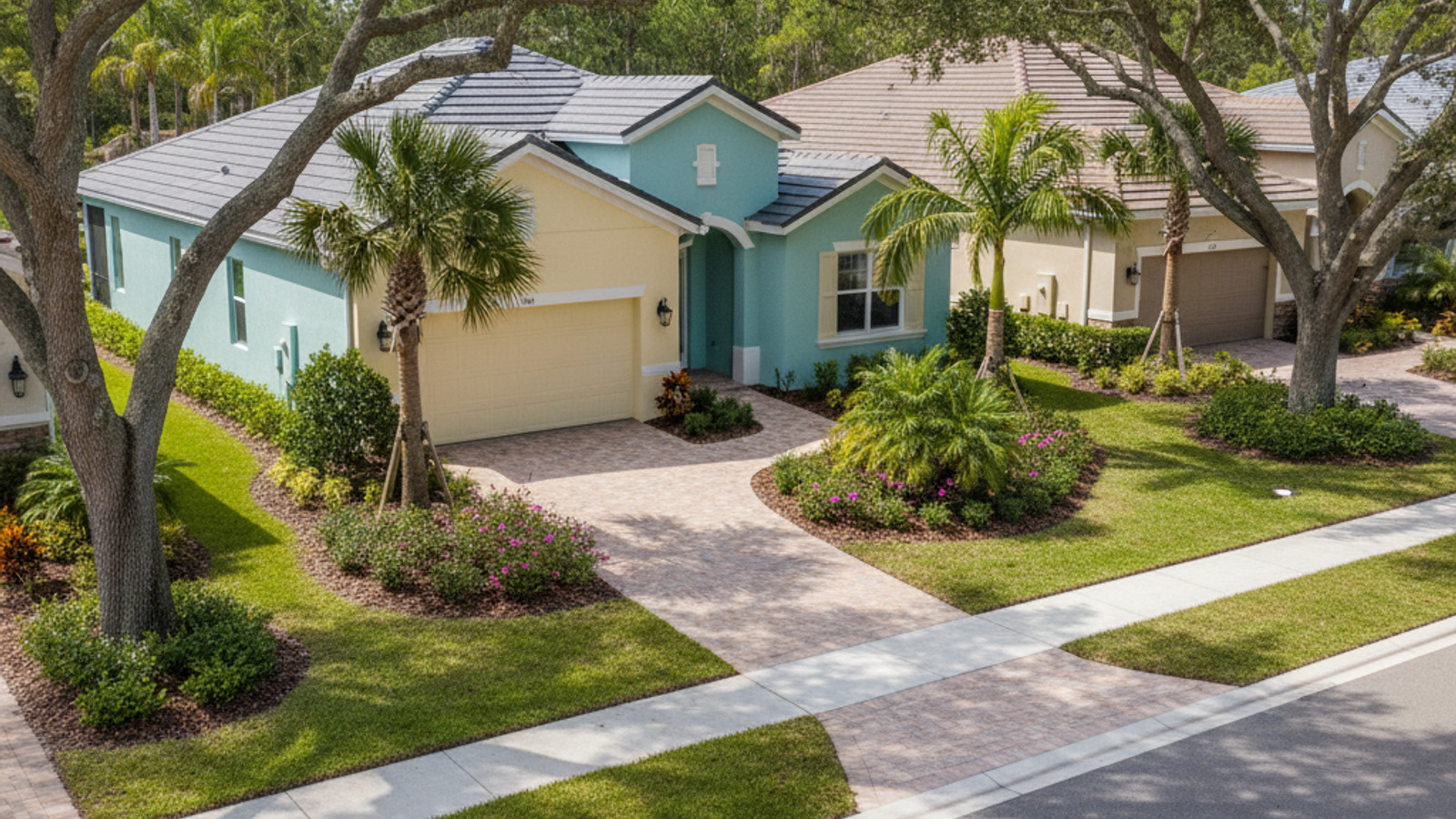
Selling in a recently built community means a different stack of paperwork than you'd pull together for an older property. In Riverland, Port St. Lucie, the conversation isn't about aging foundations or decades-old plumbing. It's about builder warranties, association governance, permit records, and a relatively new state-mandated flood disclosure form. These records are essential when selling a home in Riverland, Port St. Lucie.
Getting the right documents together before you list keeps the transaction from stalling. Buyers want to know exactly what they're taking over: the fees, whatever builder coverage remains, and the flood history Florida now requires you to put in writing. The earlier you pull this file, the fewer surprises end up as negotiating chips.
Key takeaway
A Riverland seller owes buyers the same Florida duty as anyone else: disclose known defects a buyer cannot easily see. The paperwork that shapes these sales is the HOA and CDD notices, the flood-claim disclosure, and your builder-warranty and permit history, so put all of it in writing before you list. With 5.4 months of supply on the market, buyers have other homes to choose from, and an as-is sale is the alternative if you'd rather not repair, though it still does not excuse leaving a known defect off the form.
Who this guide is for
You are preparing to list a Riverland home and need to know which disclosures Florida requires and what to gather before a buyer's inspector starts asking questions.
Seller disclosures in Riverland, FL
Most Florida disclosure guides are written around older homes and condos, but all 41 Riverland sales in the 90 days ending September 30, 2026, were single-family homes in a young HOA-and-CDD community. The disclosures that decide these deals are the HOA and CDD notices, the flood-claim form, and the builder-warranty and permit history. Standard condo disclosure forms circulating online don't apply to these sales.
With a median 88 days on market and a 97.3% sale-to-list ratio, buyers have the time to turn anything missing from that file into a price cut. They can inspect the property, compare it to other active listings, and come back with a credit request. Whatever isn't disclosed up front tends to resurface as a price negotiation. This overview is for informational purposes and does not constitute legal advice.
Is a seller's disclosure required in Florida?
Florida has no single statute-mandated condition form for a single-family resale. The duty comes from the 1985 Florida Supreme Court decision in Johnson v. Davis, which effectively abolished caveat emptor for residential real estate sales in the state. That ruling requires sellers to disclose known facts that materially affect the home's value and are not readily observable to the buyer.
The Florida Realtors Seller's Property Disclosure form, currently version SPDR-4x, is the customary way sellers meet this obligation. Released in March 2025, this updated version covers structures, roof-related items, environmental issues, and restrictions not readily observable to buyers. Selling with an as-is contract limits your obligation to make repairs. It does not erase the duty to disclose known defects.
There's also a meaningful difference between answering "unknown" honestly and answering "no" to something you're aware of. Florida law does state that certain facts, such as a death on the property, are not material and don't need to be disclosed. Those you can leave out entirely while focusing on the physical condition of the home.
The three disclosures that matter most in Riverland
Because Riverland is a master-planned development, the paperwork focuses on association governance, recent construction, and specific state requirements. Getting these three areas documented early protects you from delayed closings or canceled contracts.
Buyers in this community want to know exactly what they're taking over: fees, builder coverage, and the flood history Florida now requires in writing. Having these documents ready before you go under contract gives buyers the confidence to move forward cleanly.
HOA and CDD disclosures
Florida requires an HOA disclosure summary before the buyer signs a contract. Under state law, a buyer who doesn't receive this summary beforehand can cancel the contract within three days of receiving it, or prior to closing, whichever comes first. You'll also need to include Community Development District (CDD) disclosure language in the contract itself, since Riverland's district assessments appear on the property tax bill. You can check the HOA fees by Valencia community and review how the property taxes and reset after sale (incl. CDD line) work to see exactly what buyers will take over.
At closing, the association issues an estoppel certificate confirming exactly what is owed. Florida law gives the HOA 10 business days to deliver this certificate once requested, and the statutory base fee cap is currently $299 for standard preparation. Expedited delivery within three business days allows an additional $119 charge, and delinquent accounts can trigger another $179 fee. Ask your HOA's management company for the current estoppel certificate fee and turnaround time.
If the summary or CDD notice is missing or late, the buyer gets an exit you didn't plan for, often after you've already taken the home off the market. An open violation or pending special assessment will show up on the estoppel certificate regardless, so leaving it out of your disclosures only moves the surprise to closing.
Flood history and Florida's flood disclosure form
Florida's flood disclosure statute requires residential sellers to state in writing, at or before the contract is signed, whether they know of flood damage. The law, which took effect in October 2024 and expanded in October 2025, requires you to disclose whether you have filed flood insurance claims, including with the National Flood Insurance Program, or received federal assistance like FEMA for flood damage. This is a separate statutory document, not just a checkbox on the customary property questionnaire. You can review the flood zones and safety data to understand how this applies to the area.
Request your CLUE claims report and confirm your flood and property claim history with your insurer before you complete this form. A past claim is no longer something a seller can stay quiet about. The buyer's insurer will likely see claim history when quoting coverage, so an inaccurate answer can surface during the buyer's insurance shopping, mid-contract.
Builder warranty, repairs and permits
In a recently built community, repair history usually lives in builder-warranty tickets rather than contractor invoices. Disclose repairs made under warranty, especially anything involving water intrusion, the roof, or the structure, along with any open claims. Check your builder warranty booklet for what coverage remains, whether it transfers to a new owner, and how a transfer is requested. You can look into the new home developments in Riverland to see how builders handle these initial warranties.
You also need to account for anything added after your closing: a pool, screen enclosure, patio extension, shutters, or a generator. Search City of Port St. Lucie permit records online for open or expired permits on anything added after the builder's closing. Port St. Lucie building permit history can be searched online via the city's portal at pandapublicweb.cityofpsl.com, where a buyer can check what was added to the home and whether it was permitted.
An unpermitted or never-closed permit on a post-closing addition is easy for a buyer's inspector or lender to find. Getting it resolved during a contract happens on the buyer's timeline, not yours.
Notices that come with every Florida contract
Florida contracts carry statutory wording the seller doesn't fill out but should recognize. These include the radon gas notice, the energy-efficiency brochure notice, and the property tax disclosure warning buyers not to rely on the seller's current tax bill.
The federal lead-based paint disclosure is another standard form, but it only applies to homes built before 1978. Confirm your home's year built on the St. Lucie County Property Appraiser record before deciding whether that federal form applies. You can use their online property search at apps.paslc.gov to view the year built and finished area. Since Riverland is a newer development, this specific federal form won't apply to these recently constructed homes.
How to tell which disclosures apply to your home
Start with a few specific questions. Has water ever come into the home, or have you filed a flood insurance claim or received federal disaster help for it? If so, start with the flood section. Did you add or change anything after the builder handed over the keys, such as a pool, screen enclosure, extended patio, shutters, or a generator? If so, check your permit status before a buyer does. Is anything still open, like an unresolved warranty claim, an HOA violation notice, or a pending special assessment? Those belong in the file.
Build the disclosure file before listing by starting from records, not memory. Gather the builder closing package and warranty booklet, warranty ticket history, your insurance claim history, the permit search results, the HOA governing documents, and the CDD line on the tax bill. Check your tax bill for the CDD assessment and ask the district manager whether any bond balance remains on the lot. If something changes before closing, such as a new leak, the buyer should hear about it in writing.
Selling as-is vs. repairing first
Riverland home prices are down 7.7% year over year, and recently only 5% of homes sold above list price. There's little bidding pressure to push a buyer into absorbing an inspection surprise. On the $517,005 median sale price, every 1% conceded at inspection costs about $5,170. You can review the pricing strategy and the listing vs. cash offers options to see how condition affects your bottom line.
Two main paths exist here. A pre-listing inspection plus disclosed findings lets the buyer price issues in once, giving you the fewest surprises once a buyer's inspector walks through. An as-is contract paired with a complete Seller's Property Disclosure limits your repair obligations if you'd rather sell without making repairs. Both choices factor into your time to sell and your seller closing costs and net proceeds.
When to bring in a real estate attorney
Some questions shouldn't be answered on a form without legal review. Past water intrusion that was repaired, an ongoing dispute with the HOA or builder, boundary or easement questions, or uncertain wording on an as-is contract all warrant professional advice. Have a Florida real estate attorney review as-is contract wording and any disclosure answer you're unsure about.
The Florida Bar lawyer referral service is a neutral starting point if you need to find local representation. Pulling together the HOA, warranty, and permit records before listing means you'll have the facts in hand when you consult with an attorney.
At a glance
- Median sale price: $517,005 (all homes, 90 days ending Sept. 30, 2026)
- Change in median sale price: down 7.7% year over year (all homes, 90 days ending Sept. 30, 2026)
- Homes sold: 41, all single-family (all homes, 90 days ending Sept. 30, 2026)
- Median days on market: 88 (all homes, 90 days ending Sept. 30, 2026)
- Sale-to-list ratio: 97.3% (all homes, 90 days ending Sept. 30, 2026)
- Share sold above list price: 5% (all homes, 90 days ending Sept. 30, 2026)
- Months of supply: 5.4 (all homes, 90 days ending Sept. 30, 2026)
- Homes for sale: 71 (all homes, 90 days ending Sept. 30, 2026)
- Median price per square foot: $288 (all homes, 90 days ending Sept. 30, 2026)
FAQ
How do you get a property disclosure?
Sellers usually get the Florida Realtors Seller's Property Disclosure form through their listing agent. The flood disclosure is a separate statutory form, while the HOA disclosure summary and estoppel certificate come directly from the association. Buyers should ask the listing agent for these documents, ideally before making an offer.
What not to say when selling a house?
Don't answer "no" when the honest answer is "I don't know," and don't downplay a known defect in conversation. Avoid giving spoken assurances, such as saying a roof has never leaked, that contradict or go beyond the written form. Under Johnson v. Davis, concealment of known defects creates liability even in an as-is sale.
When does a Florida seller have to hand over disclosures?
The statutory flood disclosure is due at or before contract signing. The HOA disclosure summary is due before the buyer signs, or the buyer can cancel within three days under Florida law. The customary property condition form is normally shared before an offer, and since the duty continues to closing, any new problems should be disclosed in writing.