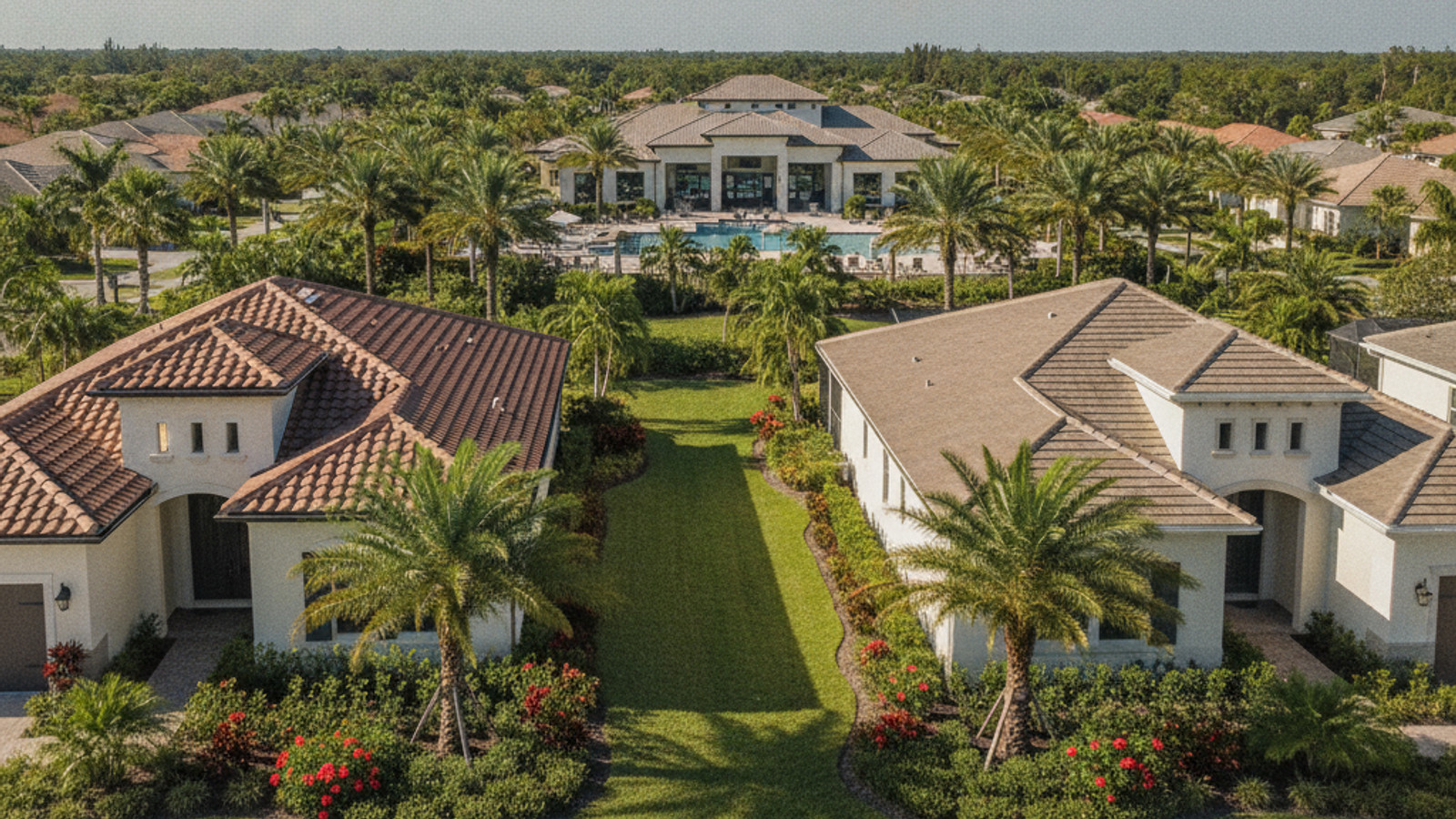
PGA Village is a gated, golf-centric community off I-95 in Port St. Lucie, FL - roughly 2,600 acres with three, and soon four, 18-hole golf courses. It draws buyers who want warm weather and serious recreation, and the numbers reflect steady interest from anyone considering living in PGA Village, FL: the wider 34987 zip code sits at a median home sale price around $444,899, with homes averaging 88 days on the market.
What makes shopping here genuinely complicated is the structure. The community breaks into 34 unique subdivisions, and not all of them are age-restricted. PGA Village Verano is the newer 55+ section, and inside it sits the Cresswind 55+ neighborhood. If you're specifically chasing a retirement community in PGA Village, FL, you'll find single-family homes, townhouses, and condos - but knowing which subdivision you're actually targeting saves a lot of wasted Saturday afternoons.
An Overview of PGA Village, FL Retirement Communities
PGA Village mixes all-ages subdivisions with age-restricted ones. Torrey Pines, Laurels, and Carnoustie are all part of the development, but they're not 55+ enclaves - they're open to buyers at any stage of life. The dedicated active-adult neighborhoods sit in a different corner of the map.
Inventory has held up reasonably well. As of mid-2026, roughly 614 homes were available across the broader 34987 zip code, which gives you room to compare attached villas against large single-family estates with golf course frontage rather than feeling forced into whatever happens to be listed that week.
Types of communities in PGA Village
Most of the 34 subdivisions here are open to residents of any age. The master-planned layout - golf courses, maintained common areas, gated entries - tends to attract retirees regardless of whether a neighborhood carries a formal age restriction, but that's a preference, not a rule.
The dedicated 55 plus communities in PGA Village, FL, Cresswind at PGA Village Verano being the primary example, go a step further. They layer in private clubhouses, fitness centers, and social directors specifically because the residents who live there want organized activities on top of the golf-and-amenities baseline.
Who qualifies (the 80/20 age rule)
This is the part buyers most often misunderstand. The Housing for Older Persons Act (HOPA) is the federal law that makes age-restricted neighborhoods legal, and its core requirement is straightforward: at least 80% of the occupied units must have at least one resident who is 55 or older.
The remaining 20% can technically be occupied by younger residents, but individual HOAs frequently layer their own stricter rules on top of that federal floor. Before you assume anything about a spouse under 55 or an adult child, read the specific HOA bylaws for whichever PGA Village, FL retirement community you're considering. The federal law sets the minimum; the association may have drawn a tighter line.
Housing Options for Seniors in the Area
If you're picturing a traditional continuing-care campus with dining halls and medical staff on-site, PGA Village isn't that. Senior living in PGA Village, FL means independent, active-adult homeownership. The community is zoned and built for residential living - people who own or lease their homes and run their own days.
Buyers who need regular daily assistance typically look just outside the gates into the wider Port St. Lucie or Stuart areas. That distinction matters early in your search, because confusing active-adult housing with assisted care will send you in the wrong direction entirely.
Active-adult and independent living
The 55 and older communities in PGA Village, FL are built around independence. You own or rent your home. You decide how you spend your time. The shared amenities - pools, tennis courts, golf courses - are there when you want them, not on a schedule someone else sets.
What the community does handle for you is exterior maintenance and security. No meals, no transportation, no medical care. If the appeal is a low-maintenance lifestyle where the landscaping gets done and the gates are monitored, this model works well. If you need hands-on support, it won't.
Assisted living and continuing care
PGA Village doesn't include assisted living facilities or Continuing Care Retirement Communities (CCRCs) inside its gates. Memory care, medication management, help with daily tasks - those services live in the surrounding Port St. Lucie area.
If you think you might need tiered care down the road - moving from an independent apartment to skilled nursing as circumstances change - CCRCs in the broader area can offer that progression. Inside PGA Village, the focus stays on independent residential living, full stop.
Featured 55 Plus Communities in PGA Village, FL
The main destination for age-restricted living within the gates is PGA Village Verano. It was developed specifically to give active-adult buyers a distinct experience inside the broader master-planned community - its own identity rather than just a corner of a larger all-ages neighborhood.
Cresswind sits inside Verano and is the enclave aimed squarely at senior buyers. Single-story layouts, open floor plans, finishes designed with older adults in mind - it's built with intention rather than retrofitted.
Luxury and golf-centric subdivisions
Cresswind is the dedicated 55+ option, but plenty of retirees end up in the all-ages luxury subdivisions - Carnoustie and Torrey Pines among them - specifically for the golf course access. These neighborhoods feature larger single-family homes, and residents commonly use private golf carts to move between their homes and the clubhouses.
The honest trade-off is this: Verano gives you the dedicated 55+ programming and the neighbors-at-the-same-life-stage dynamic. Carnoustie and Torrey Pines give you direct course frontage and larger footprints. Buyers searching for the best retirement communities in PGA Village, FL usually land on that comparison before making a decision.
For sale versus for rent properties
Most of what you'll find here is for sale. The 55+ Cresswind section is built around single-family home purchases, and while some owners do lease their properties annually, those are individual private arrangements rather than a coordinated rental inventory.
Dedicated senior apartments in PGA Village, FL are hard to find - the community isn't built around large rental complexes. If you want to rent, expect to lease a house from a current owner, which means prices vary more and availability is less predictable than in a traditional apartment market.
The Cost of 55+ Living in PGA Village
The median sale price in the 34987 zip code, which covers PGA Village Verano, is around $444,899. Homes are selling at about 97% of list price, and there's roughly 5.3 months of inventory available - a market that's reasonably balanced without being a fire sale in either direction.
The purchase price is only part of the picture. This is a gated, master-planned development with serious amenities, and the monthly carrying costs reflect that. Buyers who underestimate the fees often end up surprised by their real monthly number.
Average rent and home prices
For renters, the broader PGA Village area shows an average rent of about $2,187 per month. The PGA Village/Carlton area runs higher, closer to $3,191 on average.
Because the 55+ Cresswind section deals in individual single-family home rentals rather than apartment units, lease prices move around based on the specific home - its size, finishes, whether it has a golf course view or a private pool. There's no standardized rent roll to point to.
HOA dues and community fees
Monthly HOA fees in PGA Village Verano and Cresswind generally run from about $444 to $545, depending on the home type. That covers landscaping, gated security, cable, and clubhouse and amenity access.
On top of that, there's a Community Development District (CDD) fee - reported at around $1,400 per year in some cases - which exists to repay the infrastructure costs of building the neighborhood. It's a separate line item, not folded into the HOA dues, so factor it in when you're running your monthly numbers.
Why Retirees Choose PGA Village
The 34987 zip code carries a cost of living index of 92.2, which is below the U.S. average of 100. The wider Port St. Lucie city index ranges from about 91.5 to 113, putting overall living costs near or slightly below the national average. That's a meaningful baseline for buyers coming from higher-cost markets.
The climate and outdoor access do the rest of the selling. Golf, tennis, and walking trails are available year-round in a way that simply isn't true in most of the country.
Healthcare access
For buyers evaluating over 55 communities in PGA Village, FL, proximity to medical care usually moves near the top of the checklist quickly. Cleveland Clinic Tradition Hospital, located on SW Innovation Way in the 34987 zip code, is the closest major facility - recognized for America's 250 Best Hospitals and America's 100 Best Cardiac Care. HCA Florida St. Lucie Hospital offers a 207-bed acute care facility known for top-tier surgical care and joint replacement. Cleveland Clinic Martin North Hospital adds further options in nearby Stuart, FL.
Having a recognized cardiac care facility essentially in the zip code is not a small thing when you're making a long-term housing decision.
Cost of living for retirees
Florida collects no state income tax. For retirees drawing from pensions, 401(k)s, or Social Security, that matters more year over year than it might seem at first.
Property taxes and insurance premiums in Florida do require careful budgeting - nobody should pretend otherwise. But the relatively moderate home prices in Port St. Lucie help offset those costs. Run your full monthly number: purchase price, HOA fees, the CDD fee, taxes, insurance. That's the real figure you're committing to.
Pros and Cons of Local Active Adult Neighborhoods
An age-restricted neighborhood is a specific lifestyle, and it's the right fit for some buyers and genuinely not for others. Being clear-eyed about that before you're under contract is worth the uncomfortable conversation.
Living in PGA Village means accepting the master-planned trade-off: you get a uniform, well-maintained community standard, and you give up some individual property freedom. That's not a flaw - it's the structure. Whether it works for you depends on what you actually want from daily life in retirement.
Benefits of age-restricted living
The predictability is the primary draw. The rules limit the number of young children living in the neighborhood full-time, and that consistency in the daily environment is exactly what many retirees are after.
The amenities are also calibrated for this stage of life. Clubhouses in PGA Village Verano are oriented around fitness, social clubs, and shared hobbies - the kind of setup that makes it easier to build a social life when you're not spending your days at an office.
Common downsides to consider
HOA enforcement is real. Exterior home colors, landscaping choices, guest parking - these aren't suggestions. If you want to paint your front door an unapproved color or let a family member park an extra car in the driveway indefinitely, expect friction.
The age restriction also cuts both ways for family. If an adult child or grandchild needs to move in permanently, the 80/20 rule and the local HOA bylaws may not allow it. That's not a hypothetical edge case for everyone - it's worth thinking through before you buy.
How to Select and Tour a PGA Village Community
Thirty-four subdivisions across 2,600 acres is a lot of ground to cover without a plan. Before you book anything, decide whether you want the dedicated 55+ environment of Cresswind or an all-ages golf neighborhood. That single decision cuts your list in half and focuses your tours.
A real estate agent who knows the Port St. Lucie market will pull current listings, verify the CDD fees on specific properties, and get you through the security gates. Without one, you're largely on the outside looking in - literally.
Questions to ask the HOA
Ask for the current financials and the reserve study before you make an offer. That document tells you whether the association has enough in reserves to handle road repairs, clubhouse maintenance, and infrastructure work without hitting owners with a special assessment. A thin reserve fund is a yellow flag worth taking seriously.
Get written answers on the pet policy and rental restrictions too. Some subdivisions cap the number of dogs you can own. Others require a minimum lease term if you decide to rent your home out. These aren't details to sort out after closing.
Booking your property tour
PGA Village is gated, which means you can't drive through on your own to check out open houses. You need a registered agent or a resident to call you in through the security checkpoint. Plan accordingly.
Give yourself a full day. Walk the golf clubhouses, spend time at the Verano amenity center, and drive by Cleveland Clinic Tradition Hospital. The lifestyle you're buying into extends well beyond the four walls of whatever house you're considering.
Frequently Asked Questions
Are all the neighborhoods in PGA Village, FL strictly 55+ retirement communities?
No. PGA Village is split into 34 unique subdivisions, and most are open to residents of all ages. The dedicated 55+ section is known as PGA Village Verano, which includes the Cresswind enclave.
Can I buy a home in a PGA Village 55+ neighborhood if my spouse is under 55?
Yes, typically you can. Under the 80/20 rule, only one resident in the household needs to be 55 or older. You should check the specific Cresswind HOA bylaws to confirm their exact age minimums for spouses.
Do HOA fees in PGA Village retirement communities include a mandatory golf club membership?
No. The HOA fees in the PGA Village Verano and Cresswind communities - ranging from $444 to $545 per month - cover landscaping, gated security, cable, and clubhouse access, but golf memberships at the PGA courses are separate.
How do the 55+ communities in PGA Village compare to the active adult neighborhoods in nearby Tradition?
Both offer master-planned living, but PGA Village is strongly focused on golf with three 18-hole courses on 2,600 acres. Tradition offers a more town-center focused layout, though both provide easy access to the nearby Cleveland Clinic Tradition Hospital.
What amenities are actually available for non-golfers retiring in PGA Village?
Non-golfers in the 55+ sections enjoy access to private clubhouses, fitness centers, social clubs, and walking paths. The HOA fees also cover cable and community landscaping, providing a low-maintenance lifestyle outside of golf.
What are the HOA rules for renting out your home in a PGA Village retirement neighborhood?
The 55+ Cresswind section mainly offers single-family homes, and owners can rent them out subject to HOA approval. You must adhere to the community's age restrictions for your tenants and follow any minimum lease term limits set by the association.