


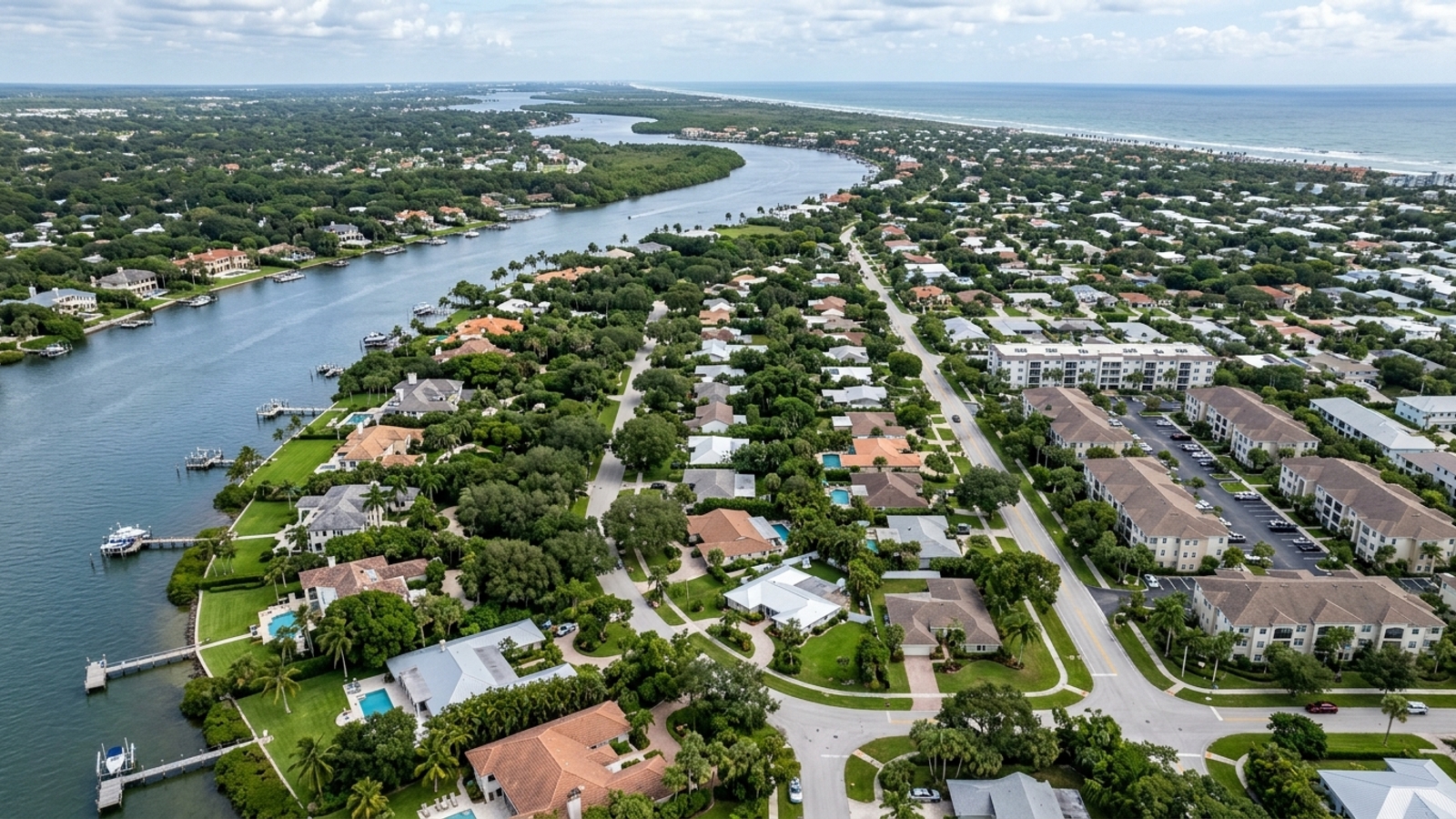
Buyers looking at the Treasure Coast often end up weighing PGA Village in Port St. Lucie against Stuart, FL - two areas separated by the St. Lucie and Martin County lines but offering genuinely different versions of Florida life. Anyone considering living in PGA Village, FL will find a master-planned golf community built around extensive amenities and organized neighborhoods.
Stuart is an established coastal town with a historic downtown and direct access to the St. Lucie River and the Atlantic Ocean. The choice usually comes down to one question: do you want the structured environment of a private club community, or the decentralized, water-oriented layout of a traditional coastal municipality?
Housing Market Trends and Home Prices
Recent data for the 34987 zip code - which covers the PGA Village area - shows a median sale price around $444,899 as of mid-2026. Homes are spending roughly 88 days on the market, with about 5.3 months of supply and over 600 active listings. That's a balanced market. You have time to negotiate, and you're not going to lose a home because you slept on it for a weekend.
Stuart pricing is comparable but more spread out. Local brokerages place the median around $435,000, while listing portals report medians ranging from $383,960 up to $499,900. That wider range reflects what's actually on the ground there - older riverfront estates, mid-century homes, and newer condo developments don't price out the same way, nor should they.
Property Types and Availability
PGA Village is almost entirely master-planned from the ground up. Active listings run from $235,000 villas and townhomes to single-family estates priced over $5 million, with most homes featuring views of the community's 48 lakes or its golf courses. Nearly all are governed by homeowners associations - that's just part of the deal here.
Stuart is a different animal. You can find historic properties near the downtown district, high-rise condos along the waterfront, and traditional single-family subdivisions with no HOA rules. Waterfront properties carry a premium, particularly those with private docks on deep-water canals that lead to the ocean.
Cost of Living and Ongoing Expenses
St. Lucie County and Martin County don't operate the same way on taxes, and that difference matters when you're running monthly numbers. The City of Port St. Lucie approved a municipal millage rate of 4.8750 for the 2026-27 fiscal year, part of a combined millage rate of about 22.85 mills for the county - which works out to a median effective property tax rate of roughly 1.31% for PGA Village residents.
Martin County runs leaner. As of 2025, the combined millage rate was around 15.47 mills, with an effective rate closer to 1.37% after standard homestead exemptions, though some sources place the median effective rate below the state average of 1.10%. Build these numbers into your mortgage calculations before you fall in love with either place.
Homeowners and Flood Insurance Rates
Insurance is where a lot of Treasure Coast buyers get surprised. Florida's Office of Insurance Regulation reported a January 2026 average of $3,522 per year for St. Lucie County, and private quotes for a typical home can range from $4,117 to nearly $8,000 annually.
Martin County runs lower. Average homeowners premiums through Citizens come in around $2,580 per year - generally better than what you'll see quoted in Port St. Lucie. That said, both areas are coastal and laced with canals, so flood insurance belongs in your budget regardless of which side of the county line you land on.
Local Amenities and Recreation
PGA Village is anchored by three championship golf courses - the Wanamaker, Ryder, and Dye courses - plus a six-hole short course and the PGA Learning Center. There's no private beach, but The Island Club serves as the community's main social hub, with a large heated swimming pool, an exercise room, a ballroom, a library, and courts for tennis, pickleball, and basketball. Most residents find they rarely need to leave the gates for daily recreation, and that's largely by design.
Stuart is a different rhythm entirely. Recreation here centers on the St. Lucie River and the historic downtown - public boat ramps, marinas, waterfront dining, and a walkable main street. The infrastructure is public and spread out rather than curated and enclosed.
Waterfront Access and Downtown Stuart
The St. Lucie River connects directly to the Indian River Lagoon and the Atlantic Ocean, which makes Stuart a practical base for offshore fishing and sailing - not just a scenic backdrop. Downtown itself is pedestrian-friendly, with local restaurants, boutique shops, and a community theater along the main corridor.
PGA Village residents who want ocean access or a downtown evening out typically drive south to Stuart or east to Jensen Beach. The community's land use prioritizes golf courses, lakes, and residential lots - not commercial strips or boat slips.
Commuting and Highway Access
Both areas sit near the Interstate 95 and Florida's Turnpike corridors, giving you direct routes to major employment centers in South Florida. PGA Village is located just off I-95 in Port St. Lucie - getting onto the highway from here is straightforward. Driving to Palm Beach International Airport takes approximately 50 minutes.
Stuart sits slightly further east from the main interstate, so residents often use US Highway 1 for local travel and drive west to pick up I-95 or the Turnpike. Drive time to Palm Beach International Airport from Stuart is similar to PGA Village given that Stuart is just south along the Treasure Coast. If you're commuting daily, test your specific route at rush hour before you commit - general drive times only tell part of the story.
Frequently Asked Questions (FAQ)
How do HOA fees in PGA Village compare to typical neighborhoods in Stuart, FL?
PGA Village is a master-planned community where nearly all homes belong to a homeowners association, which funds amenities like The Island Club and common area maintenance. Stuart offers a wider mix of properties, including older neighborhoods and historic districts with no HOA fees at all.
How long is the drive from PGA Village to the beaches and downtown amenities of Stuart?
PGA Village doesn't have its own beach, but Interstate 95 and US Highway 1 provide direct routes south to downtown Stuart and east to nearby Jensen Beach. The drive is a short trip down the highway to reach Martin County's public beaches and waterfront dining.
Are there stricter HOA and rental restrictions in PGA Village compared to Stuart?
Yes. PGA Village enforces specific community rules regarding exterior modifications, parking, and rentals to maintain the master-planned environment. Stuart encompasses many traditional municipal neighborhoods without HOA oversight, which gives owners considerably more freedom regarding property use and leasing.
What are the main differences in home styles and lot sizes between PGA Village and Stuart?
PGA Village features modern villas, townhomes, and large single-family estates designed around 48 lakes and golf courses. Stuart provides a more eclectic mix - historic riverfront estates, mid-century single-family homes, and high-rise waterfront condos.
Do I have to buy a golf club membership to live in PGA Village, FL?
No. A golf club membership is not required to purchase a home in PGA Village. All residents have access to The Island Club's pool, fitness center, and sports courts through their standard community fees, while golf memberships at the Wanamaker, Ryder, and Dye courses are optional.
Which area offers a better lifestyle for boaters versus golfers: PGA Village or Stuart, FL?
Stuart is the clear choice for boaters, with direct access to the St. Lucie River, public marinas, and the Atlantic Ocean. PGA Village caters primarily to golfers through its three championship courses and the PGA Learning Center, though it lacks navigable waterways for large boats.