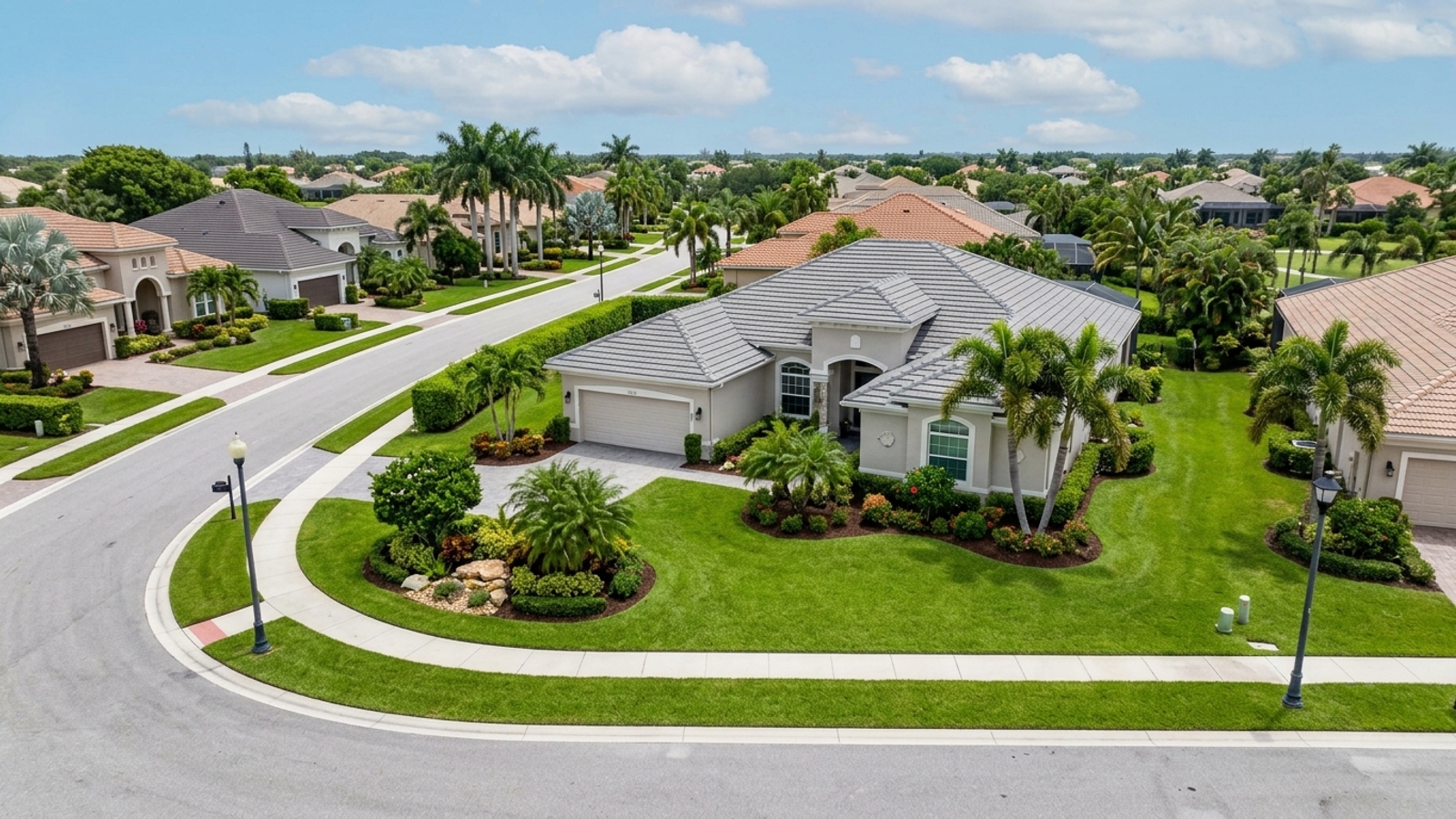
PGA Village is a master-planned community located entirely within the municipal borders of Port St. Lucie, FL. Buyers regularly weigh the specific lifestyle of living in PGA Village, FL against the broader range of housing options available throughout the rest of the city - and the distinction matters more than you might expect. It's not really a comparison between two separate places. It's a comparison between two very different ways of owning property in the same place.
Port St. Lucie covers a massive footprint in St. Lucie County, offering everything from older, non-HOA neighborhoods to large new developments like Tradition. PGA Village is a specific subset of that market, defined by private amenities, binding community rules, and immediate access to golf facilities. Before you make an offer anywhere in this city, you'll want a clear-eyed look at what your monthly carrying costs actually add up to - and how much community governance you're comfortable living under.
Choosing Between PGA Village and the Broader City
The broader Port St. Lucie market currently holds an inventory of about 614 available homes with an overall median sale price of $444,899. PGA Village represents a specific slice of that inventory, built around a structured, amenity-rich environment that not every buyer needs or wants.
The wider city is a patchwork of different zoning rules and neighborhood styles. You can purchase a home with no homeowners association at all - park a boat in the driveway, build a custom fence, handle your property the way you see fit. Other parts of Port St. Lucie have smaller, localized HOAs with modest monthly dues and basic shared maintenance. Neither option looks anything like what PGA Village offers.
PGA Village runs on a different model entirely. Governance and amenities aren't add-ons here - they're central to what you're buying. Living here means agreeing to uniform community standards covering exterior home maintenance, landscaping, and parking. That's the deal.
The choice usually comes down to one question: how much control do you want over your property versus how much shared infrastructure do you want to access? Buyers who prioritize community pools, guard gates, and consistent streetscapes tend to focus their search inside PGA Village. Those who prefer fewer restrictions, or just lower fixed monthly costs, generally look elsewhere in Port St. Lucie.
Housing Market Trends and Available Property Types
Homes in the 34987 zip code, which includes parts of this market, are sitting for a median of 88 days before going under contract. They're also selling at about 97.5% of list price, which means you have some room to negotiate - not a lot, but some.
The housing stock across Port St. Lucie runs a wide spectrum. Concrete block homes built in the 1980s sit alongside brand-new construction in large developments. That variety gives you real flexibility depending on your layout needs and how much renovation work you're willing to take on.
Inside PGA Village, the property types are more consistent, though you still have distinct choices. The community mixes single-family homes, attached villas, and condominiums. New construction is available in sections like PGA Village Verano, where you can buy into modern energy standards and updated floor plans if that's what you're after.
Home Prices and Local Inventory
Across the broader Port St. Lucie market, median sale prices run between $315,000 and $400,000 depending on the specific neighborhood and property type. That's your entry point if you want a standard single-family home without the premium community add-ons.
PGA Village runs higher. Homes there range from roughly $230,000 for smaller condos up to $4.9 million for luxury estates, with a median sale price around $458,000. You're paying for gated living and golf course proximity, and that premium is built into the price.
Homeowner Associations and Single-Family Options
Outside the master-planned developments, many Port St. Lucie single-family homes sit on quarter-acre lots with no HOA oversight. You handle your own landscaping, you avoid the monthly association bill, and nobody's telling you what color to paint your shutters.
Inside PGA Village, every property falls under at least one homeowners association. Condos and townhomes offer exterior maintenance handled by the association. Single-family homes still require owners to maintain their lots - just to community standards rather than their own.
Carrying Costs and Monthly Budgets
St. Lucie County levies a total millage rate of about 22.85 mills (based on 2025 figures). That's currently the highest county rate in Florida, and it's a number you need to take seriously when you're running your monthly budget.
Because PGA Village sits inside the city limits, everyone there pays the same base tax rates as the rest of Port St. Lucie. The city's municipal millage rate is set at about 4.97 mills, layered on top of county, school district, and special district portions to produce the final tax bill. No difference there between PGA Village and any other Port St. Lucie address.
The real budget gap between the two areas is mandatory association dues. Outside PGA Village, you can find neighborhoods with zero HOA fees or minimal annual dues of a few hundred dollars - which keeps your fixed monthly housing costs meaningfully lower. Inside PGA Village, those obligations are substantially higher and vary by subdivision.
Property Taxes and Millage Rates
Florida property taxes reset when a home sells. Your tax bill will be based on your purchase price, not whatever capped rate the seller was paying. Don't look at last year's tax bill and assume it's yours.
Since both PGA Village and the surrounding Port St. Lucie neighborhoods share the same 22.85 millage structure, the differences in tax bills come down entirely to assessed value. A $458,000 home in PGA Village will generate a similar tax bill to a $458,000 home anywhere else in the city, assuming equal exemptions.
HOA Dues and Homeowners Insurance
General PGA Village HOA fees typically run between $480 and $545 per month. In the newer PGA Village Verano section, fees range from $444 to $650 per month. Some phases also carry additional sub-association or club dues on top of that - Village Emilia runs $1,205 quarterly, and Club Verano runs $572.47 quarterly. Read the disclosures carefully.
Homeowners insurance is another significant piece of the Florida cost picture. Port St. Lucie is coastal, but properties further inland - like those in PGA Village - may carry different flood zone designations than homes east of US Highway 1. Get your insurance quotes during the inspection period. Don't guess at that number.
Commutes, Accessibility, and Area Amenities
PGA Village sits just off Interstate 95, which makes regional travel straightforward. The broader Port St. Lucie area spans both sides of Florida's Turnpike and I-95, with multiple access points depending on where exactly you're coming from.
Location shapes daily life in ways that aren't obvious until you're actually living it. Neighborhoods in eastern Port St. Lucie are closer to US Highway 1 and the Atlantic beaches, but you'll spend more time grinding through local traffic to reach the major interstates. PGA Village and the western developments flip that - fast highway access, but a longer drive to the coast. Neither is wrong; they just favor different daily routines.
Highway Access and Airport Drives
Because PGA Village is right off I-95, drive times to major airports are essentially the same as anywhere else on the western side of Port St. Lucie. Palm Beach International Airport (PBI) is roughly 45 to 50 minutes south, covering about 50 to 56 miles. Orlando International Airport (MCO) is about 90 minutes north, around 115 miles. If you travel frequently, that interstate proximity matters. If beach access is your priority, the eastern neighborhoods have the better position.
Golf Courses, Parks, and Shopping
Port St. Lucie has municipal parks, boat ramps, and commercial shopping scattered throughout the city. Residents in non-HOA neighborhoods rely on those public facilities for outdoor recreation and daily errands - and they're generally adequate.
PGA Village is built around the PGA Golf Club, with immediate access to multiple championship courses. The broader city has its own golf options, but PGA Village residents have those specific facilities and private community clubhouses right outside their door. If that access is driving your search, it's a real differentiator.
Frequently Asked Questions
How much higher are the HOA fees in PGA Village compared to standard Port St. Lucie neighborhoods?
They're significantly higher. Standard Port St. Lucie neighborhoods often carry no HOA fees at all, or charge minimal annual amounts. PGA Village fees run from $480 to $650 per month, and some subdivisions layer additional quarterly club dues on top of that.
Do I have to buy a golf club membership to purchase a home in PGA Village, FL?
No. Buying a home in PGA Village doesn't automatically require a golf membership at the PGA Golf Club. You'll pay mandatory HOA and property owners association dues, but golf memberships are handled separately.
What are the short-term rental restrictions in PGA Village versus non-HOA parts of Port St. Lucie?
It depends on the specific neighborhood. Non-HOA parts of Port St. Lucie follow municipal guidelines, which generally allow more flexibility for rentals. PGA Village enforces binding community association rules that typically restrict or regulate short-term rentals to maintain neighborhood consistency.
Do PGA Village residents get free access or resident discounts to the public PGA Golf Club courses?
No. Living in PGA Village doesn't grant free access to the PGA Golf Club. The club operates independently of the residential homeowners association, though residents obviously have the convenience of living right next to the facilities.
How does the resale value of homes in PGA Village compare to newer Port St. Lucie communities like Tradition?
Both areas hold their value, but they attract different buyers. PGA Village homes carry a median sale price around $458,000 and appeal to buyers focused on golf and established amenities. Newer communities like Tradition offer modern construction and different commercial integrations, keeping their neighborhood prices competitive within the broader city market.
Is PGA Village fully gated, and how does its security differ from the rest of Port St. Lucie?
Yes, PGA Village has manned security gates for its residential sections. Most standard Port St. Lucie neighborhoods are open to public streets - no gated entry. If restricted access matters to you, that's one of the clearest differences between the two options.