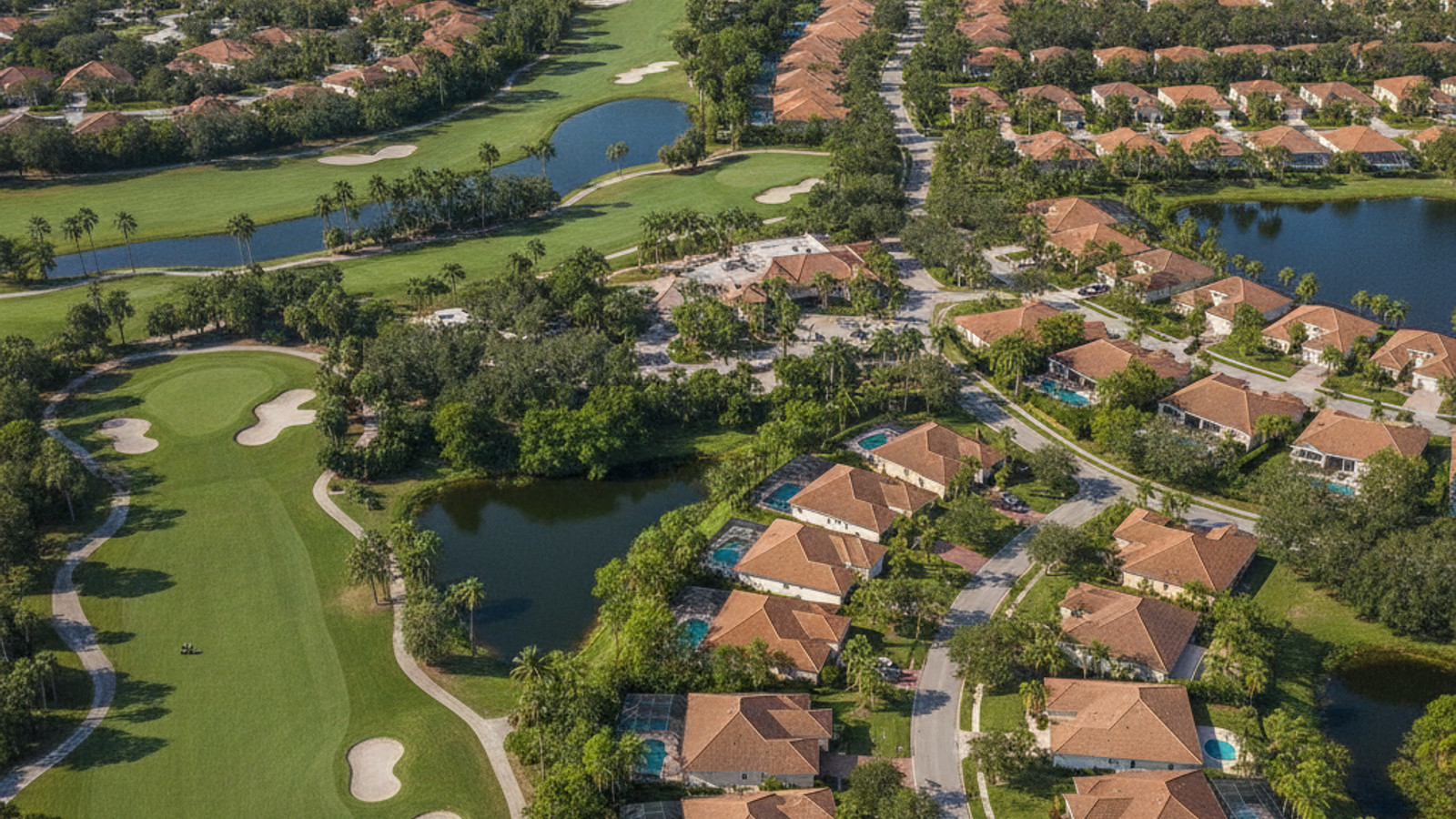
PGA Village sits on Florida's Treasure Coast - a planned community built around championship golf that has grown, over the past three decades, into something considerably more than that. Developed in the 1990s, it started as a specialized golf resort concept and expanded into a large residential footprint that still operates very much the way its original designers intended. For those considering living in PGA Village, FL, its origins provide valuable context.
If you're looking at the numbers right now, the median sale price is around $445,000, homes are spending roughly 88 days on the market, and there are over 600 active listings to work through. That's a genuine buyer's market in terms of selection. Knowing the history of PGA Village, FL - how it was built, who built it, and why - helps explain why the layout, the amenities, and even the HOA structure look the way they do today.
PGA Village at a Glance
This is an unincorporated master-planned development, not an independent municipality. The PGA of America partnered with Kolter Homes to build out the residential sections alongside the golf facilities, and the community officially opened in 1996.
Since then, it has expanded to include thousands of homes, multiple clubhouses, and enough golf infrastructure to draw players from across the country on a regular basis.
Is PGA Village a City or a Neighborhood?
It's a neighborhood, not a city. PGA Village is an unincorporated community within the Port St. Lucie metropolitan area, which means residents rely on county services for utilities and public safety rather than a local municipal government.
Day-to-day governance of the private roads, gates, and shared amenities falls to the master homeowners association - that's the entity buyers will be dealing with, not a city hall.
Where PGA Village Sits Within the Treasure Coast
Location shapes daily life here more than almost anything else. The community sits entirely within St. Lucie County on Florida's eastern coastline, just west of Interstate 95. That placement gives commuters direct highway access and puts the community squarely inside the Port St. Lucie metro area - the stretch of coastline known as the Treasure Coast.
County Lines and Metropolitan Connections
One thing worth knowing: unlike some large developments that straddle municipal boundaries, PGA Village is contained within St. Lucie County. There are no split tax districts, no confusing school zoning lines that cross into a different county. What you see on the map is what you get.
Being close to Port St. Lucie means quick access to larger medical centers and retail. The Atlantic beaches are about a half hour away, depending on traffic on the local state roads.
How the Community Got Its Name
The name is straightforward - it comes directly from who built it and why. The Professional Golfers' Association of America wanted a flagship destination for its members and the public, and they branded the area to reflect that ownership.
The "Village" portion was intentional. It was meant to signal that this would be a complete residential community, not just a standalone golf course dropped in the middle of St. Lucie County.
The Meaning Behind the Initials
PGA stands for the Professional Golfers' Association - same meaning internationally, and non-English speakers generally just use the English acronym. The name functions as a permanent trademark for the area and makes the neighborhood's primary recreational focus immediately clear to anyone looking at a map of South Florida.
Founding and Timeline of the Development
The conceptual work started in the early 1990s, when the PGA of America was looking for a winter base and a public-facing resort. Acquiring land and laying out the footprint for multiple 18-hole courses with surrounding housing is not a small undertaking - it took years of planning before anything opened.
PGA Golf Club and the initial phases of PGA Village opened to the public in 1996. Kolter Homes came on as the master developer to build out the residential neighborhoods that weave through the fairways.
From 1996 to Today
The late 1990s and early 2000s were years of rapid construction - single-family homes, townhouses, golf villas, the full range. The original sections set the architectural standards that newer phases eventually followed. Over the past three decades, the community matured into a fully realized residential hub.
The PGA of America eventually shifted some of its national headquarters operations elsewhere, but the PGA Village footprint is a permanent fixture in St. Lucie County. That's not going to change.
Historic Sites, Golf Landmarks, and Museums
The history here is relatively modern, so you're not going to find centuries-old architecture. The landmarks are built around the sport that created the community.
The main draw is the PGA Golf Club at PGA Village, which features 54 championship holes across the Wanamaker, Ryder, and Dye Courses - designed by Tom Fazio and Pete Dye.
Exploring Local History Today
Inside the clubhouse area, the PGA Gallery is worth a walk-through. It displays golf history through trophies, vintage equipment, and memorabilia from the sport's past.
For broader regional history, you'll need to go slightly outside the neighborhood. The A. E. Backus Museum & Gallery in Fort Pierce and the Elliott Museum in Stuart both offer substantial exhibits on the Treasure Coast's past.
What the Area is Known For
Golf drives the local culture and the local economy. The 54 holes at PGA Golf Club are the main economic engine and the primary reason buyers from out of state even look at this area in the first place.
Beyond the fairways, the community is known for its carefully maintained streetscapes and the scale of its master-planned layout - one that prioritizes golf course views and natural water features over commercial density.
Local Specialties and Culture
PGA Village is a modern planned community, not an old incorporated town, so there's no specific historical local cuisine and no famous founding resident. The culture is built entirely around resort-style living and seasonal recreation - that's the honest answer.
Buyers moving here are looking for exactly that lifestyle. With about 5.3 months of housing supply currently on the market, you have real time to find something that fits precisely what you're after.
Frequently Asked Questions
What years were the different neighborhoods in PGA Village built?
It depends on the subdivision. The original PGA Village neighborhoods opened starting in 1996, with additional phases added by Kolter Homes throughout the 2000s and beyond.
How have the PGA Village HOA fees and membership requirements evolved since the community opened?
The master homeowners association manages the gates and shared amenities, and fees have adjusted over time to cover maintenance costs. Specific fees vary by subdivision, so review the current HOA documents for any property you're seriously considering.
How do the original PGA Village neighborhoods compare to the newer PGA Village Verano development?
The original 1996 neighborhoods are deeply integrated with the PGA Golf Club courses. Newer developments tend to feature updated architectural styles and their own separate amenity centers.
What are the common insurance or inspection hurdles when buying one of the original 1990s homes in PGA Village?
Homes built in the 1990s often need roof replacements or updated HVAC systems. You'll also want to verify whether the home meets current Florida windstorm insurance requirements before you close.
Did the sale of the PGA Golf Club courses change the membership eligibility for PGA Village residents?
Golf memberships and HOA dues are generally separate in this community. Check directly with the PGA Golf Club for current membership availability and resident rates.
Which of the original PGA Village communities were zoned for short-term rentals, and is it still allowed?
Some of the original golf villas were designed to accommodate short-term visitors. Rental rules are enforced at the association level, so you'll need to check the specific HOA bylaws for any property before assuming that's an option.