


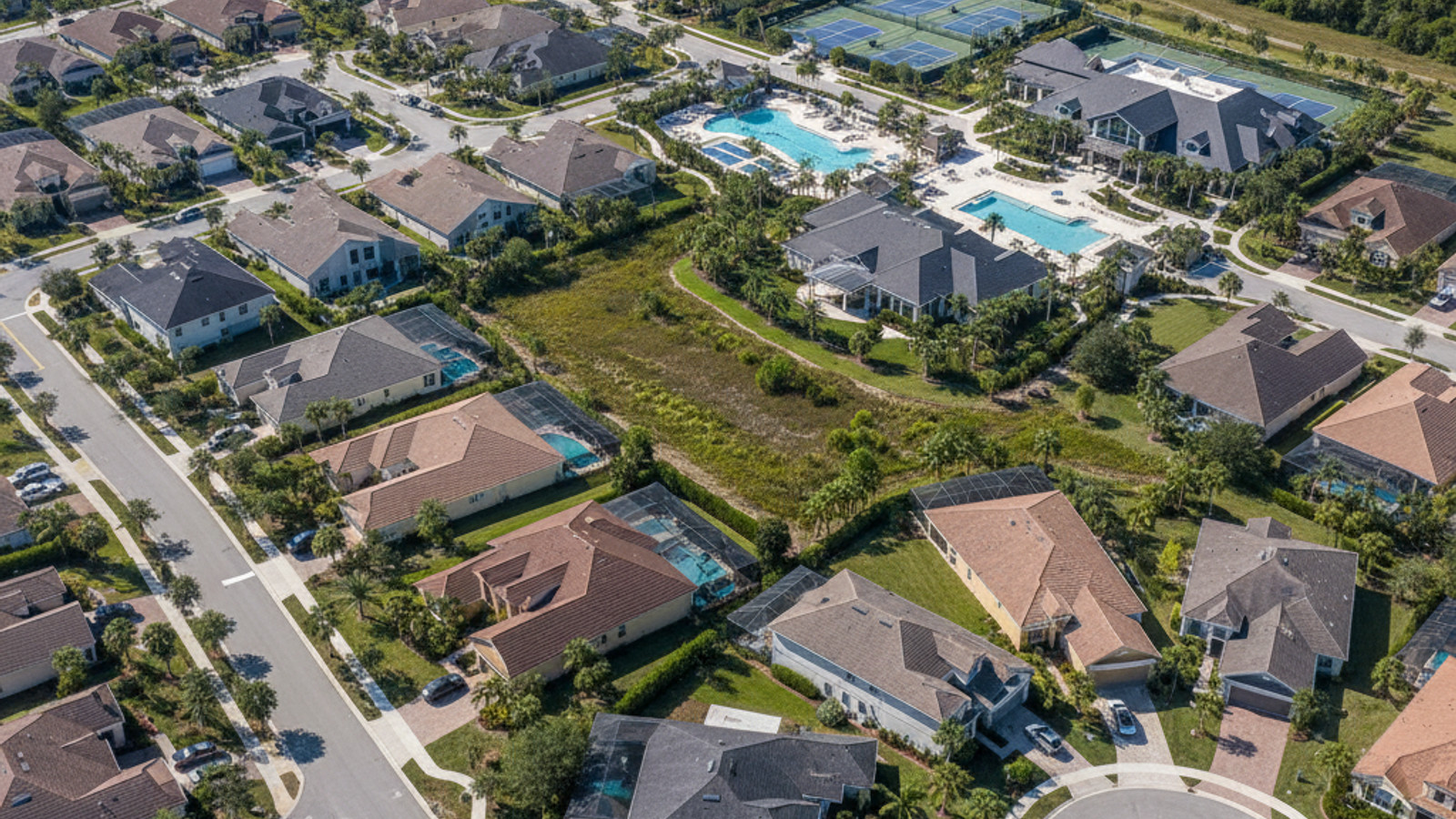
Buyers moving to Port St. Lucie, FL often look closely at the master-planned communities along the Treasure Coast. The cost of living in PGA Village Verano, FL breaks down into several distinct categories, from base home prices to monthly community fees. Built by Kolter Homes, this neighborhood offers a mix of new construction properties and resale homes.
Understanding the full financial picture means looking beyond the purchase price. Residents pay St. Lucie County property taxes, a Community Development District (CDD) fee, and monthly homeowner association dues. These recurring costs fund the manned gate, landscaping, and the massive amenity center at the heart of the neighborhood.
Home Prices and Property Taxes
Home prices in PGA Village Verano start in the mid-$300,000s for attached villas. Larger single-family homes range from roughly $475,000 to over $1,000,000 as of early 2026. Buyers can choose between move-in ready resale homes and new construction properties being finished by Kolter Homes.
The property tax rate in Port St. Lucie, FL plays a major role in monthly housing budgets. The total millage rate for the Port St. Lucie area sits at roughly 22.36 mills. Buyers should factor this rate into their mortgage calculations when estimating their total monthly payment.
Florida does not have a state income tax, which often offsets the property tax burden for buyers coming from out of state. Assessed values for tax purposes frequently reset after a home sale. A local real estate professional can help you estimate the exact tax bill for a specific listing based on current county data.
Monthly HOA and Community Development Fees
Homeowners in this community pay between $502 and $600 per month in HOA dues. The exact amount depends on the specific phase of the neighborhood and the size of the lot. These fees cover a wide range of services that lower out-of-pocket expenses for residents.
The HOA dues bundle several standard household bills into one payment. High-speed internet, basic cable, and home alarm monitoring are all included. The association also handles lawn care, common area maintenance, and the staffing for the manned security gate.
Buyers must also pay a Community Development District (CDD) fee. This fee repays the bonds used to build the community's initial infrastructure, like roads and water lines. The CDD charge does not get paid monthly; instead, it appears as a line item on the annual St. Lucie County property tax bill.
Club Talavera and Golf Access
Club Talavera serves as the central hub for amenities, offering 40,000 square feet of total indoor space. The facility is divided into a 27,000-square-foot social clubhouse and a 13,000-square-foot fitness center. Residents have access to an indoor lap pool, an outdoor resort-style pool, and dedicated aerobics studios.
The outdoor sports complex includes one of the largest private pickleball centers in South Florida, featuring 27 courts. Residents also use the Har-Tru tennis courts and bocce ball facilities. These amenities are fully funded by the monthly HOA dues, meaning residents do not pay extra daily usage fees.
While the neighborhood borders the PGA Golf Club, membership to the golf facility is optional. The club features 54 holes of championship golf, and residents can choose to pay for daily play or purchase a separate membership. You do not have to be a golfer to live in the community, and non-golfers do not subsidize the golf courses through their HOA fees.
Monthly Utility Bills
Florida Power & Light (FPL) provides electricity to homes in Port St. Lucie, FL. Because the HOA covers internet and cable, electricity and water are the primary utilities residents pay directly. South Florida's climate requires year-round air conditioning, which makes up the bulk of the monthly power bill.
A typical single-family home in this area sees electric bills ranging from $120 to $250 per month, depending on the season and the home's square footage. Newer Kolter Homes properties feature modern insulation and energy-efficient HVAC systems. These construction standards help keep cooling costs predictable during the warmer summer months.
Port St. Lucie Utility Systems handles water and sewer services for the neighborhood. Most households can expect their combined water and sewer bill to run between $60 and $90 per month. Trash and recycling collection are managed by the city and billed separately or rolled into local tax assessments.
Distances to Healthcare and Retail
Cleveland Clinic Tradition Hospital is located less than five miles from the community gates. This major medical campus provides emergency services, specialized care, and routine medical offices. The proximity to this hospital is a major draw for buyers relocating to the area.
For regional travel, residents have immediate access to Interstate 95. Florida's Turnpike is also just a short drive away, providing a direct route south to West Palm Beach and Miami or north to Orlando. Palm Beach International Airport is roughly a 45-minute drive from the neighborhood.
Everyday shopping is concentrated just outside the community along Crosstown Parkway and Tradition Parkway. Residents can reach Publix, Target, and various local restaurants within a ten-minute drive. The broader St. Lucie County area offers large retail centers and big-box stores for major purchases.
Everyday Expenses on the Treasure Coast
Groceries in Port St. Lucie, FL generally align with the national average. A two-person household can expect to spend between $500 and $700 per month on food, depending on dining habits. Local farmers' markets and discount grocers provide options for keeping this budget lower.
Vehicle expenses form another major part of the local cost of living. Auto insurance rates in Florida are higher than in many other states due to weather risks and local traffic density. Buyers should request a quote from their insurance provider before moving to accurately project their monthly auto costs.
Entertainment on the Treasure Coast revolves around outdoor activities and water access. Parking at many local beaches is free or low-cost, and regional parks offer miles of walking trails. Dining out at local seafood restaurants or attending seasonal festivals will round out the discretionary budget.
Frequently Asked Questions
Is PGA Village Verano a gated community?
Yes, the neighborhood features a manned security gate. The cost of staffing and maintaining this entrance is included in the monthly HOA fees.
Are golf memberships required for residents in PGA Village Verano?
No, golf club membership is completely optional. Residents can enjoy the neighborhood's pools, fitness center, and pickleball courts without ever paying for access to the adjacent PGA Golf Club.
What is the recommended income to live comfortably in PGA Village Verano?
A household income of $80,000 to $120,000 is generally sufficient to cover a mortgage, HOA fees, property taxes, and standard living expenses here. This estimate assumes a standard down payment on a median-priced home of $475,000.