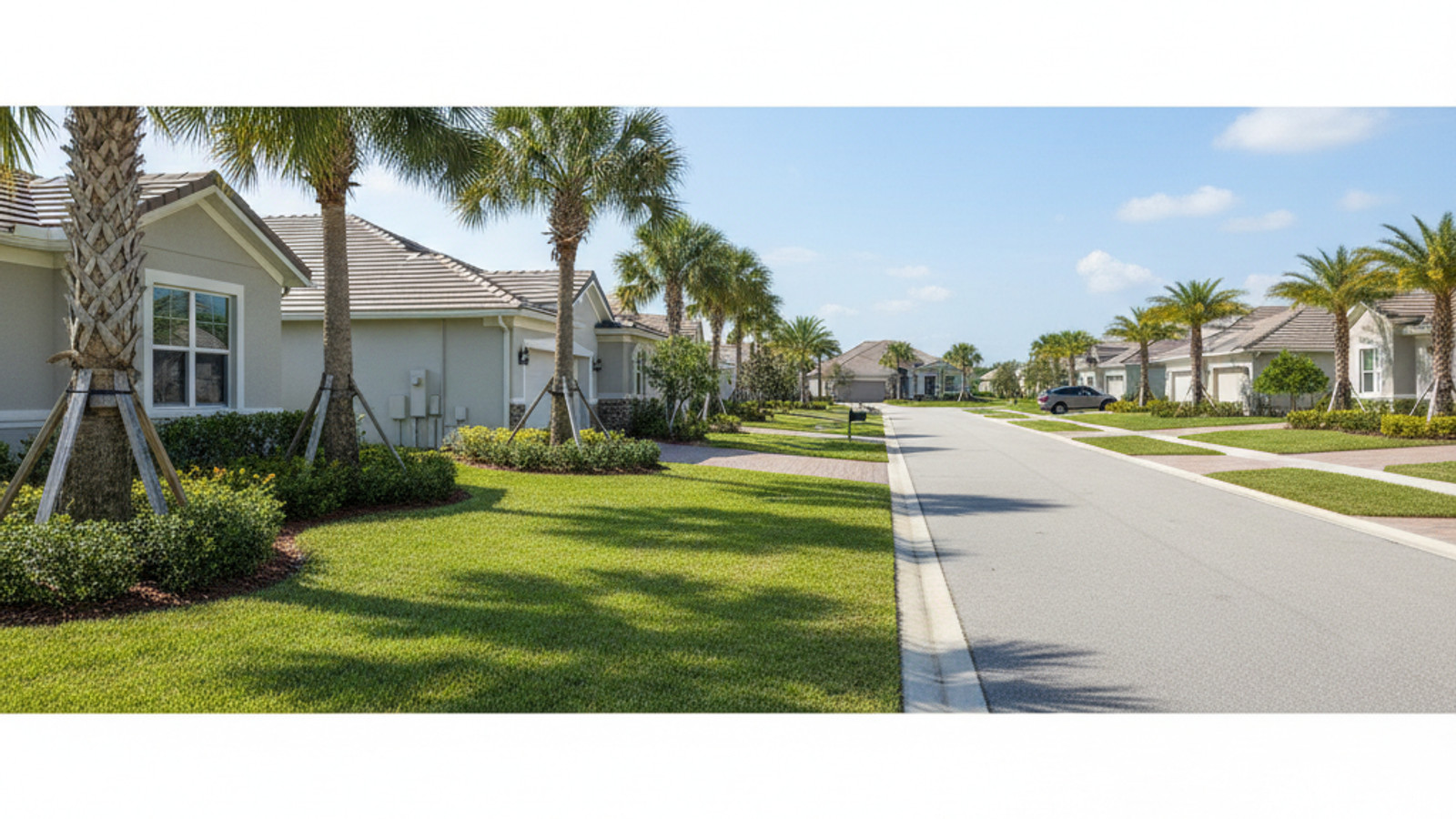
The Treasure Coast sees around 230 sunny days each year. Buyers looking at homes in Port St. Lucie, FL often ask how the local environment shapes daily life and property maintenance.
The Weather and Climate in PGA Village Verano, FL plays a major role in how the community operates. From the concrete block structure of the homes to the indoor layout of the amenities, the neighborhood accommodates the realities of South Florida.
Understanding these seasonal shifts helps buyers plan their moves and manage their expectations. Knowing what the sky will do from month to month makes transitioning to a subtropical environment much easier.
Port St. Lucie Temperature and Rainfall Patterns
Average high temperatures in Port St. Lucie range from 74 degrees in January to 91 degrees in July and August. Winter lows rarely drop below 51 degrees, keeping the area comfortable during the colder months.
The region operates under a humid subtropical climate. Humidity levels remain elevated for most of the year, pushing the heat index higher than the actual air temperature during the summer. Buyers moving from northern states should prepare for this constant moisture in the air.
Ocean breezes from the nearby Atlantic provide some natural cooling during the late afternoon. This airflow helps moderate the coastal temperatures compared to inland areas of the state.
The area receives about 60 inches of rain annually. This precipitation keeps the local vegetation green but requires homes to have proper drainage systems.
Managing the Wet and Dry Seasons
The South Florida calendar divides into two distinct weather patterns rather than four traditional seasons. The dry season runs from November through April, bringing lower humidity and mild temperatures. During this stretch, the area averages just two to four inches of rain per month.
The wet season begins in June and extends through September. Residents expect daily afternoon thunderstorms that drop six to eight inches of rain per month. These storms usually pass quickly, leaving clear skies by the late afternoon or early evening.
These seasonal shifts dictate outdoor schedules around the community. Golfers playing the 54 holes of championship golf at the PGA Golf Club often book early morning tee times during the summer to avoid the afternoon rain.
When the weather turns, residents move their activities indoors. The community design anticipates these shifts so that daily recreation does not stop for a thunderstorm.
How Club Talavera Supports Year-Round Activity
Club Talavera features a 27,000-square-foot social center and a 13,000-square-foot fitness center. The Kolter Homes master-planned community centers around these facilities to ensure weather never halts physical activity.
The amenity campus provides options for both sunny days and heavy rain. Golf cart paths connect the residential neighborhoods directly to the clubhouse, making it easy to access the facilities without driving a car.
Residents have access to multiple recreation spaces depending on the forecast:
-
A 27-court pickleball center operates as the largest private facility of its kind in South Florida, serving as a primary gathering spot during the dry season.
-
The outdoor resort-style pool provides a place to cool off during the hottest summer afternoons.
-
An indoor Junior Olympic lap pool allows for aquatic exercise even when lightning is spotted in the area.
-
The indoor fitness center provides climate-controlled workout space when afternoon heat peaks.
Florida Building Codes and Hurricane Readiness
The Atlantic hurricane season runs from June 1 through November 30 each year. Port St. Lucie sits on the eastern coast of Florida, meaning residents prepare for potential tropical cyclones.
Modern Florida building codes govern all construction within this master-planned community. Builders construct these single-family homes and villas with concrete block walls to withstand high winds.
Properties include impact-resistant windows and reinforced roofs as standard features. These structural elements eliminate the need to hang manual hurricane shutters when a storm approaches.
The homes also feature energy-efficient designs to combat the long cooling season. High-efficiency air conditioning units run constantly from May through October to manage both temperature and indoor humidity.
Medical access remains a priority during extreme weather events. Cleveland Clinic Tradition Hospital is located about 8.5 miles from the neighborhood, providing emergency services to the area.
Low-Maintenance Living on the Treasure Coast
The combination of heat, humidity, and rain creates a fast-growing environment for local landscaping. Managing a yard in South Florida takes consistent effort throughout the year.
The homeowners association handles lawn care and landscaping maintenance for residents. This service removes the burden of doing yard work during the hottest parts of the summer. Buyers appreciate the ability to lock and leave their homes without worrying about overgrown grass.
The community layout places residents near major transportation routes. Interstate 95 sits just outside the neighborhood, offering a straight path to West Palm Beach or Miami. This makes traveling to airports or nearby beaches simple regardless of the season.
Frequently Asked Questions
Does PGA Village Verano flood during hurricanes?
The community utilizes modern elevation and grading standards to move water away from homes. An extensive network of retention ponds captures excess rainfall during severe storms. These engineered drainage systems keep residential streets passable and protect property foundations.
Are there indoor activities at PGA Village Verano when it rains?
Club Talavera hosts indoor events, card games, and fitness classes throughout the week. The indoor lap pool and massive fitness center provide ample space for exercise when summer storms roll in. Residents can maintain their daily routines without stepping outside.
How close is the nearest hospital to PGA Village Verano?
Cleveland Clinic Tradition Hospital sits approximately 8.5 miles away from the community entrance. The drive takes about 15 minutes under normal traffic conditions. This proximity provides quick access to emergency care and specialized medical services.