


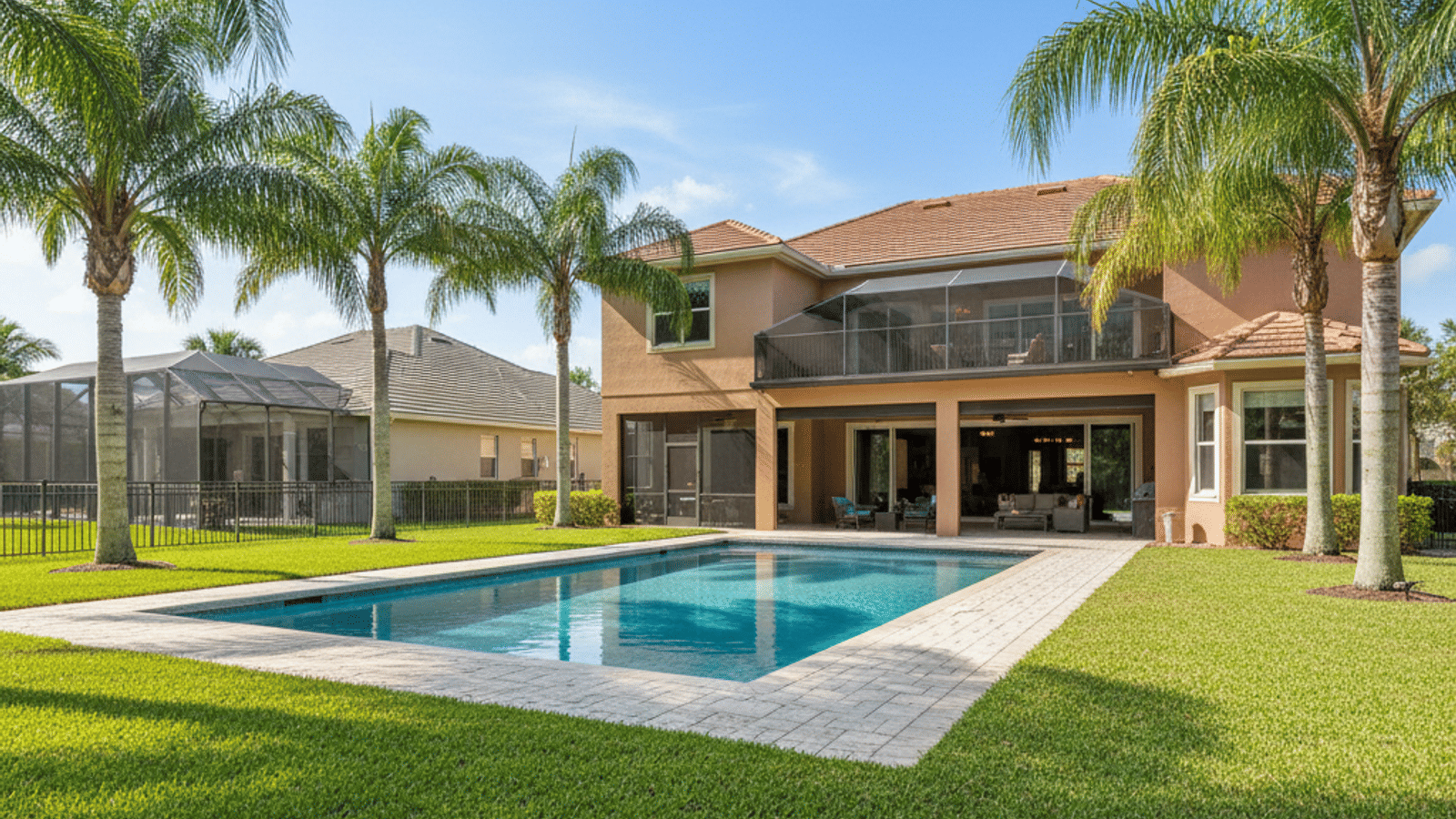
If you’re thinking about putting your house on the market this year, you’ve probably noticed that things feel a little different than they did just a few years ago. The frenzy of "stick a sign in the yard and get five offers by noon" has cooled off, and we are seeing a return to a more normal, balanced real estate cycle here on the Treasure Coast.
Whether you are looking to downsize from a large pool home in St. Lucie West, move closer to the water, or cash out an investment property, understanding the current landscape is the first step toward walking away with the most money in your pocket. This guide will walk you through exactly what to expect when you decide to sell my home in Port St. Lucie FL in the current climate.
The Port St. Lucie Real Estate Market: What Sellers Need to Know (2026 Update)
Let's be honest about the numbers. The market is shifting from a pure seller’s market to a more balanced environment, and in some neighborhoods, it’s even leaning slightly toward buyers. Inventory levels have risen, meaning there are simply more homes for buyers to choose from today than there were recently. When inventory climbs above a 6-month supply, buyers can afford to be choosier, and that means your strategy needs to be sharper.
This shift impacts how long it takes to sell. While we used to see homes fly off the shelf in days, the current Days on Market (DOM) average is settling closer to the 50–90 day range. That is a normal timeline for a healthy market, but it can feel slow if you’re expecting overnight results. Patience and persistence are key right now.
Prices have also stabilized. We aren't seeing the skyrocketing appreciation of the past, but we aren't crashing either. Median home prices are hovering comfortably in the $380,000 – $415,000 range. The biggest risk for sellers right now is overpricing. In a market with more options, an overpriced home tends to sit stale, while correctly priced properties still move efficiently. Getting a precise number from a local market report is safer than guessing based on what your neighbor got two years ago.
7 Steps to Sell Your Home in Port St. Lucie
Selling a house in Florida has a specific rhythm to it. Here is the roadmap we usually follow to get from "thinking about it" to the closing table.
1. Strategy & Pricing
It starts with the numbers. Many sellers rely on automated estimates from big websites, but those algorithms often miss local nuances—like the difference between a custom pool home in a gated community versus a standard lot in a non-HOA street. We use a Comparative Market Analysis (CMA) to look at what has actually sold nearby, not just what is listed.
2. Preparation
Florida buyers want "light, bright, and airy." We usually recommend decluttering heavily to make the rooms feel larger. If you have heavy drapes, take them down to let that sunshine in. It’s about selling the Florida lifestyle, not just the square footage.
3. Marketing
Cell phone photos won't cut it anymore. Professional photography is non-negotiable, and if you have a waterfront property or a large lot in the equestrian areas, drone shots are essential. You need to grab a buyer's attention within seconds of them scrolling through a listing app.
4. Disclosures
Florida law is strict about transparency. Under the Johnson v. Davis ruling, sellers must disclose any known material defects that aren't obvious to the buyer. This means filling out the standard Seller’s Property Disclosure form honestly. If the roof leaked in 2021 and you fixed it, disclose it. It protects you from lawsuits later.
5. Showings & Open Houses
If you live in a gated community like PGA Village or Tradition, logistics matter. We have to ensure buyers can get through the gate ease, which requires coordination. In non-gated areas, access is easier, but you still want the home "show-ready" at all times.
6. Negotiating Offers
The highest price isn't always the best offer. We look closely at contingencies. A cash offer might be slightly lower but closes in two weeks with zero risk, whereas a higher offer with a financing contingency could fall through if the appraisal comes in low.
7. Closing
Once we navigate the inspection period and the buyer gets their loan approval, the title company handles the transfer. You’ll sign the deed, hand over the keys, and the proceeds are wired to your account.
When Is the Best Time to Sell in Port St. Lucie?
Real estate on the Treasure Coast has a distinct seasonality driven by our weather and our demographics.
The "Snowbird" effect is very real here. Our market often heats up in winter (November through April) when northern buyers and retirees flock down to escape the cold. They are here, they are looking, and they are often ready to buy cash.
However, the traditional peak for getting the highest price and fastest sale is usually March through May. This catches the tail end of the snowbird season and the beginning of the spring buying rush for locals.
Conversely, late summer and early fall (August through October) tends to be the slowest time. It’s peak hurricane season, it’s incredibly hot, and families are busy with the start of the school year. If you can avoid listing during the peak of hurricane season, you might save yourself some stress.
Cost to Sell: Florida Closing Costs & Fees Explained
Many sellers focus on the sale price and forget to calculate the "net sheet"—what you actually keep. Here is a breakdown of the typical costs you’ll see on your closing statement.
Agent Commissions usually total around 5–6% of the sale price. This fee is typically split between the listing agent who markets your home and the buyer’s agent who brings the purchaser.
State Doc Stamps on the Deed are a transfer tax charged by Florida. The rate is $0.70 per $100 of the sale price. On a $400,000 home, that comes out to roughly $2,800. It’s a standard cost that sellers rarely expect but always have to pay.
Title Insurance varies by county. In St. Lucie County, it is customary for the SELLER to pay for the owner’s title insurance policy and the title search. While everything is negotiable, most local buyers will expect you to cover this, and pushing back can sometimes sour a deal.
HOA Estoppel Fees are critical if you are in a master-planned community like Tradition or St. Lucie West. This is a fee paid to the HOA to certify that you don’t owe any back dues.
Property Tax Proration ensures fair payment of taxes. Since taxes are paid in arrears in Florida, you will credit the buyer for the taxes from January 1st up to the day of closing.
All in, you can expect the total cost to sell to land somewhere between 7% and 9% of your sale price. It’s smart to run these numbers early so you know exactly what you have to put down on your next home.
Should You Sell FSBO or Hire a Port St. Lucie Realtor?
Some homeowners consider going the "For Sale By Owner" (FSBO) route to save money. It’s a valid option, but you have to weigh the savings against the risks.
The main pro is obvious: you save the listing commission, which is usually around 2.5% to 3%.
The cons, however, are significant in a cooling market. Statistics consistently show that FSBO homes sell for less than agent-listed homes—often enough to negate the commission savings. Without the MLS, your exposure is limited, which is dangerous when inventory is high and buyers have plenty of choices. You also take on the full legal liability for disclosures and the hassle of screening unqualified strangers who want to walk through your house.
Some sellers try a hybrid approach using flat-fee MLS listing services. This gets you on the MLS, but you still have to handle the negotiations and paperwork yourself. If you aren't comfortable navigating contracts, it’s often safer to talk to a local listing specialist who manages the process full-time.
Preparing Your Home for the Treasure Coast Buyer
To get top dollar, your home needs to stand out. Here are a few specific things local buyers look for.
Landscaping and Curb Appeal In Florida, things grow fast. Fresh mulch, trimmed palms, and a green lawn are essential. If your exterior looks neglected, buyers assume the inside is too.
A/C and Roof These are the "Big Two" for insurance and comfort. Buyers will ask about the age of your A/C and roof immediately. If your roof is over 15 years old, expect insurance to be a major hurdle for the buyer. Having your maintenance records handy can soothe a lot of anxiety.
Septic vs. Sewer This is a huge distinction in Port St. Lucie. Many older homes (especially those east of the river or in non-HOA areas) are on septic tanks. A great "pro tip" is to have your septic tank pumped and inspected before you list. Being able to hand a buyer a clean septic report removes a massive objection right off the bat.
Pool Care If you have a pool, it must be sparkling blue for photos and showings. A green or cloudy pool is a major red flag that screams "expensive repairs needed."
Handling 'As-Is' Sales You can certainly sell your home "As-Is," and most Florida contracts are written this way. However, "As-Is" doesn't mean you can hide problems. Major issues like active roof leaks or mold will still kill deals if they aren't priced into the listing or addressed upfront.
Frequently Asked Questions
How long does it take to sell a house in Port St. Lucie right now?
In the current 2026 market, you should expect a timeline of roughly 50 to 90 days from listing to closing. This accounts for the time it takes to find a buyer in a higher-inventory market plus the standard 30–45 days for the buyer’s financing and underwriting process.
Do I have to pay taxes on the profit from selling my home?
Most homeowners can exclude up to $250,000 of profit (or $500,000 for married couples filing jointly) from capital gains taxes, provided it was your primary residence for two of the last five years. However, tax laws can be complex, so it is always best to consult a tax professional to see how this applies to your specific situation.
Who pays for title insurance in St. Lucie County?
By local custom in St. Lucie County, the seller typically selects the closing agent and pays for the owner’s title insurance policy. This differs from some neighboring counties like Palm Beach, where the buyer often pays, so it’s important to know the local norms when reviewing offers.