Real Estate News & Market Trends on Florida's Treasure Coast

You’ll find our blog to be a wealth of information, covering everything from local market statistics and home values to community happenings. We feature topics relevant to the Treasure Coast of Florida which includes, Stuart, Port St Lucie, Vero Beach, Palm City & Jensen Beach. That’s because we care about the community and want to help you find your place in it. Please reach out if you have any questions at all. We’d love to talk with you!

April 23, 2026

Moving to Port St. Lucie: A Guide to Living in Riverland FL in 2026


Buyers exploring the Treasure Coast often find themselves drawn to the massive developments currently reshaping Port St. Lucie. Anyone considering living in Riverland FL will quickly realize this is not just a standard subdivision, but rather a sprawling, self-contained town within a city. The massive footprint and scale of this development have fundamentally changed the local housing landscape in 2026, offering a highly structured alternative to traditional scattered-site building.

Planning a move here requires understanding exactly what this community offers and how it connects to the broader South Florida region. From the extensive network of golf cart paths to the distinct neighborhood sections, the local infrastructure is designed for high connectivity and ease of movement. Knowing the current property types, prices, and logistical realities will help you decide if this master-planned layout matches your specific real estate goals.


Exploring the Riverland Master-Planned Community

The foundation of Riverland is its massive 4,000-acre master-planned footprint developed by GL Homes. This impressive scale allows for a level of infrastructure that smaller regional developments simply cannot support. The entire property is engineered around a central objective of connecting residential zones directly to large-scale recreation areas without requiring a car, utilizing a dedicated network of trails.

Within this massive acreage, the Valencia neighborhoods operate strictly under the 55+ housing exemption. These specific subdivisions - Valencia Cay, Valencia Grove, Valencia Walk, and Valencia Parc - are physically integrated into the broader community grid while maintaining their own distinct architectural styles. Buyers looking at these neighborhoods will find standardized property maintenance and shared access to the central recreational facilities.

The physical layout prioritizes dedicated pathways over traditional road shoulders for pedestrian safety. Residents can navigate between their driveways and the central recreation zones using miles of dedicated trails designed specifically for alternative transport. This deliberate design choice significantly reduces local vehicle traffic while maintaining high accessibility across the 4,000-acre expanse.


Riverland FL housing market property types and prices

The 2026 real estate market here offers a distinct mix of attached villas and detached single-family homes. Buyers can choose between established resale properties in the older phases or brand-new construction sites. The current inventory caters to a wide spectrum of budgets, ranging from entry-level attached units to expansive estate-style homes.

Median sales prices in 2026 are hovering between approximately $510,000 and $575,000, depending heavily on the specific subdivision and lot size. Those looking for new construction will find the most active building phases currently located in Valencia Parc. In this section, new attached villas currently start in the $340,000s, providing a highly accessible entry point for buyers looking to avoid the resale market.

On the upper end of the spectrum, larger single-family estates with premium lot placements frequently exceed $1,200,000. Navigating this market requires a clear strategy, as the financial gap between entry-level villas and premium estates is quite vast. Buyers seeking new construction in Valencia Parc are securing modern floor plans with updated energy efficiencies, while resale buyers in older sections benefit from fully established landscaping and immediate move-in timelines.


Riverland FL community amenities and parks

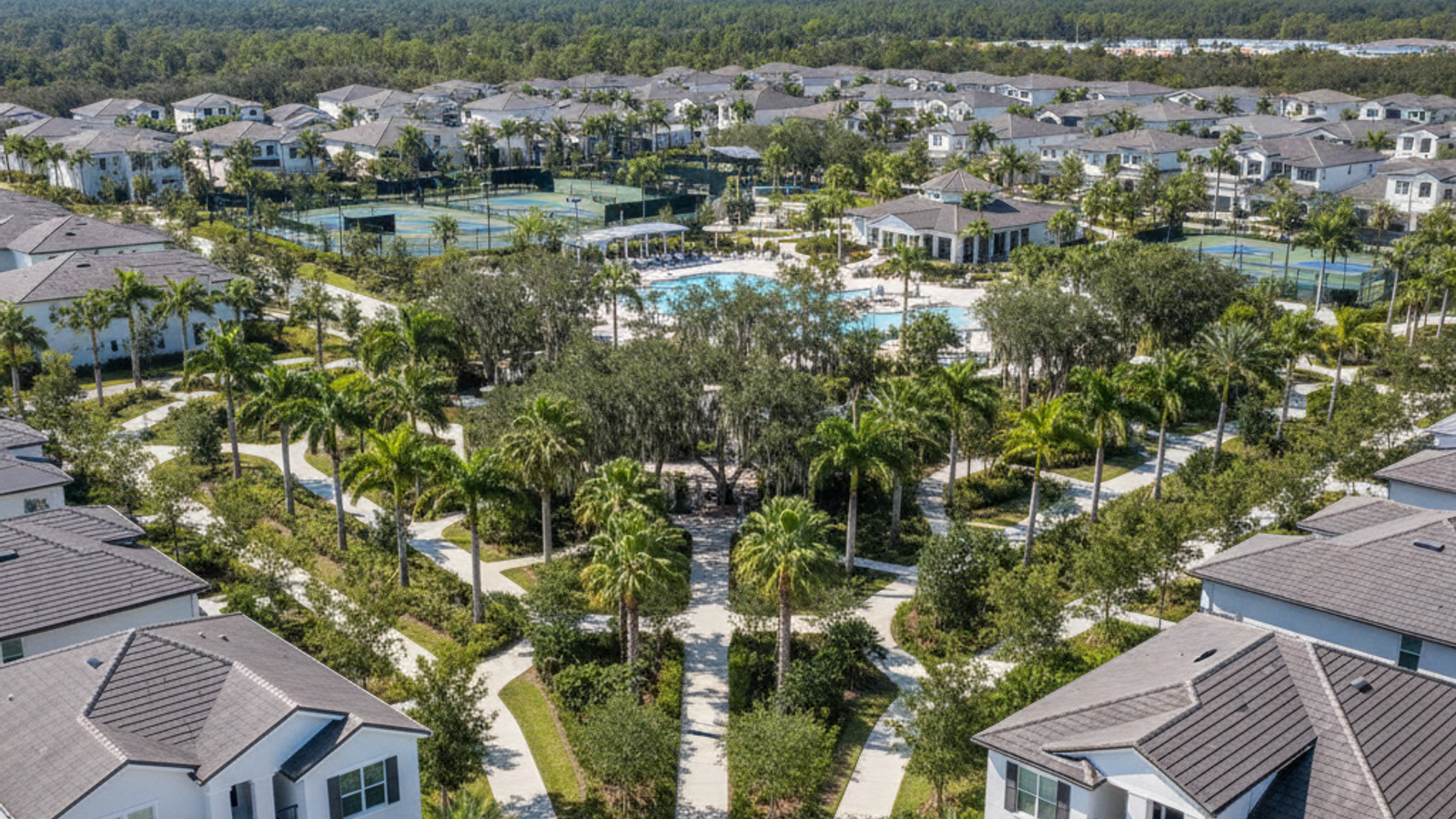
The recreational facilities built into this development are objectively massive and serve as the central hub of daily activity. Instead of small neighborhood pools, GL Homes constructed regional-scale athletic and wellness centers for the residents. These facilities are centralized so that all subdivisions have relatively equal access to the infrastructure.

The community is anchored by several major installations that require just a golf cart, bike, or short drive to reach. These amenities are fully operational in 2026 and represent a significant portion of the value associated with the local homeowner association dues.

  • The Paseo Greenway provides over 5 miles of traffic-free pathways designed exclusively for golf carts, bicycles, and pedestrians.

  • The 16-acre Sports & Racquet Club features more than 37 pickleball courts alongside multiple tennis and bocce facilities.

  • A 51,000-square-foot Wellness & Fitness Center houses extensive workout equipment, group exercise studios, and both indoor and outdoor pools.

  • Riverland Paseo Park spans 12 acres and includes softball fields, dedicated dog parks, and open soccer fields.

Having this level of infrastructure inside the gates essentially eliminates the need for external gym memberships or municipal park visits. The sheer volume of courts and pools ensures that residents rarely face long wait times, even during the peak seasonal months.


Riverland FL commute times and highway access

Location logistics are a major factor for anyone evaluating property in the Port St. Lucie area. Riverland is positioned in the western corridor of the city, placing it strategically close to major transit arteries. This specific location dictates daily driving patterns for work, travel, and coastal recreation.

Access to Interstate 95 and Florida's Turnpike is highly streamlined from the main community gates. Residents can merge onto the interstate within minutes, making regional travel north to Orlando or south to Miami highly efficient. For air travel, the drive south to Palm Beach International Airport typically takes about 45 to 55 minutes under normal traffic conditions.

Reaching the Atlantic coastline requires heading east across the city grid. The drive to the nearest Treasure Coast beaches, specifically the public access points at Jensen Beach and Fort Pierce, generally takes 20 to 30 minutes depending on seasonal traffic. The immediate proximity to I-95 is a massive advantage for regional commuters, though buyers should note it does add a slight buffer to the drive times for daily beach access.


Riverland FL nearby healthcare and shopping centers

Essential services and commercial hubs are conveniently located just outside the main residential gates. The adjacent Tradition master-planned area provides the bulk of the retail and medical infrastructure for the western Port St. Lucie corridor. Residents do not have to travel far to secure daily necessities or specialized medical care.

The commercial development surrounding the community has expanded significantly leading up to 2026. This immediate access to modern facilities is a strong selling point for the entire area.

  • Cleveland Clinic Tradition Hospital operates within a convenient 5 to 10-mile radius of the main gates.

  • Major grocery chains, including Publix and The Fresh Market, are located just minutes away in the Tradition commercial sector.

  • Tradition Square offers an expanding hub of retail stores, dining options, and everyday consumer services.

This concentration of commercial real estate means residents can complete almost all routine errands within a short drive. The presence of a major hospital system so close to the residential sectors adds a distinct layer of long-term stability to the local housing market.


Frequently Asked Questions

Is Riverland a neighborhood of Fort Lauderdale or Port St. Lucie?

The 4,000-acre master-planned community of Riverland by GL Homes is located entirely in the western corridor of Port St. Lucie, FL. There is a historic neighborhood also named Riverland located further south in Fort Lauderdale. Buyers searching for new construction and the Valencia 55+ communities should focus their search exclusively on the Port St. Lucie location.

What is the biggest risk of living in Florida regarding property in Port St. Lucie?

Property in Port St. Lucie faces objective environmental risks, primarily related to Atlantic hurricane exposure and severe weather events. Because of this geography, homeowners must factor in the cost of specialized windstorm and flood insurance policies. Working with a local agent to understand specific flood zones and modern building codes can help mitigate these regional risks.

What types of amenities are available in Riverland?

The community features large-scale recreational facilities connected by the 5-mile Paseo Greenway. Residents have access to a 16-acre Sports Club with over 37 pickleball courts and a massive 51,000-square-foot Wellness Center. Additional outdoor recreation is anchored by the 12-acre Paseo Park, which provides ample space for organized sports and outdoor activities.
Posted in Market Updates
April 23, 2026

Exploring the Best Neighborhoods in Riverland FL: Complete 2026 Property Guide


Port St. Lucie continues to expand, and the 4,000-acre master-planned community of Riverland stands out as a focal point for real estate activity this year. Buyers researching the best neighborhoods in riverland fl will find a massive development organized into distinct, gated subdivisions.

Finding the right home here requires understanding the nuances between the different phases of construction and the specific property types available. This guide breaks down the current 2026 market data, subdivision features, and objective location factors that influence property values in this section of St. Lucie County.

The integration of extensive community development districts has transformed the local housing supply over the past few years. Buyers navigating the 2026 market must carefully weigh the carrying costs against the objective lifestyle benefits these properties provide.


Exploring the Top Subdivisions in Riverland

The Riverland master-planned community, developed by GL Homes, offers a highly structured approach to neighborhood design across its massive footprint. Total square footage for homes across the entire development ranges from approximately 1,290 to over 3,700 square feet. This wide variation in size allows the community to absorb different segments of the buyer pool simultaneously.

Current pricing spans from the mid $300,000s up to approximately $1,059,000 depending on the specific phase, lot size, and level of customization. The phased Valencia developments provide distinct architectural and layout choices that give buyers clear options based on their space requirements. Understanding these price bands is essential for setting accurate expectations before touring model homes.

Opting for an earlier phase often means walking into a fully established streetscape with mature landscaping. Conversely, the newest sections provide opportunities for modern builder upgrades and selecting premium lot placements. This deliberate phasing is a major advantage because it ensures architectural consistency while allowing for gradual community expansion.

The master homeowner association governs the overarching architectural guidelines across all these subdivisions. This strict oversight maintains the visual appeal of the streetscapes and prevents deferred maintenance from impacting neighboring property values.

Valencia Cay and Valencia Grove

Valencia Cay and Valencia Grove represent the first two completed phases of the Riverland development. These neighborhoods primarily feature single-family homes designed with open floor plans, high ceilings, and contemporary Florida architecture. The resale market in these sections is highly active, giving buyers immediate move-in options.

Many properties in these sections include standard builder upgrades like durable polyaspartic garage floor finishes, widened entry pavers, and impact-resistant glass. Standard homeowner association fees in these established areas run around $427 per month. Buyers should always verify current assessment levels during the inspection period.

Valencia Walk and Valencia Parc

The newer phases include Valencia Walk and Valencia Parc, which introduce different housing styles to the community. Valencia Parc features attached Club Villas, such as the popular Bismarck floor plan that offers 1,537 square feet of living space. These attached units provide a lower-maintenance alternative to the detached single-family properties.

Development is also underway on the upcoming Valencia Vista section, expanding the footprint of new construction options. The monthly HOA fees in these newer sections generally cover full lawn care, landscaping, irrigation, and manned gated security. Contracting a new build here requires understanding the builder's current timeline for completion.


Objective Community Amenities and Recreational Facilities

A major draw of the 4,000-acre Riverland community is the massive scale of its shared amenities, which are available to all subdivision residents. The development centralizes its recreational facilities rather than duplicating smaller clubhouses in every single neighborhood. This strategy keeps overall maintenance costs predictable while delivering resort-level infrastructure.

This centralized approach creates a highly connected environment linked by five miles of traffic-free pathways. The integrated paseo system essentially eliminates the need for vehicular travel within the community when accessing the main amenity centers. Residents can navigate between their homes and the clubhouses using golf carts, bicycles, or by walking.

Buyers evaluating property values here should note that this level of dedicated infrastructure is rare in South Florida. The sheer volume of amenities provides significant utility to residents who prioritize active recreation and walkable access. Properties located closer to these main pathways often command a slight premium on the resale market.

Maintaining these facilities requires a well-funded reserve account, which the community association manages aggressively. The objective quality of the physical plant remains high because the operating budget is distributed across thousands of individual rooftops.

Sports Facilities and the Wellness Center

The athletic infrastructure is anchored by a 51,000-square-foot Wellness & Fitness Center. This facility operates alongside a massive 16-to-24-acre Sports & Racquet Club designed for high-capacity use. The scale of these buildings ensures that residents rarely face wait times for equipment.

Residents have access to a wide variety of objective sports amenities managed by the community association. The current facilities available for daily use include:

  • 53 dedicated pickleball courts, which notably includes 8 covered courts for all-weather play during the rainy season.

  • Multiple swimming facilities featuring indoor lap pools, outdoor resort pools, and specialized resistance pools.

  • Extensive fitness equipment, dedicated spaces for structured exercise programs, and professional training areas.

Paseo Park and the Arts Center

Cultural and outdoor connectivity features are heavily emphasized through the 12-acre Paseo Park. This linear park system serves as the primary artery connecting the residential subdivisions to the community hubs. It functions as a massive greenway that physically ties the different Valencia collections together.

The 5-acre Arts & Culture Center acts as the focal point for creative activities within the gates. It houses an 11,550-square-foot Creativity Hub equipped with dedicated studios, classrooms, and demonstration spaces. Having these facilities on-site adds a unique dimension to the standard master-planned community model.


Commute Times and Highway Access

Transportation logistics are a critical factor when evaluating real estate in Port St. Lucie. The Riverland community benefits from immediate proximity to Interstate 95, accessible via SW Becker Road at Exit 114 and SW Tradition Parkway at Exit 118. This dual-exit access prevents severe bottlenecks during peak travel hours.

This positioning provides highly efficient commute times to the Florida Turnpike and major regional employment hubs throughout South Florida. Direct highway access is a massive logistical advantage for East Coast travel, allowing residents to bypass heavy local traffic zones. Buyers commuting to Palm Beach County or Martin County rely heavily on this infrastructure.

Coastal destinations are also within a reasonable driving distance from the community gates. Residents can easily reach the Atlantic coast, including popular spots like Jensen Beach and Hutchinson Island, for day trips. The ability to access the ocean without paying premium waterfront property taxes is a major selling point.

The local municipality continues to invest in road widening projects along the main external corridors. These ongoing infrastructure improvements aim to handle the increased traffic volume generated by the region's steady population growth.


Nearby Healthcare, Grocery, and Daily Services

Access to daily services and medical care heavily influences property demand in master-planned developments. The Cleveland Clinic Tradition Hospital is located directly across the street at 10000 SW Innovation Way, providing immediate access to comprehensive medical services. Proximity to a major healthcare network is a permanent anchor for local property values.

Retail convenience is expanding rapidly with the upcoming Riverland Town Center, which will feature a Publix grocery store. Residents already utilize the existing commercial corridors nearby, which include major retailers like Target and Bass Pro Shops. These retail hubs supply all necessary daily goods without requiring long drives across town.

For outdoor recreation beyond the community borders, the Oxbow Eco-Center is situated approximately 9.4 miles away. Having these essential services and public parks within a short travel radius adds undeniable practical value to the location. Buyers consistently rank this convenience as a top priority during their property search.

Future commercial zoning plans indicate even more retail development is slated for the surrounding parcels. This ongoing commercial expansion ensures that property owners will have access to an increasingly diverse range of services.


Local School Districts and Educational Institutions

Residential addresses within this development fall under the jurisdiction of the St. Lucie Public Schools district. Understanding the local educational zoning is an important step for buyers analyzing long-term property resale value. School district boundaries can shift, so verifying current zoning is always recommended before closing.

The availability of established educational institutions provides an objective baseline for neighborhood stability. Nearby facilities include several distinct campuses serving different grade levels across the county. Buyers prioritizing proximity to educational centers will find several options just outside the community gates.

Transportation to these campuses is managed by the county, with established bus routes servicing the external community gates. Evaluating the logistics of daily school commutes is a standard part of the due diligence process for many purchasers.

The public school options in the immediate vicinity include the following campuses:

  • Tradition Lakes K-8, which serves primary and middle school students in a combined campus setting.

  • Palm Pointe Educational Research School at Tradition, operated in partnership with Florida Atlantic University.

  • Treasure Coast High School and St. Lucie West Centennial High School for secondary education requirements.


Frequently Asked Questions

What do the HOA fees in Riverland cover?

The monthly HOA fees in Riverland generally cover full lawn care, landscaping, irrigation maintenance, and manned gated security. These fees, which average around $427 per month in established phases, also fund the upkeep of the extensive community amenities and traffic-free pathways. Buyers should review the specific association documents for their chosen subdivision to confirm exact inclusions.

Are there Community Development District (CDD) fees in Riverland?

Yes, properties in Riverland are subject to Community Development District fees, which are standard for large master-planned communities in Florida. These CDD assessments help finance the initial infrastructure, such as the 4,000 acres of underground utilities and road networks, and are typically rolled into the annual property tax bill. Factoring these assessments into the total monthly carrying cost is essential for accurate budget planning.

Posted in Market Updates
April 23, 2026

A 2026 Guide to Seller Closing Costs in Port St Lucie FL

Preparing to list a property requires a clear understanding of the financial obligations required to transfer ownership. Homeowners naturally focus on their listing price, but calculating the exact net proceeds demands a close look at the expenses deducted at the closing table. Knowing what to expect prevents last-minute surprises when it is time to sign the final paperwork.

The current real estate transaction process involves state taxes, local municipal fees, and professional commissions. In St. Lucie County, certain customary charges fall on the seller's side of the ledger by default. Having a firm grasp of these local norms allows sellers to price their properties accurately and negotiate offers with confidence.


Understanding Seller Closing Costs in Port St. Lucie

When transferring a property in this region, sellers can generally expect their total settlement expenses to range between 6% and 8% of the final sale price. These fees are not upfront out-of-pocket expenses, as they are simply deducted from the buyer's funds before the final proceeds are wired to your account. This structure ensures that all legal and professional obligations are settled simultaneously during the transaction.

While some of these expenses are mandated by the state or county, many other line items are completely open to negotiation. The specific terms written into your purchase agreement will ultimately dictate your exact financial responsibility. Sellers who understand which fees are fixed and which are flexible maintain a distinct advantage during contract negotiations.

A common misconception is that all closing expenses are split evenly between the buyer and the seller. In reality, Florida real estate contracts rely heavily on county-by-county traditions to determine who pays for specific services like title searches and insurance policies. St. Lucie County operates under its own set of customary practices that differ slightly from neighboring areas.

Standard Florida Seller Closing Costs Breakdown

The largest portion of a seller's settlement statement typically consists of real estate agent commissions and state taxes. Following the 2024 NAR settlement changes, the 2026 landscape requires sellers to negotiate listing fees and any potential buyer-agent concessions as separate line items. This new structure provides homeowners with more transparency and control over their marketing expenses.

Offering a competitive concession for the buyer's agent remains a strong strategy to attract qualified offers, keeping average total commissions around 5.5% locally.

Beyond commissions, the state mandates specific taxes and customary title fees for every transaction. These primary expenses include:

  • Florida documentary stamp tax on the deed, which is set by the state at $0.70 per $100 of the sale price.

  • An owner's title insurance policy, which is customarily paid by the seller in St. Lucie County to guarantee clear ownership for the buyer.

  • A municipal lien search fee to ensure the property has no unrecorded city fines or open permits.


St. Lucie County Specific Fees and Prorations

Localized fees play a significant role in determining your final net payout. Homeowners in master-planned communities like Tradition or St. Lucie West must account for homeowner association estoppel fees. An estoppel letter is a legally binding document that verifies the current account balance and ensures there are no outstanding violations on the property.

Florida law mandates strict caps on these association charges to protect consumers from excessive administrative costs. As of 2026, standard HOA estoppel fees are capped at $299, though expedited requests or delinquent accounts will trigger additional authorized charges. Sellers should authorize their title company to order this document early in the process to avoid rush fees.

Property taxes are another major localized variable that must be prorated at the closing table. Because Florida property taxes are paid in arrears late in the year, sellers are responsible for the exact number of days they owned the home during the current calendar year. The title company calculates this daily rate and credits the buyer for that amount out of your sale proceeds.

The Closing Timeline: When Are Fees Paid?

Sellers rarely need to bring a checkbook to the closing table. The settlement agent handles all financial distributions behind the scenes on the day of closing. They collect the buyer's funds, pay off your existing mortgage, and distribute the required taxes and fees to the appropriate local agencies.

You will receive a Closing Disclosure form to review several days before the actual signing appointment. This standardized document outlines every single deduction down to the penny. Reviewing this document carefully with your real estate agent ensures that all prorations and negotiated credits match the original purchase contract.


Closing Cost Example for a $400,000 Home in Port St. Lucie

Running a mathematical estimate helps clarify exactly how these percentages and local taxes impact your bottom line. The current median home value in Port St. Lucie sits around $400,000, making it a perfect baseline for a sample calculation. Understanding this breakdown allows you to accurately project your equity before committing to a sale.

The documentary stamp tax is a fixed formula that leaves no room for interpretation. For a $400,000 property, the state charges exactly $2,800 to transfer the deed. This tax applies to every traditional real estate transaction in FL regardless of the specific neighborhood or property type.

Your remaining costs will fluctuate based on your specific mortgage balance and negotiated commission rates. A typical breakdown for a $400,000 sale might look like this:

  • Real estate commissions assuming a negotiated 5.5% total: $22,000.

  • Documentary stamp tax on the deed: $2,800.

  • Customary seller title fees and owner's policy: Approximately $2,200.

  • Prorated property taxes and HOA estoppel: Estimated at $1,500 depending on the closing date.

How to Lower Your Closing Costs in Port St. Lucie

Retaining more of your hard-earned equity requires a proactive approach before you even list the property. Sellers should interview multiple real estate agents to negotiate competitive listing fees and discuss the most strategic way to offer buyer-agent concessions. You also have the right to shop around for a real estate attorney or title company that offers reasonable settlement fees.

Addressing minor maintenance issues before listing is another highly effective way to protect your proceeds. Buyers routinely use inspection reports to demand large closing cost credits for minor repairs. Fixing these small defects in advance prevents buyers from inflating their repair estimates and reducing your final net payout.


Frequently Asked Questions

Who usually pays for title insurance in St. Lucie County?

In St. Lucie County, custom dictates that the seller pays for the owner's title insurance policy. This local norm protects the buyer by guaranteeing the property is being transferred with a clear title. The premium is based on the final purchase price and is deducted directly from the seller's proceeds at closing.

How are Florida property taxes prorated at closing?

Florida property taxes are billed in arrears, meaning the current year's taxes are paid in November. At closing, sellers give the buyer a credit for the exact number of days they owned the property from January 1st to the closing date. If your annual tax bill is $4,000 and you close exactly halfway through the year, you will credit the buyer approximately $2,000.

What is the most a seller can pay in closing costs in Port St. Lucie, Florida?

The maximum amount a seller can contribute toward a buyer's closing costs is determined by the buyer's loan type and down payment. For example, Fannie Mae conventional loans cap seller concessions at 3% for down payments under 10%, while FHA loans allow up to 6% of the sale price. These limits prevent sellers from artificially inflating the purchase price to cover excessive buyer expenses.


Posted in Selling
April 23, 2026

Navigating Seller Disclosures in Port St. Lucie FL: A 2026 Guide to Protecting Your Sale


Selling a home on the Treasure Coast requires more than just staging the living room and setting a competitive asking price. Navigating seller disclosures in Port St. Lucie FL is a critical step that directly impacts your financial security and the legal standing of your transaction.

The current real estate environment demands absolute transparency from property owners preparing to list their homes. Buyers in 2026 are highly educated on property conditions, meaning a comprehensive disclosure strategy is your best defense against delayed closings or post-sale disputes.


Understanding Florida's Disclosure Requirements for Home Sellers

Florida law explicitly rejects the traditional doctrine of buyer beware when it comes to residential real estate transactions. State regulations obligate sellers to reveal any known material facts that substantially affect the value of the property.

This mandate means you cannot simply stay quiet and hope a buyer misses a hidden issue during their walk-through. Providing complete transparency actually serves as a powerful shield that protects the seller from future litigation. My firm recommendation for any seller is to over-disclose, as revealing a minor defect upfront is always cheaper than fighting a lawsuit over it later.

The Johnson v. Davis Precedent

The foundation of current state disclosure rules stems from the landmark 1985 Florida Supreme Court ruling in Johnson v. Davis. This case established the modern standard that sellers must actively disclose facts materially affecting the property value that are not readily observable to the buyer.

This legal precedent applies to all residential properties across the state, regardless of the home's age or current condition. It places the burden of honesty squarely on the seller's shoulders to point out latent defects before a contract is finalized.

How 'As-Is' Contracts Affect Disclosure Obligations

Many sellers mistakenly believe that listing a home with an "as-is" contract completely absolves them of their disclosure responsibilities. In reality, an "as-is" agreement only means the seller declines to pay for any repairs prior to the closing date.

The legal liability to disclose known latent defects remains fully intact even when selling a property in its current condition. Failing to document known issues can still result in a post-closing lawsuit for fraud or misrepresentation, making the disclosure form just as crucial in an "as-is" sale.


The Standard Florida Realtors Seller's Property Disclosure Form

The primary tool used to outline property conditions during a transaction is the standardized property disclosure form provided by Florida Realtors. This comprehensive document acts as a written record of the home's condition at the time of listing.

While state law does not strictly mandate the use of this specific form, providing the detailed information it requests is a legal requirement. Working closely with a licensed real estate agent to fill out this document thoroughly ensures you do not overlook critical details. The best approach is to walk through your home room by room with the document in hand to ensure total accuracy.

Key Property Conditions to Document

South Florida homes face specific environmental stressors, making certain property details especially important to prospective buyers. Sellers must accurately report the history and condition of several major structural and mechanical systems.

  • Document the exact age, current condition, and recent maintenance history of the HVAC system.

  • Detail structural elements like the roof condition, any history of hurricane damage, and known sinkhole activity.

  • Disclose past plumbing leaks, professional mold remediation efforts, and any prior termite infestations.

  • Include detailed information regarding unpermitted structural additions or pending municipal code enforcement actions.


St. Lucie County and Coastal Property Disclosures

Localized environmental and municipal factors unique to Port St. Lucie real estate require extra attention during the selling process. Proximity to local waterways like the St. Lucie River often triggers additional statutory paperwork and heightened buyer scrutiny.

Accurately representing local tax obligations and association rules is just as critical as detailing the physical condition of the house. Sellers who proactively gather their local municipal documents tend to experience much smoother appraisal and underwriting processes.

Flood Zones, Wetlands, and the Standalone Flood Disclosure

Sellers must now provide a standalone flood disclosure form to buyers before contract execution under Florida Statute 689.302. Following the expanded 2025 requirement, you must explicitly disclose any history of actual flood damage, insurance claims, or federal assistance received.

Proximity to the St. Lucie River and surrounding coastal wetlands directly impacts FEMA flood zone designations for many local neighborhoods. Buyers will closely review these required environmental hazard disclosures to accurately estimate their future insurance premiums.

HOA Riders and Property Tax Disclosures

Port St. Lucie features a high concentration of planned developments, which introduces specific mandatory paperwork. Buyers must receive clear documentation regarding their future financial obligations to these governing bodies.

  • Provide mandatory Homeowner Association or condominium riders detailing the governing rules of the community.

  • Supply a statutory summary of association financials, current reserves, and any upcoming mandatory assessment obligations.

  • Deliver a property tax disclosure warning buyers that their future tax bill may differ significantly from your current assessed rate.


Disclosure Timelines and the Legal Risks of Nondisclosure

Timing plays a vital role in how effectively your property disclosures protect your transaction. The standard best practice is to provide all completed disclosure forms before or exactly at the time the sales contract is executed.

Waiting until the inspection period to reveal a known issue often creates unnecessary friction and delays the closing process. Complete transparency from day one protects your financial proceeds and severely limits your future legal liability.

Deliberately hiding a material defect carries severe consequences under current state law. Buyers discovering hidden issues after closing can initiate a lawsuit for financial damages or demand a full rescission of the sale contract.


Frequently Asked Questions

Do I have to disclose a defect if I already fixed it?

Yes, you should disclose past defects even if they have been fully repaired. Providing documentation of a $5,000 roof repair or a past plumbing fix shows buyers you proactively maintained the property. Transparency about resolved issues prevents buyers from assuming you are hiding ongoing problems if an inspector spots evidence of past repairs.

What happens if a buyer asks about a death on the property?

Florida Statute 689.25 explicitly states that homicides, suicides, or deaths on a property are not considered material facts affecting the home's value. You are not legally required to disclose a death, but if a buyer asks directly, you should answer truthfully or decline to answer entirely. Most local agents advise a simple, honest response to maintain trust during a $400,000 transaction.

Are sellers required to conduct a home inspection before listing in Port St. Lucie?

Sellers are only legally obligated to disclose known facts and are not required to actively search for unknown issues before listing. However, investing $450 in a pre-listing inspection can help you identify and resolve minor defects before buyers tour the home. Disclosing the results of a pre-listing inspection often builds immense buyer confidence and accelerates the negotiation process.

Posted in Selling
April 23, 2026

Navigating Real Estate Commissions in Port St. Lucie FL: A 2026 Guide for Buyers and Sellers


Understanding the costs associated with buying or selling a home is critical for anyone entering the Treasure Coast housing market. Real estate commissions in Port St. Lucie FL represent one of the most significant financial components of any property transaction. Both buyers and sellers need a clear picture of how these fees work in our current climate.

The landscape of agent compensation has shifted fundamentally over the past few years, making transparency more important than ever. Whether you are listing a property in Tradition or purchasing your first home near the St. Lucie River, knowing standard fee structures helps you budget accurately. Navigating these costs with a licensed real estate professional ensures there are no surprises at the closing table.


Average Real Estate Commission Rates in Port St. Lucie

The average total real estate commission rate in the Port St. Lucie market currently sits between 5.5% and 5.6%. This percentage is historically split between the two brokerages involved in the transaction. Typically, this results in roughly 2.75% going to the listing agent and 2.75% to 2.8% allocated to the buyer's agent.

To put these percentages into perspective, we can look at the typical Port St. Lucie median home price of approximately $400,000. On a property sold at this price point, a 5.5% total commission equates to about $22,000 in total agent fees. These numbers are not mandated by law and will always vary depending on the specific brokerage, property type, and the scope of services provided.

A clear takeaway for sellers is that commission rates should be viewed as a reflection of the marketing and administrative power an agent brings to the table. Choosing an agent based solely on a discounted fee often means sacrificing essential marketing exposure. A fully funded listing campaign generally yields a higher final sale price, offsetting the cost of the commission itself.


How 2026 Market Trends Impact Agent Fees

The Port St. Lucie housing market has officially stabilized in 2026, bringing new challenges that directly influence the value of hiring an experienced real estate agent. Properties are currently experiencing an average time on market ranging from 48 to 100 days. This longer selling window requires agents to sustain comprehensive marketing campaigns for extended periods.

With higher inventory levels exceeding 5,000 active listings across the city, listing agents must spend significantly more on professional staging, digital advertising, and targeted outreach. Buyers simply have more options to choose from, meaning a home must stand out visually and strategically to secure an offer. The current median sale-to-list ratio is approximately 96% to 97%, highlighting the reality that initial asking prices are rarely the final closing numbers.

Strong negotiation skills are absolutely necessary to maximize sale prices in this environment. Real estate professionals justify their standard commission rates by absorbing these increased upfront marketing costs and fighting for that final 3% to 4% of the purchase price. Sellers who try to cut corners on agent fees often find their properties lingering on the market and ultimately selling for far less than they anticipated.


Florida Real Estate Rules: The Impact of the NAR Settlement

Following the National Association of Realtors settlement that was fully implemented leading into 2026, the mechanics of how agents are paid have changed significantly. Buyer agent compensation can no longer be published directly on the Multiple Listing Service. This major shift was designed to enforce full transparency regarding flat rate options and percentage-based fees before any services are rendered.

Because of these updated rules, Florida homebuyers must now sign a written representation agreement with a licensed real estate agent before touring any properties. This document clearly outlines exactly how much the buyer's agent will be paid and who is responsible for that payment. Buyers can no longer assume that the seller is automatically covering their agent's fee.

Despite these changes, sellers can still offer financial concessions in the purchase contract to help buyers cover their agent fees. These concessions are now negotiated directly between the buyer and seller as part of the overall purchase offer, rather than being a pre-set guarantee. Sellers who are willing to offer these concessions often attract a wider pool of qualified buyers who might otherwise struggle to cover both closing costs and agent fees out of pocket.


Local Factors Influencing Port St. Lucie Real Estate Commissions

Objective local features and property locations heavily influence the marketing strategies required, which in turn can impact agent fees. Marketing waterfront properties near the St. Lucie River or coastal access points often requires specialized drone photography and advanced flood zone documentation. The listing agent's fee reflects the extra liability and specialized advertising needed to reach buyers looking for these specific premium features.

Proximity to regional healthcare facilities and zoning for St. Lucie Public Schools alters the demographic targeting in a property's marketing plan. Agents must build tailored campaigns highlighting these civic amenities to maximize the property's visibility. Selling properties within massive master-planned communities necessitates significant extra administrative work for agents.

Transactions in these planned developments require agents to manage complex HOA disclosures, compliance inspections, and extensive transfer tax documentation. Furthermore, complex transactions involving commercial property or unique zoning variances command higher commission rates due to increased processing time. The extensive paperwork and municipal coordination required in FL simply demand a higher level of professional oversight.


Frequently Asked Questions About Florida Commissions

Who typically pays real estate commissions in Port St. Lucie, Florida?

Historically, the seller paid the total commission, which was then split with the buyer's agent. Under the 2026 rules, sellers still frequently offer concessions to cover the buyer's agent fee, but it is now a negotiated term rather than an automatic standard. If a seller declines to offer a concession, the buyer is responsible for paying their agent directly based on their signed representation agreement.

Will a Port St. Lucie real estate agent accept a 2% commission?

Yes, some local real estate agents may agree to list a property for a 2% commission, though this typically only covers the listing side of the transaction. Sellers must understand that offering a reduced commission often means receiving a reduced tier of marketing services. On a standard Port St. Lucie home, cutting the marketing budget can result in a longer time on the market and a lower final sale price.

How much commission does a real estate agent make on a $300,000 house?

If a property sells for $300,000 with an average total commission rate of 5.5%, the total fee generated is $16,500. This amount is usually split, meaning the listing agent's brokerage and the buyer's agent's brokerage each receive approximately $8,250. From that gross amount, the individual agent then receives a percentage based on their specific split agreement with their broker.

Posted in Selling
April 23, 2026

Selling in 2026: Proven Pricing Strategies in Port St. Lucie FL


Navigating the real estate landscape in St. Lucie County requires precision and a clear understanding of current market dynamics. As we move through 2026, the frenzied bidding wars of past years have firmly settled into a more measured, predictable environment. Homeowners looking to list their properties must adapt to these stabilized conditions to find success.

Developing effective pricing strategies in Port St. Lucie FL is no longer about testing the waters with inflated numbers. Buyers today are highly educated on local property values and are sensitive to rising carrying costs. Setting the right asking price from day one is the single most critical factor in securing a successful sale without lingering on the market.


Understanding the 2026 Port St. Lucie Real Estate Market

The local market has officially transitioned from a rapid seller's market into a balanced environment. This shift offers fair negotiating conditions for both buyers and sellers, provided expectations are rooted in current reality. Sellers must recognize that buyers have more options today and feel less pressure to compromise on valuations.

Current data shows the median home price in Port St. Lucie is hovering around an approximate $400,000. This baseline figure should dictate a seller's initial expectations before adjusting for specific property upgrades or locations. Pricing near this median often captures the largest pool of qualified buyers currently searching in the area.

Average days on the market have increased, currently sitting between 92 and 102 days. This means sellers need more patience and a highly accurate pricing strategy from the moment the listing goes live. If a home sits unsold past that 100-day mark, it usually signals to the market that the asking price is disconnected from the property's true value.


Conducting a Comparative Market Analysis (CMA)

Relying on automated online estimates is a quick way to misprice a property in our current market. A professional Comparative Market Analysis uses hard, objective local data to set a competitive asking price. This process strips away emotion and focuses strictly on what buyers are actually paying right now.

Because 2026 inventory levels are shifting, an accurate CMA must look at closed comparable sales from the last 90 days. Looking further back risks pricing based on past peak years, which will alienate today's buyers. The median price per square foot in the area is currently ranging from $227 to $245, depending heavily on the specific neighborhood.

The dangers of overpricing are severe in a balanced market. Inflated initial prices often lead to stale listings, requiring repeated price drops that ultimately result in a lower final sale price than if the home was priced correctly at launch. A realistic list price generates more serious interest and better final terms than an aspirational one.


Evaluating Pricing Tiers by Property Type and Location

Objective property features and location within St. Lucie County fundamentally shift the pricing strategy. A standard single-family CBS home requires a different pricing approach than a condominium or a townhome. Buyers evaluate these property types based on distinct criteria, including maintenance responsibilities and insurance requirements.

Proximity to major commuter routes like I-95 and Florida's Turnpike directly impacts property values and buyer demand. Homes located within a short drive of these arteries often command a premium due to the convenience they offer daily commuters. Conversely, properties deeper into the city may need a slightly more competitive price to offset the longer drive times.

Waterfront properties along the North Fork of the St. Lucie River or homes with larger lot sizes naturally command higher asking prices. However, these unique features often appeal to a smaller, more specific buyer pool. Sellers of these premium properties should expect slightly longer days on the market and must price accurately to keep that niche audience engaged.

Buyers are also closely calculating their total monthly obligations, which includes local taxes. St. Lucie County's total property tax millage rates currently range from approximately 22 to 24 mills depending on the municipality. Sellers must factor this carrying cost into their pricing strategy, as higher tax burdens directly impact buyer affordability.


Factoring in HOA Fees and Master-Planned Communities

Fixed neighborhood carrying costs like HOA and CDD fees directly impact buyer purchasing power. High monthly fees lower the total mortgage amount a buyer can qualify for, which effectively caps the maximum list price a property can sustain. Transparent pricing strategies must account for these fixed costs so the listing remains competitive against comparable homes in lower-fee neighborhoods.

Master-planned communities offer extensive amenities, but those features come with significant financial obligations. Sellers in these neighborhoods must position their asking price to reflect the total monthly cost the buyer will inherit. If a home is priced identically to a non-HOA property, buyers will naturally gravitate toward the option with lower monthly overhead.

When pricing a home in highly amenitized areas like Tradition, sellers must account for specific recurring fees that alter a buyer's budget. These costs are non-negotiable and strictly enforced by the community management.

  • Community Development District (CDD) fees in Tradition typically range from $1,500 to $3,000 per year, covering public infrastructure.

  • Combined Master and Neighborhood HOA fees in these communities often exceed $500 per month.

  • Properties outside these master-planned zones with no mandatory HOA can often support a slightly higher initial list price due to the absence of these recurring fees.


The Impact of Seasonal Shifts on Your Asking Price

Adjusting a pricing strategy based on the time of year is essential given South Florida's unique market cycles. Winter months bring seasonal residents from colder climates, temporarily increasing demand. This influx of winter buyers can potentially support firmer asking prices for well-presented homes.

Conversely, the summer months often see a slower market locally as seasonal residents depart. Selling during this quieter period requires more aggressive pricing to stand out among the remaining active inventory. Sellers listing in July or August must be highly competitive to capture the attention of year-round local buyers.

Relying on national real estate news about the traditional spring market does not strictly apply to the Port St. Lucie area. Our peak activity happens earlier in the year, meaning a pricing strategy designed for a northern spring market will miss the mark here. Sellers must focus entirely on local seasonal patterns to time their pricing correctly.


Frequently Asked Questions About Pricing a Home in Port St. Lucie

Are home prices in Port St. Lucie dropping in 2026?

Home prices in Port St. Lucie are stabilizing rather than dropping significantly in 2026. The market has leveled out from previous years, creating a more predictable environment for valuations. Sellers pricing near the median of $400,000 are seeing steady, realistic offers.

Is Port St. Lucie a buyer's or seller's market right now?

The area has transitioned into a balanced market, offering fair negotiation power for both sides. Inventory levels have normalized, meaning buyers have choices and sellers must present well-priced homes. This equilibrium prevents the extreme bidding wars seen in past years.

How long do homes stay on the market in Port St. Lucie?

Currently, average days on the market range between 92 and 102 days. This extended timeline requires sellers to remain patient and confident in their initial pricing strategy. Homes that are overpriced tend to sit much longer and often require price reductions.

What are the current median home prices in Port St. Lucie?

The median home price in the area is currently approximately $400,000. Depending on the neighborhood, the median price per square foot ranges from $227 to $245. These figures serve as a reliable baseline for sellers entering the 2026 market.

Posted in Market Updates
April 23, 2026

Strategic Upgrades to Increase Your Home Value in Port St Lucie, FL in 2026


Preparing a property for the market requires a highly strategic approach, especially when the goal is to maximize your financial return. Homeowners frequently ask which specific improvements will actually translate into higher appraisal numbers and stronger offers from qualified buyers. Making the right choices depends heavily on understanding current buyer expectations in St. Lucie County.

The days of throwing a fresh coat of paint on the walls and expecting multiple offers over asking price are completely behind us. If you want to increase home value port st lucie fl, you need to focus on upgrades that solve fundamental problems and deliver measurable returns. Buyers today are highly educated about construction quality, insurance requirements, and the true cost of deferred maintenance.

Navigating this process requires a clear understanding of what local purchasers actually value. Every dollar spent on renovations should be calculated to improve your final list price or reduce your days on market.


Understanding the 2026 Port St. Lucie Real Estate Market

The local housing landscape has shifted toward a much more balanced inventory this year. With active listings steadily rising, buyers have more leverage to scrutinize a property's condition before submitting an offer. Current median home prices in Port St. Lucie are hovering around $400,000, meaning buyers expect a certain baseline of quality and reliability at that price point.

Average days on market have extended to approximately 90 to 100 days across the city. This longer timeline gives prospective purchasers ample opportunity to schedule thorough inspections and compare your property against newly built alternatives. Objective local data must drive your renovation decisions to prevent over-improving for your specific neighborhood.

Sellers who ignore these market realities often find their homes sitting stagnant while updated properties go under contract quickly. Your renovation budget should be treated as a strict investment with a required yield, not an emotional spending spree. Accurate pricing combined with strategic updates is the only proven formula for a successful sale.


Highest ROI Exterior and Climate-Specific Upgrades

South Florida weather patterns dictate a completely different set of buyer priorities compared to other regions of the country. Wind mitigation and weatherproofing are no longer just nice-to-have features - they are absolute prerequisites for a smooth real estate transaction. Buyers are acutely aware of how a home's exterior defenses directly impact their future carrying costs.

Exterior upgrades that harden the home against severe weather increase a property's listing value by alleviating fears regarding future maintenance. Upgraded properties often qualify for significant insurance premium reductions, which lowers the buyer's monthly debt-to-income ratio. When a home is substantially cheaper to insure, buyers can comfortably afford to pay a higher purchase price upfront.

Hurricane Impact Windows and Roof Replacements

Installing hurricane impact windows offers one of the highest returns on investment in our local market. Buyers vastly prefer the seamless, continuous protection of impact glass over the manual labor required to deploy traditional metal shutters. A new roof makes a property significantly easier to finance and insure, eliminating what is often the largest hurdle during the buyer's inspection period.

Florida roofs typically have a strict lifespan expectation of 15 to 20 years before insurance carriers begin flagging them for mandatory replacement. If your roof is approaching that age, replacing it prior to listing is almost mandatory to secure top dollar. Move-in-ready homes that do not require immediate structural investment consistently command premium prices at the closing table.

Screened-In Lanais and Outdoor Living Spaces

The expectation for functional, year-round outdoor living spaces is incredibly high in the Port St. Lucie climate. Extending your usable square footage into the backyard allows buyers to instantly envision the classic Florida lifestyle. Shaded, protected areas for outdoor dining and entertainment are essentially viewed as an additional living room by house hunters.

Compared to major structural additions, screening in an existing covered patio or lanai comes at a relatively moderate cost. The perceived value increase for buyers is substantial, especially since it creates a bug-free environment for evening relaxation. Well-designed outdoor spaces often serve as the ultimate deciding factor when buyers are choosing between two similar properties.


Major Additions vs. Interior Updates in CBS Homes

Deciding where to allocate your renovation budget often comes down to a debate over high-cost exterior additions versus standard interior remodeling. Concrete Block Structure homes, which are incredibly common throughout Port St. Lucie, benefit uniquely from specific types of updates. Because the exterior shell is already robust and highly durable, interior modernization often yields the most immediate visual impact.

Sellers must carefully weigh the financial trade-offs before breaking ground on any major construction project. My professional takeaway is that you should always prioritize bringing the baseline condition of the home up to neighborhood standards before considering luxury additions. An outdated kitchen will drag down your appraisal value far more than the absence of a custom outdoor kitchen.

The True Value of Adding a Pool in Port St. Lucie

Building a brand new in-ground pool in 2026 involves a high initial cost, often exceeding $50,000 for standard designs. While private pools are highly desired in Florida, the dollar-for-dollar return at the appraisal table rarely reaches 100 percent. You will likely recoup only a fraction of that massive construction cost in actual appraised value.

However, the real value of a pool lies in its proven ability to dramatically reduce your home's days on market. Many buyers relocating to St. Lucie County explicitly filter their property searches for homes with existing pools to avoid the lengthy construction process. A pool will absolutely make your property more sellable, even if it does not double your final profit margin.

Kitchen and Bathroom Modernization

Modernized kitchens and primary bathrooms consistently deliver a high return on investment in our local market. Standard mid-range updates typically recover between 60 and 80 percent of their costs upon resale. It is generally wise to avoid ultra-luxury overhauls so you do not accidentally price your home out of its specific ZIP Code.

Focus on uniform upgrades that create a cohesive, inviting feel throughout the entire property. Matching countertops, updated plumbing fixtures, and neutral paint colors appeal to the widest possible demographic of buyers. These targeted interior updates clearly signal that the home has been meticulously cared for during your ownership.


How to Market Your Upgraded Port St. Lucie Property

Completing the right renovations is only half the battle when preparing to sell your real estate. You must pair those physical improvements with objective location benefits to justify a higher asking price to potential buyers. A strategic marketing plan highlights both the pristine condition of the property and the lifestyle the surrounding area provides.

Buyers are purchasing the neighborhood just as much as they are purchasing the structure itself. Your listing needs to clearly communicate why your specific location adds tangible value to their daily routine. Here are the key elements to emphasize when marketing a modernized home in this region:

  • Highlight the exact distance to major recreational staples like the St. Lucie River, Savannas Preserve State Park, and local public golf courses.

  • Emphasize the daily convenience of nearby commuting routes, including immediate access to I-95 and Florida's Turnpike.

  • Use local property tax data to demonstrate long-term affordability, noting that St. Lucie County features a roughly 1 percent effective tax rate.

  • Compare these favorable carrying costs against the significantly higher property tax burdens found in neighboring South Florida counties.

By combining the appeal of a newly updated interior with these strong geographical advantages, you create a compelling narrative for buyers. This comprehensive approach ensures that your property stands out in a crowded market and justifies top-tier pricing.


Frequently Asked Questions About Increasing Home Value

How can I increase the value of my home by $50,000 in Port St. Lucie?

Achieving a $50,000 value increase typically requires combining a major structural update with cosmetic interior modernization. Replacing an aging roof and installing hurricane impact windows will secure the highest appraisal bumps while satisfying strict insurance requirements. Pair those exterior upgrades with a mid-range kitchen refresh to confidently hit that higher valuation tier.

Should I renovate before selling or sell as-is in Port St. Lucie?

You should renovate before selling if your property has outdated major systems that will prevent a buyer from securing a mortgage or insurance. With average days on market hovering around 90 days, buyers have the leverage to bypass homes requiring immediate, heavy maintenance. Selling as-is usually results in steep price reductions that cost far more than the repairs would have.

What upgrades increase resale value in South Florida?

The most profitable upgrades in the region focus heavily on weather resilience and climate-appropriate outdoor living. Wind mitigation features, updated HVAC systems, and screened-in lanais consistently generate the highest financial returns. Buyers in this area prioritize properties that offer low insurance premiums and immediate move-in readiness.

April 23, 2026

Navigating the Market: How Long to Sell My Home in Port St Lucie FL in 2026


When homeowners decide it is time to list their property, the most common question they ask is how long to sell my home in Port St Lucie FL. The timeline from listing a property to closing the deal depends heavily on current market conditions, pricing strategy, and the condition of the house.

In 2026, the local market operates at a more measured pace compared to the rapid sales seen in previous years. Understanding the current timeline helps sellers plan their next move, whether they are relocating for work or downsizing to a different property.


2026 Port St. Lucie Real Estate Market Analysis

The local real estate market has stabilized significantly this year, settling into a rhythm that requires sellers to be highly strategic. Currently, the median sale price for properties in the area hovers between $400,000 and $413,000.

The average time to sell a house has increased to a more balanced timeframe compared to the frenzy of past years. Sellers can expect an average of 90 to 102 days on the market before securing a solid contract.

This return to historical norms means that homes are no longer flying off the market in a single weekend. The current sale-to-list ratio sits around 96% to 97%, indicating that buyers are successfully negotiating slight discounts.

A 96% sale-to-list ratio means a home listed for $400,000 will typically close for around $384,000. Building this slight negotiation buffer into your initial pricing strategy helps keep the transaction moving forward smoothly.

Setting realistic expectations based on these figures is critical for a successful home sale. Sellers who understand these metrics are much less likely to feel frustrated when their property takes a few months to sell.


Key Factors That Influence Your Selling Timeline

Several objective variables dictate the exact timeline for selling a house in Port St. Lucie. The physical condition of the property directly impacts buyer interest and the overall speed of the sale process.

Single-family homes and townhouses often experience different average selling timelines based on current local demand. A well-maintained exterior, clear landscaping, and fresh paint can attract more buyers quickly.

In Florida, the age of a roof plays a massive role in how quickly a property changes hands. Homes with roofs older than 15 years often face financing and insurance hurdles, which can delay the final closing date.

Properties that require extensive repairs will naturally sit on the market longer than updated alternatives. Buyers in 2026 are increasingly looking for turnkey properties to avoid high renovation costs after closing.

The Importance of a Precise Pricing Strategy

Accurate listing prices prevent a property from lingering on the market as local housing supply expands. Sellers must look closely at recently sold comparable homes rather than currently active listings to determine true market value.

Overpricing a home from day one is the fastest way to derail a potential sale. Homes priced correctly out of the gate are significantly more likely to sell within the 90-day average without requiring drastic price reductions.

Leveraging Local Port St. Lucie Features in Your Marketing

Proximity to key local infrastructure can be utilized in your marketing to reduce time on the market. Highlighting nearby transit routes, such as I-95 and Florida's Turnpike, appeals directly to out-of-town buyers and commuters.

Pointing out proximity to local parks, golf courses, and civic centers adds tangible value to the property description. Calling out popular local hubs like Tradition Square can capture the attention of buyers looking for specific regional amenities.


St. Lucie County Housing Supply and Inventory Levels

Examining current housing supply and inventory levels provides sellers with highly realistic timeline expectations. The concept of "months of supply" measures how long it would take to sell all active listings at the current sales pace.

Currently, the active inventory in St. Lucie County is sitting at approximately 5.3 to 5.6 months of supply. There are roughly 2,500 active property listings available across the county right now.

Real estate professionals generally consider a six-month supply to be a perfectly balanced market. At 5.5 months, Port St. Lucie is hovering right on the edge of equilibrium, meaning neither the buyer nor the seller holds absolute power.

This level of inventory represents a shift away from a historical seller's market and toward a balanced environment. Increased inventory gives potential buyers more leverage, extending average selling times as they browse multiple options.

Sellers must recognize that they are competing against a substantial number of other properties. Standing out in a market with 2,500 listings requires a pristine presentation and a highly competitive asking price.


How to Sell a House Fast in Port St. Lucie

Sometimes a seller cannot afford to wait 100 days to close on their home. Implementing actionable strategies is essential to secure a faster sale when timelines are exceptionally tight.

Preparing the property meticulously before it ever hits the MLS is the most effective way to speed up the process. Homeowners who take the time to optimize their listing will naturally attract cash buyers and motivated house hunters.

To accelerate your home sale in 2026, consider focusing on these specific steps:

  • Stage your home neutrally to maximize visual space and emphasize exterior curb appeal.

  • Hire a professional real estate agent with a proven track record in the local Port St. Lucie market.

  • Evaluate cash buyers or "as-is" cash offers if closing speed is the absolute top priority.

Accepting a cash offer can bypass the lengthy mortgage underwriting process entirely. While cash offers might come in slightly below market value, the trade-off in speed is often worth it for sellers on a strict deadline.


Frequently Asked Questions

What is the best month to sell a house in Port St. Lucie?

The optimal time to list a home in Florida is typically during the late winter and early spring months. Listing in February or March allows sellers to capture peak buyer activity, often resulting in a signed contract within 60 days.

Is it a good time to sell your house in Florida right now?

Yes, it remains a solid time to sell, provided you adjust your expectations to the balanced 2026 market. With median prices holding steady above $400,000, sellers can still secure strong returns if they price their properties accurately.

What decreases property value the most when selling?

Deferred maintenance, particularly an older roof or an outdated HVAC system, decreases property value the most. Buyers will heavily discount their offers or walk away entirely if they anticipate spending $15,000 on immediate major repairs.

April 23, 2026

Property Valuation Port St Lucie FL: A Homeowner's Guide for 2026


Understanding the precise worth of your home is the foundation of any successful real estate transaction. Whether you are preparing to list your house or negotiating a purchase, having accurate data prevents costly financial mistakes. Relying on guesswork or outdated figures can easily leave money on the table.

The local landscape has shifted significantly over the past few years, making current market intelligence more valuable than ever. Buyers and sellers need to look beyond national headlines and focus strictly on local neighborhood metrics. A targeted approach to property valuation ensures you make decisions based on reality rather than speculation.


The Importance of Accurate Property Valuation in Port St. Lucie

Pinpointing the exact value of a home is crucial for setting a realistic asking price in today's environment. With active inventory exceeding 2,600 homes in early 2026, buyers have plenty of options to choose from. Overpricing in a high-inventory market is the absolute fastest way to kill your listing and cause a property to linger on the MLS.

Precise valuation also protects buyers from appraisal gaps when securing a mortgage. If a home appraises for less than the agreed-upon purchase price, the buyer must cover the difference in cash or renegotiate the contract. Knowing the true numbers upfront helps both parties understand the seller's net proceeds and ensures a smoother path to closing.

Market Value vs. Assessed Value in St. Lucie County

It is common to confuse the market value a buyer is willing to pay with the assessed value used by the county for taxes. Market value fluctuates constantly based on current buyer demand, active inventory, and recent comparable sales. This is the number you focus on when buying or selling a home on the open market.

Conversely, the St. Lucie County Property Appraiser determines the assessed value strictly for calculating annual property taxes and special assessment taxes. Florida's Save Our Homes cap limits how much this assessed value can increase annually for existing residents with a homestead exemption. Because of this cap, a home's assessed value is often significantly lower than its open market value.


Port St. Lucie Real Estate Market Trends in 2026

The 2026 real estate landscape in Port St. Lucie has stabilized considerably compared to the frantic pace of previous years. We are now operating in a balanced environment where neither buyers nor sellers hold absolute control over the transaction. The pace of sales has normalized, meaning homes are naturally taking a bit longer to go under contract.

Active inventory currently sits at over 2,600 homes, giving buyers the leverage to negotiate terms and request repairs. Median sale prices in the area are hovering approximately between $400,000 and $423,000, depending heavily on the specific neighborhood. Average days on the market now range from 60 to 100 days, reflecting a healthier, more deliberate pace of commerce.

This shift toward a balanced market means pricing strategy is more critical than it was during periods of low inventory. Sellers can no longer expect multiple offers above the asking price on day one without a flawless pricing strategy. Buyers now have the luxury of time, so a property must present an undeniable value to secure a prompt sale.


Local Factors That Influence Port St. Lucie Home Values

While broader economic conditions dictate general trends, specific local geographic and community features heavily impact individual property prices. Commuter access and proximity to commercial hubs remain primary drivers of value across the region. Location dictates the baseline value, but specific infrastructure upgrades are what truly separate a premium listing from a standard one.

Properties situated closer to the coastline or major recreational centers naturally command different price points than those further inland. Buyers pay close attention to structural resilience and neighborhood amenities when evaluating a home's worth. The following local factors consistently influence property values across the city:

  • Proximity to major commuter routes, specifically I-95 and Florida's Turnpike, which streamline daily travel.

  • Access to natural amenities and recreation, including the St. Lucie River and the Savannas Preserve State Park.

  • Distance to established golf courses and master-planned community features, such as those found in PGA Village and Tradition.

  • Specific property infrastructure features, including lot size, hurricane impact windows, and functional storm drains.


Methods for Valuing Your Port St. Lucie Property

Homeowners have access to several different methods for determining a home's value, ranging from quick online tools to official evaluations. Each method varies significantly in cost, speed, and overall accuracy. Choosing the right approach depends entirely on where you are in the real estate process and what you intend to do with the information.

Free digital tools are fine for casual curiosity, but real financial decisions require a human expert evaluating local nuances. If you are preparing to sell, you need localized data rather than broad algorithmic estimates. For legal or financing needs, hiring a licensed real estate appraiser is a non-negotiable requirement.

Automated Valuation Models (AVMs)

Automated Valuation Models provide a fast, free starting point for homeowners curious about their property value. These algorithmic tools pull from public county records and aggregate data to generate an instant price estimate. They are highly accessible and offer a helpful baseline when you first begin thinking about your home's worth.

However, AVMs do not physically inspect the property, meaning they completely lack insight into unique home upgrades or specific condition issues. They cannot tell if you recently renovated the kitchen or if the roof needs immediate replacement. You should never rely solely on an automated estimate when setting an official listing price.

Comparative Market Analyses (CMAs)

A Comparative Market Analysis is a detailed report created by a local real estate agent using recent sales data. Agents analyze recently sold homes in your specific neighborhood or zip code to determine a competitive and realistic listing price. They pull comparable sales from the local MLS, typically focusing on transactions that closed within the last three to six months.

CMAs factor in current market conditions, active inventory levels, and the specific physical condition of your property. This method bridges the gap between raw data and real-world buyer behavior in the current market. Requesting a CMA is generally free and serves as the ideal first step when you are seriously preparing to list a home.

Professional Real Estate Appraisals

A professional real estate appraisal involves a rigorous process conducted by a state-licensed appraiser to determine official property value. These licensed appraisers conduct in-depth physical inspections, measure the exact square footage, and perform a detailed local market analysis. This is the most accurate and legally binding valuation method available to a homeowner.

Official residential real estate appraisals in Florida typically cost between $400 and $600, depending on the property size. This formal evaluation is strictly required by lenders for securing a mortgage, refinancing an existing loan, or removing private mortgage insurance (PMI). Appraisals are also necessary in specific legal situations, such as finalizing a divorce or executing estate planning documents.


Frequently Asked Questions

How much does it cost to appraise a house in Florida?

A standard residential real estate appraisal in Florida generally costs between $400 and $600. The exact price can fluctuate based on the size, complexity, and specific location of the property. Larger estates or homes with unique custom features may require a higher fee due to the extra research involved.

Who is the property appraiser for St. Lucie County?

The St. Lucie County Property Appraiser is an elected official responsible for identifying, locating, and fairly valuing all property within the county. Their office manages the assessment roll used to calculate local property taxes. You can access public property records and file for homestead exemptions directly through their official county website.

Is assessed value the same as market value in Florida?

No, assessed value and market value are two completely different figures in Florida real estate. Market value is the price a buyer is willing to pay, while assessed value is a strictly regulated number used by the county to calculate taxes. Because of the Save Our Homes cap, a property's assessed value is often much lower than its current market value.

What are ad valorem taxes?

Ad valorem taxes are property taxes based directly on the assessed value of real estate or personal property. In St. Lucie County, these taxes fund essential local services like public schools, infrastructure maintenance, and emergency response teams. The county calculates your annual tax bill by multiplying your property's assessed value by the local millage rate.

Posted in Market Updates
April 23, 2026

Is PGA Village Safe? A 2026 Port St. Lucie Buyer's Guide


Buyers exploring Florida’s Treasure Coast frequently ask about community access and local crime statistics when evaluating properties. Port St. Lucie has grown significantly, and understanding the physical security features of its premier communities is a top priority for house hunters in 2026.

PGA Village and its newer expansion, PGA Village Verano, stand out as major residential hubs built around championship golf courses. This guide breaks down current property types, HOA inclusions, and objective data regarding the area so buyers know exactly what to expect.


Evaluating PGA Village: Community Features and Data

Finding the right home requires looking beyond the floor plan and understanding the infrastructure that supports the community. PGA Village is a sprawling, master-planned development in Port St. Lucie, FL, known for its extensive amenities and structured environment.

Buyers entering the 2026 real estate market need verified information rather than vague promises about an area. We will cover the specific access controls, current housing costs, and objective crime data that define living in this part of St. Lucie West.


Access Controls and Gated Entrances in PGA Village

Physical security features are a defining characteristic of this development. The primary entrances to the community feature 24/7 manned gates, ensuring that all visitors and contractors are logged before entry.

This controlled access provides a structured boundary between the private residential streets and the broader public roads. The homeowner association also manages roving security patrols that monitor the neighborhoods throughout the day and night.

There is a distinct difference in access points depending on which section you choose. The classic PGA Village neighborhoods operate with their own dedicated gates, while the newer PGA Village Verano section utilizes a separate, equally monitored entrance system.


Port St. Lucie Crime Statistics and Breakdown

When buyers ask "is pga village safe", the most objective way to answer is by looking at the broader municipal data. According to the latest Uniform Crime Reports data, Port St. Lucie maintains an overall crime rate that sits approximately 62% below the national average.

The city's sprawling, suburban design inherently limits high-density foot traffic, which plays a major role in these statistics. Violent crime remains notably low, with recent figures showing approximately 117 incidents per 100,000 residents.

Property crimes, such as vehicle break-ins or minor theft, make up the majority of the reported incidents in the region. Buyers should always review current municipal reports to understand the specific block-by-block data before making a purchase decision.


PGA Village Real Estate: Property Types and HOA Inclusions

The housing landscape here caters to a wide range of budgets and architectural preferences. Buyers can find everything from compact golf villas and attached townhomes to expansive single-family estates with private pools.

Understanding the monthly holding costs is just as important as knowing the purchase price. The homeowner association fees bundle several essential services, making property maintenance highly predictable for residents.

Current market dynamics shape the financial expectations for buying into this community. The figures below represent the approximate costs buyers can expect to encounter:

  • Median home prices currently range from the low-to-mid $400,000s up to over $1,000,000 for premium estate lots.

  • Monthly HOA dues typically land between $450 and $587, depending on the specific neighborhood and property size.

  • Standard HOA inclusions cover lawn care, basic cable, high-speed internet, and maintenance of all common areas.

  • Golf memberships at the PGA Golf Club remain entirely optional, rather than a mandatory deed requirement.


Proximity to Amenities and Commute Times

Location efficiency is a major draw for buyers looking at homes along the St. Lucie West corridor. Residents have immediate access to the PGA Golf Club, which features 54 championship holes and the expansive PGA Center for Golf Learning.

Beyond the greens, the community sits just minutes from major retail centers, grocery stores, and local restaurants. Healthcare access is also highly convenient, with the Cleveland Clinic Tradition Hospital located a short drive down the highway.

Commuting and travel are straightforward thanks to immediate access to Interstate 95. For those who travel frequently, Palm Beach International Airport is roughly a 50-mile drive, translating to an approximate 55-minute commute under normal traffic conditions.


Local Education: St. Lucie Public Schools

Educational infrastructure is a critical data point for many buyers evaluating property values and resale potential. The PGA Village area is zoned within the St. Lucie Public Schools district, which governs the local educational assignments.

The district provides designated public elementary, middle, and high schools that serve the immediate subdivisions. Buyers prioritizing specific academic programs will also find several nearby charter and private school options within a short driving distance.


Frequently Asked Questions About PGA Village

Are golf memberships required for residents of Verano or PGA Village?

Golf memberships at the PGA Golf Club are strictly optional for all residents. Homeowners can still access community pools, fitness centers, and clubhouses through their standard monthly HOA fees without ever paying for golf privileges.

How do HOA fees typically work in Verano?

The monthly fees in PGA Village Verano cover extensive community amenities, including resort-style pools, tennis courts, and comprehensive landscaping. These fees, which typically range from $450 to $587, consolidate multiple household expenses like internet and cable into one predictable monthly payment.

How does PGA Village crime compare to the national average?

The broader Port St. Lucie area reports a crime rate roughly 62% below the national average. The presence of 24/7 manned gates and roving security patrols further limits unauthorized access to the specific residential subdivisions.