The Treasure Coast offers distinct choices for buyers evaluating relocation options across different counties. Navigating these choices requires understanding how zoning, amenities, and daily logistics impact your long-term investment.
Port St. Lucie and Martin County represent two entirely different approaches to Florida living. You can contrast the rapid new construction growth and golf-cart accessibility of Riverland with the mature, relaxed, boat-centric environment of Palm City. Both areas attract out-of-state buyers, but they cater to very different daily routines.
The 2026 property tax revaluations have also shifted how buyers calculate their long-term carrying costs in both counties. Understanding these subtle municipal differences is crucial before signing a purchase contract.
Making the right choice comes down to prioritizing your preferred community structure. Choose Riverland for built-in social programming and resort amenities within a gated environment. Alternatively, choose Palm City for larger acreage, deep-water boating access, and neighborhoods with open zoning.
2026 Real Estate Market & Property Types
The 2026 real estate landscape along the Treasure Coast provides a high-level overview of how housing inventory differs drastically between these two locations. Current 2026 inventory levels are providing buyers with more negotiating power compared to the severe shortages seen in previous years. Builders and individual sellers alike are offering more flexible terms to secure qualified buyers.
This market shift highlights the stark difference in architectural styles across the region. You will find a sharp contrast between modern developer floor plans in master-planned hubs and the diverse, custom-built estates of established waterfront towns. The overall cooling of days on market in 2026 has shifted the landscape slightly toward buyers, allowing for more deliberate property inspections.
Riverland: New Construction in a 55+ Master-Planned Community
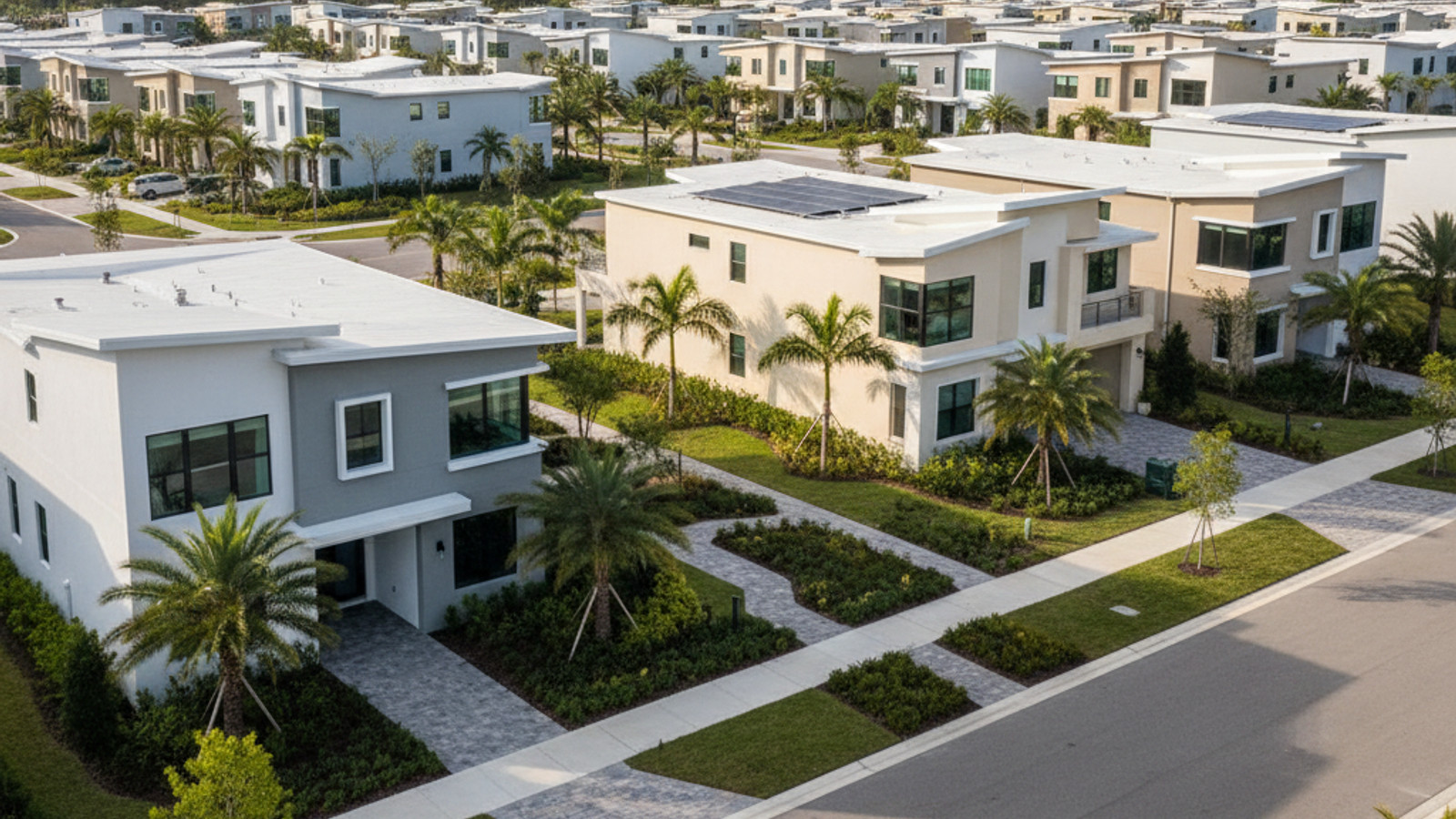
The Valencia neighborhoods, including Valencia Walk and Valencia Parc, offer extensive new construction single-family homes. These developments operate under strict 55+ age-restricted zoning, creating a highly tailored environment for active adults. Buyers can select from multiple floor plans featuring impact glass, modern energy efficiency and open-concept living spaces.
Median price ranges for Riverland homes in early 2026 span from the mid-$400,000s to over $600,000 depending on lot premium and interior upgrades. These properties provide a high degree of lock-and-leave convenience, which is highly valued by seasonal residents. Standardized construction quality ensures that homes meet the latest Florida building codes for wind resistance.
The community layout prioritizes pedestrian safety, utilizing an expansive network of dedicated pathways separated from main vehicle roads. This infrastructure allows residents to safely walk or cycle to the various amenity centers year-round.
Palm City: Waterfront Estates, Golf Communities, and Acreage
Palm City presents a much wider variety of homes, including St. Lucie River waterfront estates, low-rise condos, and non-HOA acreage properties. Prominent golf and country club communities like Martin Downs and Harbour Ridge offer structured environments, while areas like Farms at Pipers Landing provide massive lots. This diversity allows buyers to find properties that accommodate RV parking or private boat docks.
Pricing in this area reflects the wide spread of lot sizes and water access rights. In April 2026, median list prices in Palm City hover around $640,000 to $830,000. Closed sale medians often fall between $430,000 and $613,000 based on the specific subdivision and its proximity to the ocean.
Many of the older subdivisions feature mature oak canopies and lush, established landscaping that new developments simply cannot replicate. Buyers looking for unique architectural character often find Palm City highly appealing compared to uniform builder tracts.
Comparing HOA Fees, Taxes, and Cost of Living
Comparing the standardized HOA structure in Riverland to the highly variable HOA environment in Palm City is critical for budget planning. Riverland HOA fees are generally $400 to $500 per month, which remains highly competitive for the region. These monthly dues cover comprehensive lawn care, security personnel, and maintenance of the extensive recreational facilities.
A major financial advantage for Riverland residents is the absence of CDD (Community Development District) fees. This lack of hidden infrastructure taxes keeps the annual carrying costs predictable for buyers on fixed incomes. St. Lucie County property taxes are applied on top of these fees, requiring buyers to calculate their total monthly exposure.
Palm City offers a completely different financial model, ranging from $0 HOA zones to mandatory equity country clubs. Monthly assessments here can range from absolutely nothing to over $600, not including the high joining fees required at premium golf clubs. Martin County generally features slightly lower property tax millage rates than St. Lucie County, which can offset some ownership costs.
Insurance premiums in 2026 also play a major role in the overall cost of living for both locations. Newer construction in Port St. Lucie often benefits from lower windstorm insurance rates due to updated building codes. Conversely, older waterfront homes in Palm City may carry higher flood insurance premiums depending on their exact elevation.
Riverland provides a much more predictable monthly budget for buyers who want an all-inclusive lifestyle. Palm City offers the ultimate financial flexibility for buyers who prefer to manage their own property maintenance and avoid association rules entirely. Understanding these fee structures is an important step in evaluating your 2026 purchasing power.
Amenities and Outdoor Recreation Compared
Setting up a contrast between private, developer-built resort amenities and public, nature-based recreational infrastructure is essential. Buyers must decide if they prefer a curated community experience or broader regional access to natural waterways. The daily lifestyle in these two areas revolves around entirely different types of recreation.
Riverland relies heavily on internal master-planning to keep everything within a simple golf-cart ride. Palm City relies on its direct proximity to the St. Lucie River and the expansive Martin County parks system for outdoor engagement. Both approaches offer rich recreational opportunities, but the delivery methods are fundamentally opposed.
Riverland's Paseo Park, Pickleball, and Master-Planned Green Spaces
The 12-acre Riverland Paseo Park serves as a central gathering space, featuring a 2-acre dog park, lighted softball and soccer fields, and pedestrian greenways. This massive 4,000-acre development also includes a 24-acre Sports & Racquet Club equipped with 37 pickleball courts. Dedicated lifestyle directors maintain a packed schedule of tournaments, fitness classes, and social clubs.
Residents benefit from a 51,000 square-foot Wellness & Fitness Center and a 5-acre Arts & Culture Center offering continuous educational programming. The Riverland Town Center anchors the commercial side of the community, offering a golf-cart accessible Publix and everyday retail conveniences. The self-contained design means residents rarely need to start their cars for daily errands.
The community's dedicated lifestyle directors maintain a packed schedule of tournaments, fitness classes, and social clubs. This robust programming ensures that new residents can easily integrate into the community and build local networks.
Palm City's Golf Courses, Public Parks, and Boat Ramps
Leighton Park stands out as a local favorite, noted for its St. Lucie River boat ramps, fishing pier, and public picnic facilities. Palm City residents also enjoy access to top-tier public and private golf courses like Hammock Creek and Piper's Landing. The waterfront culture here means weekends are often spent navigating the local sandbars or heading toward the St. Lucie Inlet.
The western portions of Palm City feature extensive equestrian trails and close proximity to natural preserves. The nearby Treasure Coast Wildlife Center highlights the region's commitment to maintaining its natural Florida landscape and protecting local habitats. This area provides a much more organic, nature-driven lifestyle compared to master-planned environments.
Local marinas provide dry storage and fueling services, making boat ownership highly convenient even for those without private docks. The surrounding waterways offer world-class fishing opportunities that draw anglers from across the state.
Commuting, Highway Access, and Medical Facilities
Assessing Riverland's immediate proximity to I-95 and Cleveland Clinic Tradition Hospital reveals a highly efficient logistical setup. This master-planned hub sits directly off the interstate in Port St. Lucie, making regional travel and medical visits incredibly simple. The concentration of commercial plazas near the highway ensures that specialized healthcare is always just minutes away.
Palm City occupies a strategic position near both the Florida Turnpike and I-95, offering fast, parallel routes down to West Palm Beach. Driving times to Palm Beach International Airport generally hover around 40 to 45 minutes from most Palm City neighborhoods. This makes the area highly appealing for professionals who commute south or residents who travel frequently.
Local traffic patterns dictate the daily rhythm of navigating both Martin and St. Lucie counties. Port St. Lucie experiences heavier peak-hour congestion near its main commercial centers due to rapid population growth. Palm City maintains a slightly lower traffic volume, though the bridges connecting it to Stuart can back up during seasonal peaks.
Public transportation options remain limited in both areas, making personal vehicles or golf carts essential for daily life. However, the nearby Brightline station in West Palm Beach offers a high-speed rail connection down to Miami for weekend trips.
Riverland is the superior choice for buyers needing immediate, walkable access to specialized medical care and master-planned retail. Palm City wins for frequent travellers commuting south to Palm Beach County or those seeking a quieter, less congested road network. Evaluating your weekly driving habits will quickly reveal which location better serves your needs.
Frequently Asked Questions
Is it cheaper to live in Port St. Lucie or Palm City?
Port St. Lucie is generally more affordable than Palm City when comparing median home prices and property taxes. In 2026, closed sale medians in Palm City frequently exceed $600,000, while Port St. Lucie offers a wider inventory of homes in the $400,000 range. However, master-planned communities like Riverland carry mandatory HOA fees that offset some of those base price savings.
What are the pros and cons of living in Port St. Lucie vs. Palm City?
Port St. Lucie offers extensive new construction and highly amenitized HOA communities, but it can feel heavily developed with more traffic. Palm City provides larger lots, waterfront access, and freedom from association rules, though it lacks the expansive, golf-cart accessible commercial centers found up north. Buyers must weigh built-in convenience against zoning flexibility.
Does Palm City have a downtown area like Riverland's Town Center?
Palm City does not have a centralized, master-planned commercial hub like the Riverland Town Center. Instead, it features established strip centers, local waterfront restaurants, and standalone grocery stores spread along Martin Highway and Mapp Road. Residents looking for a traditional downtown experience typically drive a few minutes east to historic Stuart.