


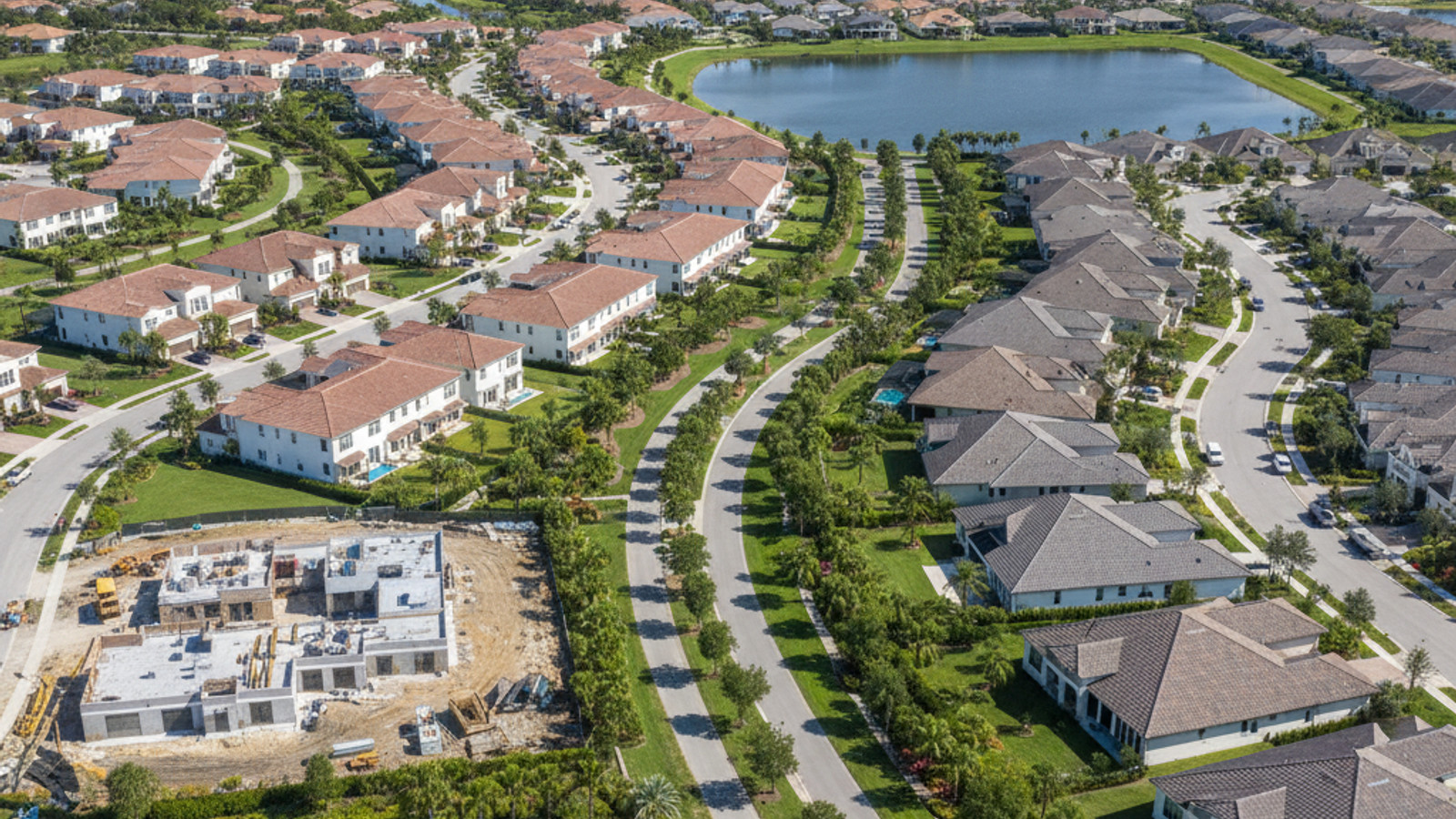
A Riverland home's value is best determined by looking at the last 90 days of closed resales in its own community, not last year's sales, the builder's new-home prices, or a high opening list price. Single-family home prices in Riverland have shifted downward compared to a year ago, and that changes how sellers need to approach the market.
For the bigger picture, see Sell my Home in Riverland.
With homes taking longer to sell and months of supply sitting on the market, buyers have the time and inventory to compare options. Setting a realistic price on day one dictates whether you sell near your asking price or spend weeks grinding through price reductions.
Key takeaway
For a Riverland resale, the valuation to trust is a comparative market analysis built on the last few months of closed sales in your own Valencia community. Last year's comparable sales, the builder's new-home prices, and the county's just value are all the wrong anchor for a listing. Single-family prices are down roughly 7.7% from a year earlier, so a 2025 number likely overstates what buyers will pay now. If you need a figure a lender or court will accept, order a licensed appraisal instead.
Who this guide is for
You own a home in Riverland and need a realistic value before you list, refinance, appeal a tax assessment, or settle an estate.
What is a Riverland home worth right now?
The real answer comes from closed resales in your specific community over the past 90 days. Because prices have fallen over the past year, a comparable sale from 2025 acts as a ceiling on your home's value, not a reliable guide for what a buyer will pay today.
The current market punishes testing the waters with a high price. Homes take a median of 88 days to sell, and the average sale-to-list ratio is 97.3%. Homes that successfully close do so very close to their final asking price, which means your first list price decides how long the property sits. Ask your agent for the original-list-to-sale ratio on your comparable sales, not just the final-list figure, so you can see how much sellers had to cut before closing.
Which property valuation do you need?
A comparative market analysis (CMA) is the standard tool for setting a list price. An agent prepares it using recent closed and active comparable sales, and you can request one tailored to your specific property. If you need a number a lender, court, or estate will accept, that's a licensed appraisal. For a refinance or a buyer's mortgage, lenders order the appraisal directly.
To check whether your property tax assessment is fair, look at the county's just value on the St. Lucie County Property Appraiser site. Under Florida law, just value is assessed as of January 1 each year, which means it can lag behind a market where prices have fallen, and it differs from current market value. Online estimates offer a quick range before you talk to anyone, but they routinely misread community age restrictions, lot premiums, and permitted upgrades.
Before choosing a valuation method, consider your timeline and goals. Are you setting a list price, or do you need a number a lender, court, or the county will accept? If you need a quick sale within about three months, the supply and days-on-market figures matter more than squeezing out the last dollar. If you've added permitted upgrades since you bought, don't rely on a simple price-per-square-foot shortcut.
How to value a Riverland home from recent sales
The most accurate comparable sales come from your specific Valencia community. Those homes share the same community rules and homeowners association fees, which is what makes them genuinely comparable. Look for closings in the last 90 days. If you have to stretch further back, apply a downward time adjustment given the annual decline in local prices.
Once you have recent sales, adjust for differences in size, lot type (lake or preserve view), model age, and permitted upgrades. Then compare your adjusted number against current active listings, which are your real competition, and check the builder's new homes if they're still selling in your phase.
Sizing up an 1,800-square-foot resale
At Riverland's median price per square foot, an 1,800-square-foot home pencils out to about $518,400. That lands within about $1,300 of the area's $517,064 median sale price for a single-family home, which confirms the math provides a reasonable starting range before you make specific adjustments.
A premium lake lot, an older model year, or an unpermitted addition will push the actual value up or down from that baseline. The limitation is that that median blends every community, model age, and lot type in Riverland, so a home that differs from the typical sale can sit well above or below it.
Riverland housing market: what it means for your price
Buyers currently have 5.4 months of supply to choose from, with roughly 72 active single-family listings on the market. That volume means buyers can easily compare your home against dozens of others, and an overpriced home mostly collects days on the market rather than a higher final sale price.
Only about 5% of recent sales closed above the asking price. Budgeting for a bidding war isn't realistic here. Price at the market from the start, or plan for a longer timeline and eventual reductions.
What raises or lowers home value in Riverland
A home's value shifts based on its specific community rules, including any 55+ age restrictions, and the local HOA. Builder competition also caps resale prices when new homes are still available. As of 2026, GL Homes is actively selling new construction in Valencia Vista (55+) and Valencia Parc (55+) from the mid $300,000s to the $900,000s, while Valencia Cay, Valencia Walk, and Valencia Grove are sold out of new inventory. Confirm whether the builder is still selling near you, and at what base prices and incentives.
Carrying costs affect what buyers will pay. Ask the HOA for current dues, what they cover, and any pending special assessments. Check your property tax bill for a Community Development District (CDD) or other non-ad valorem assessment line. Flood zones affect carrying costs through insurance premiums; look up your home's flood zone on the FEMA Flood Map Service Center.
For upgrades to count toward your value, they need permits and documentation. Pull your home's permit history from the City of Port St. Lucie to prove the work is legitimate. Condition, presentation, and properly completing your seller disclosures also play a role in holding your home's value through the inspection period.
Next steps before you set a price
Seller closing costs and real estate commissions determine your final net proceeds. It's worth comparing the timeline and net payout of listing on the open market against accepting a cash offer before you decide which direction to go.
You can request a comparative market analysis built specifically on your community's closed sales. The right data keeps you from pricing too high and sitting, or pricing too low and leaving money behind.
At a glance
- Median sale price: $517,064 (single family, 90 days ending 2026-09-30)
- Change in median sale price vs a year earlier: -7.7% (single family, 90 days ending 2026-09-30)
- Median price per square foot: $288 (single family, 90 days ending 2026-09-30)
- Homes sold: 41 (single family, 90 days ending 2026-09-30)
- Median days on market: 88 (single family, 90 days ending 2026-09-30)
- Sale-to-list price ratio: 97.3% (single family, 90 days ending 2026-09-30)
- Share of homes sold above list price: 5% (single family, 90 days ending 2026-09-30)
- Months of supply: 5.4 (single family, 90 days ending 2026-09-30)
- Active listings: 72 (single family, 90 days ending 2026-09-30)
Common questions
What is the average cost of an appraisal in Florida?
For a purchase or refinance, the lender orders the appraisal and passes the fee to the borrower. Complex lots or rush timelines can increase the final cost. Ask your lender which appraisal type they require and for a schedule of their typical appraisal fees.
What not to tell an appraiser?
Under Fannie Mae's Appraiser Independence Requirements, no person may influence an appraisal through coercion or compensation, and the borrower must be provided a copy of the appraisal at least three days prior to closing. Don't suggest a target value or pressure the appraiser for a specific number. What you should provide is a dated list of permitted upgrades, the permit history, and any recent comparable sales you're aware of.
How do I find a good appraiser?
Verify that the appraiser is a state-certified or licensed residential appraiser using the Florida Department of Business and Professional Regulation (DBPR) license lookup. For a private appraisal, ask how recently they've appraised homes in Riverland's communities. For mortgages, the lender selects the appraiser, often through a management company.
How can I look up who owns a property in Florida?
The St. Lucie County Property Appraiser's public real estate search portal lets you look up property ownership by parcel ID, owner name, or address. The same record shows the county's assessed just value and recorded sales history, which is useful for checking comparable sales.
Sources
- Redfin: Data Center
- St. Lucie County Property Appraiser: Your Questions Answered
- St. Lucie County Property Appraiser: Real Estate Search
- Florida DBPR: Real Estate Appraisal Board
- Fannie Mae: Appraiser Independence Requirements
- GL Homes: Valencia Parc at Riverland
- City of Port St. Lucie: Building Online Services
- FEMA: Flood Map Service Center