


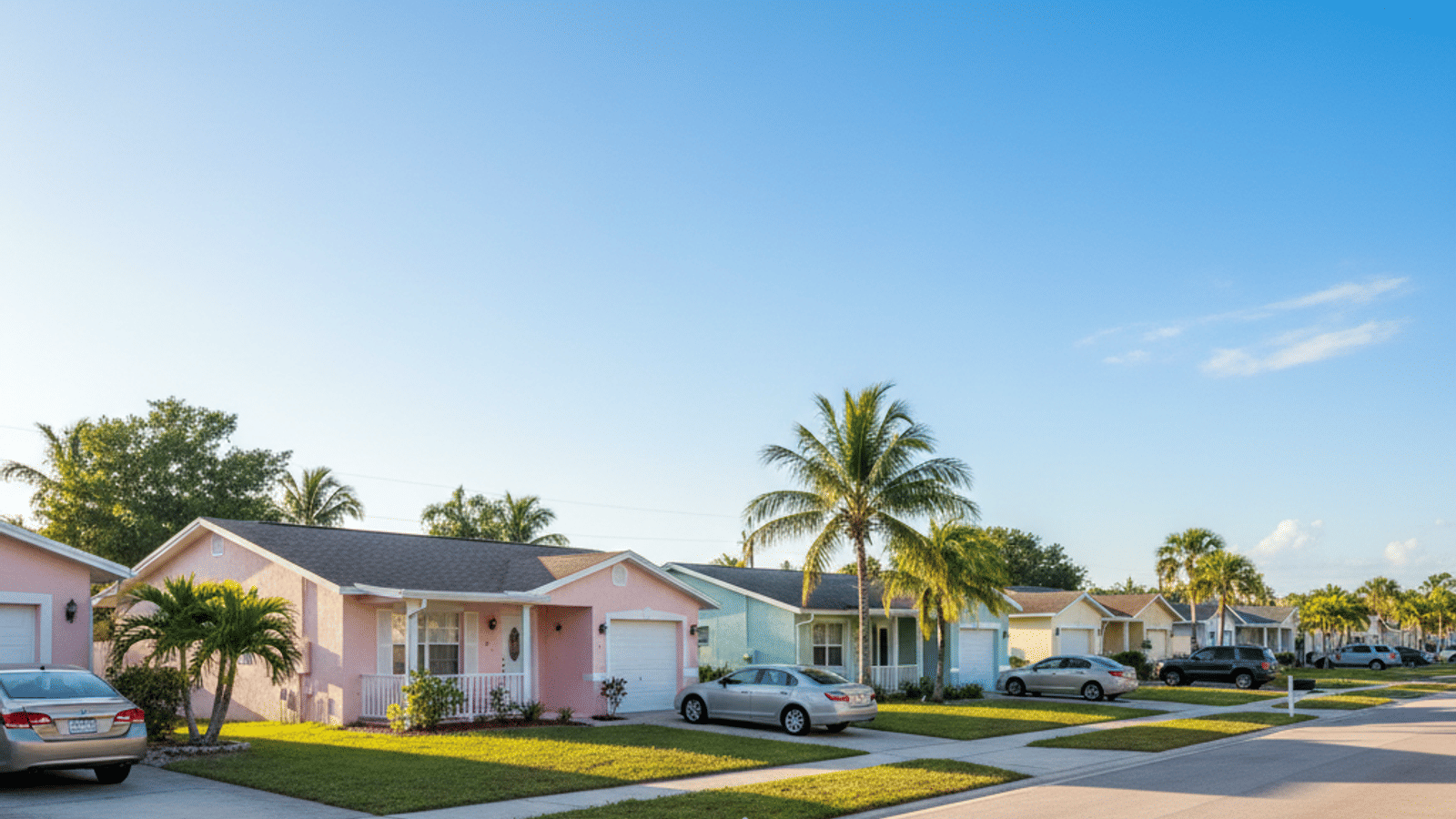
If you have been watching the housing market in St. Lucie County lately, you know that prices have shifted. Port St. Lucie is one of the fastest-growing cities in the country, and while that growth brings great amenities and new opportunities, it also brings a higher cost of entry for buyers.
But here is the good news: purchasing a home here isn't just for those with massive savings accounts. There is a common misconception that down payment assistance is only for very low-income earners. In reality, many programs today are designed for moderate-income residents—often defined as households earning $70,000 or more—who just need a bridge to cover the upfront costs.
When we talk about financial help for homebuyers in Port St. Lucie, we are generally looking at three different "buckets" of money: Local (City and County), State (Florida Housing), and Federal. Let's break down how these numbers work so you can see if you qualify to stop renting and start owning.
Navigating Homebuyer Assistance in Port St. Lucie
The biggest hurdle for most buyers isn't the monthly mortgage payment; it is the cash to close. Between the down payment and closing costs, you might need $20,000 to $30,000 cash on hand for a "standard" purchase. That is where assistance programs step in.
These programs help lower that barrier, ensuring that the cost of living in Port St. Lucie remains accessible to the workforce that keeps the city running. Whether you are looking at a starter home in a non-gated neighborhood or exploring PGA Village homes for sale, understanding your financing options is the first step.
Florida Statewide Programs Available in Port St. Lucie
The most accessible funds usually come from the state level through the Florida Housing Finance Corporation. These programs are widely used because they are standardized and work with many local lenders.
Florida Hometown Heroes
This is currently the most popular program for first-time buyers in the region. While it originally targeted frontline workers like nurses and police officers, eligibility has expanded significantly. As of recent updates, it is open to full-time Florida workers (35+ hours a week) employed by a Florida-based employer.
Here is how the numbers work:
- The Benefit: You can receive up to 5% of the total loan amount, capped at $35,000.
- The Catch: This is a deferred second mortgage at 0% interest. It is not "free money" in the sense of a gift. You do not make monthly payments on it, but you must pay the full amount back when you sell the home, refinance, or move out.
- Availability: Funding is approved in buckets by the state legislature (often $50 million to $100 million at a time). When the money runs out, the program pauses until the next fiscal cycle.
Florida Assist (FL Assist)
If Hometown Heroes runs out or doesn't fit your profile, the Florida Assist program is another option. It typically offers up to $10,000 in assistance. Like Hometown Heroes, this is a 0% interest, deferred second mortgage payable upon sale or refinancing.
HFA Preferred Grants
Unlike the deferred loans mentioned above, these are actual grants—meaning you generally do not have to pay them back. They usually cover 3% or 4% of the purchase price. The trade-off is that the interest rate on your primary mortgage might be slightly higher to offset the grant.
St. Lucie County & City SHIP Programs
If you want to maximize your assistance, you have to look local. The State Housing Initiatives Partnership (SHIP) is the primary vehicle for local aid. In our area, this is often administered by the St. Lucie County Housing Division, though the City of Port St. Lucie sometimes receives its own direct allocation.
This is where the "big" money often lives. Historically, SHIP awards have ranged from $10,000 up to $50,000 or more, depending on the funding cycle and your income bracket.
How SHIP Works
- Deferred Payment Loans: Similar to the state programs, these are usually 0% interest loans. However, SHIP often includes a forgiveness clause. For example, if you live in the home for a set period (often 5 to 15 years), the loan might be forgiven completely.
- Funding Cycles: Unlike state programs that are open year-round until funds run out, SHIP often operates with a "Notice of Funding Availability" (NOFA). This means there is a specific application window.
- Selection: Because demand is high, these funds are often awarded on a first-qualified, first-served basis or through a lottery system.
If you are serious about this, you need to monitor the county website closely or work with a loan officer who knows when these windows open.
The Community Land Trust (CLT) Partnership
Port St. Lucie has a unique and aggressive strategy for affordability involving the Community Land Trust of Palm Beach County and the Treasure Coast. This program is different from a standard mortgage and is worth understanding if you are looking for living in Port St. Lucie on a budget.
The Ground Lease Concept
In a CLT purchase, you buy the physical house, but the Trust retains ownership of the land underneath it. You then sign a 99-year ground lease for a nominal fee.
Because you aren't paying for the land, the purchase price of the home is significantly lower—sometimes subsidized by up to $100,000 depending on the specific property and grant used.
The Trade-Off
The goal of the CLT is to keep the home affordable forever. Therefore, you cannot sell the home for huge market profits later. Your resale price is restricted to ensure the next buyer can also afford it. This is a great option for stability, but less ideal if your primary goal is maximizing equity appreciation.
Federal Low-Down Payment Options
Sometimes, grant money runs out or the income restrictions are too tight. In those cases, federal loan programs are your best bedrock for low upfront costs.
- FHA Loans: The classic first-time buyer choice. You only need a 3.5% down payment. Credit requirements are more lenient (often down to 580) than conventional loans.
- VA Loans: If you are an eligible veteran or active-duty service member, this is arguably the best loan product available. It offers 0% down payment and no private mortgage insurance (PMI).
- Fannie Mae HomeReady / Freddie Mac Home Possible: These are conventional loans designed for credit-worthy, low-to-moderate-income buyers. They allow for a 3% down payment and often have reduced mortgage insurance rates compared to standard conventional loans.
A Note on USDA Loans
You may hear about USDA "Rural Development" loans which offer 0% down. It is important to know that most of Port St. Lucie is ineligible for USDA loans. As the city's population has grown, it no longer meets the "rural" definition for standard USDA lending. Do not waste time looking for USDA-eligible homes in central PSL zip codes; you would typically need to look much further west or north to find eligible areas.
Do You Qualify? Key Eligibility Criteria
While every program has its own fine print, they generally look at the same four metrics.
- First-Time Buyer Status: In the eyes of these programs, a "first-time buyer" is usually someone who has not owned a primary residence in the last three years. If you owned a home five years ago but rent now, you likely qualify.
- Income Limits (AMI): Eligibility is capped based on the Area Median Income (AMI). Programs typically target households earning 80%, 100%, or up to 120% of the AMI. In St. Lucie County, 120% of the AMI for a family of four can be around $95,000 to $100,000 (subject to annual changes).
- Credit Score: While FHA allows lower scores, most down payment assistance programs in Florida require a minimum credit score of 640.
- Homebuyer Education: Almost every assistance program requires you to complete an 8-hour HUD-approved homebuyer education class. This is not optional, so it is smart to get it done early.
How to Apply: The Step-by-Step Process
Many buyers make the mistake of finding a house first and then scrambling to find grant money. That usually leads to heartbreak. Here is the correct order of operations:
- Find a Participating Lender: Not all banks or loan officers are approved to work with SHIP or Hometown Heroes. You must find a loan officer who is "participating" in these specific programs.
- Get Pre-Approved: Have the lender review your income and credit to see exactly which "bucket" of money applies to you.
- Take the Class: Sign up for the required Homebuyer Education course.
- Submit Program Applications: If you are applying for SHIP, there may be a specific application window. Your lender will guide you here.
- Go House Hunting: Once you know your budget and your grant amount, you can look for homes. Whether you are looking near Port St. Lucie golf communities or near the Tradition area, your offer will be stronger because your financing is already structured.
Closing Costs and Extra Expenses
Finally, remember that "Down Payment Assistance" is often used to cover the down payment and closing costs, but you still need some cash of your own.
Closing costs in Florida generally run 2% to 3% of the purchase price. In addition, there are upfront costs that you cannot roll into a loan. You should budget $300 to $600 for a home inspection and roughly $500 to $700 for an appraisal. These fees are paid before you get the keys, so having a small nest egg is essential even with assistance.
Frequently Asked Questions
Does Port St. Lucie have its own first-time homebuyer program?
Yes, the City of Port St. Lucie receives funds (often through SHIP or CDBG) specifically for residents. However, these funds are frequently administered through the St. Lucie County Housing Division or the Community Land Trust. It is best to check the City's housing website for current "Notice of Funding Availability" alerts.
What is the income limit for down payment assistance in St. Lucie County?
Income limits vary by household size and the specific program. Generally, programs cap eligibility at 120% of the Area Median Income (AMI). For a moderate-sized family, this limit is often near or just above $100,000 per year, but you must verify the current year's chart with your lender.
Do I have to pay back the Florida Hometown Heroes loan?
Yes, the Hometown Heroes funds are provided as a deferred second mortgage. You do not make monthly payments on it, but the full amount becomes due when you sell the property, refinance your first mortgage, or no longer live in the home as your primary residence.
Can I use USDA loans in Port St. Lucie?
Generally, no. Most of Port St. Lucie has been reclassified as too densely populated to qualify for USDA Rural Development loans. You would typically need to look at properties in the far western or northern parts of St. Lucie County to find USDA-eligible zones.
How long does it take to get approved for SHIP funds?
SHIP approval can take longer than a standard mortgage approval, often adding 30 to 45 days to the process. Because local government staff must review and approve the file, it is important to build this extra time into your purchase contract to avoid missing your closing date.