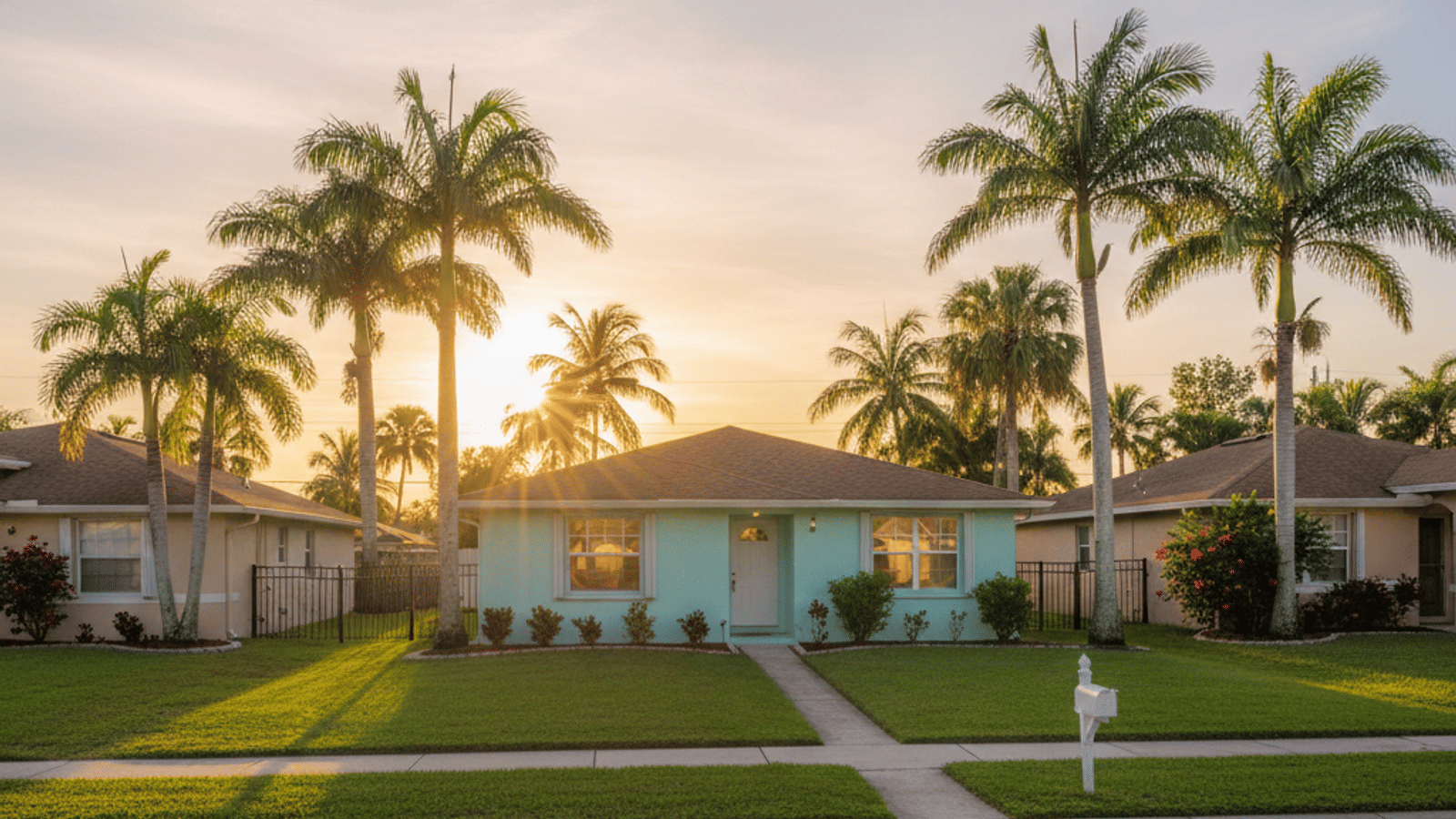
If you are currently renting in Miami or Broward and watching rent prices climb, you aren't alone in looking north. For years, Port St. Lucie has been the escape hatch for South Floridians who want a backyard and a driveway without the million-dollar price tag.
But buying here is different than buying further south. The market has shifted, inventory is rising, and for the first time in a long time, buyers have a bit of breathing room. If you are looking to stop renting and start owning, you need to understand how the local numbers work—from insurance quirks to hidden tax district fees—before you fall in love with a listing photo.
Is Port St. Lucie Good for First-Time Buyers?
Let’s be honest about the market right now. While prices have risen significantly over the last few years, Port St. Lucie remains one of the few places in South Florida where "affordability" isn't an oxymoron.
Compared to Miami-Dade or Palm Beach counties, where starter homes often require a half-million-dollar budget, St. Lucie County offers a different reality. As of 2026, the median sale price here hovers around the $405,000 to $410,000 mark. However, that’s just the median. If you are looking for a true "starter home," you can still find solid properties in the $300,000 to $350,000 range, especially if you look at established neighborhoods rather than brand-new construction.
The best news for you? The frenzy has cooled off. We are seeing homes sit on the market a little longer—sometimes closer to 90 days. That means you aren't just one of twenty offers anymore. You actually have the leverage to negotiate price and terms, which is a massive advantage for first-time buyers trying to keep cash in their pockets.
First-Time Buyer Programs & Down Payment Assistance
One of the biggest misconceptions I hear is that you need 20% down to buy a home. In reality, most first-time buyers put down significantly less, and there is local money available to help you do it.
If your income qualifies, you should look immediately at the City of Port St. Lucie Homebuyer Assistance program. When funding is available, they can offer substantial aid—sometimes up to $100,000—to help moderate-income buyers bridge the gap. It often operates on a lottery system because demand is high, so you need to keep a close watch on when the window opens.
Outside of the city limits or if you miss that lottery, St. Lucie County has its own assistance program. They typically offer up to $50,000 in unincorporated areas and slightly less within city limits. These often come in the form of 0% interest deferred loans, meaning you don't pay them back monthly; you pay them when you eventually sell the home or refinance.
Don't forget the state-level options, specifically Florida Hometown Heroes. If you work for a Florida-based employer in a frontline field (like nursing, law enforcement, or education), you could receive 5% of your loan amount to use for down payment and closing costs.
Beyond grants, standard loan programs are very popular here:
- FHA Loans: require only 3.5% down and are more lenient on credit scores.
- VA Loans: offer 0% down for eligible veterans and active duty.
- USDA Loans: surprisingly, some western parts of the county still qualify for these 0% down rural loans, though you must check the eligibility map carefully as the city grows.
The Real Cost of Buying in Port St. Lucie
The mortgage principal and interest are easy to calculate online. It's the "Florida variables" that shock people. When you are building your monthly budget, you have to factor in taxes, insurance, and potential fees that are specific to our area.
Property Taxes and Exemptions
In Port St. Lucie, the total millage rate (the tax rate) is usually around 19 to 20 mills. Roughly speaking, the effective tax rate is often about 1.39% of the assessed value. However, as a primary resident, you get a massive benefit called the Homestead Exemption. This reduces the taxable value of your home by up to $50,000, which can save you hundreds of dollars a year. Just remember, you have to file for this after you close.
Homeowners Insurance and Wind Mitigation
This is the wildcard. Insurance premiums in Florida vary wildly based on the age of the roof and the shape of the roof. When you look at homes, you want to ask if the home has a current Wind Mitigation inspection. This is a report that tells insurers the home has hurricane clips, impact windows, or a specific roof geometry (hip roofs are cheaper to insure than gable roofs). A "clean" wind mit report can cut your premium by 10% to 40%.
HOA Fees vs. Freedom
We have two distinct types of living here. You have master-planned communities which offer clubhouses, gates, and perfectly manicured lawns, but they come with HOA fees ranging from $200 to over $600 a month. Then, you have non-HOA areas where you can park a boat in your driveway and paint your house whatever color you want. Your monthly payment will look very different depending on which route you choose.
Best Neighborhoods for First-Time Buyers
Finding the right spot often comes down to balancing your budget against your desire for amenities.
For Affordability & No HOAs If you want to maximize your buying power and avoid monthly fees, look at River Park. It’s one of the older sections of the city, meaning the homes are smaller and older, but they are built solid and often list in the low $300,000s. Torino in the north is another great option; it has newer construction and a mix of HOA and non-HOA pockets. Southbend Lakes is fantastic if you want larger lots and proximity to boat ramps without the gated community rules.
For Amenities & Convenience If you want that "resort" lifestyle, Tradition is the hotspot. It has a walkable town center and beautiful lakes, but you will pay a premium in price (often starting over $400,000) plus HOA and CDD fees. St. Lucie West is the established older sibling to Tradition—great shopping, right off I-95, and plenty of condos or townhomes that might fit a starter budget.
For Commuters If you work in West Palm Beach and need to commute, Newport Isles is worth a look. It is located right at the Gatlin Blvd exit for immediate I-95 access. It’s a gated community with amenities, but prices there are often more accessible than in the newer western developments.
Step-by-Step Buying Process in St. Lucie County
Buying a house here follows a specific rhythm. Here is how the roadmap usually looks for local buyers.
- Get Pre-Approved First Before you drive to a single open house, talk to a lender. Specifically, ask them if they participate in "SHIP" funds or local bond programs. Not every lender works with the down payment assistance programs mentioned earlier, so you want to find one who knows the local grants.
- The Hunt: Look for CBS You will hear the term CBS (Concrete Block Structure) a lot. In Florida, concrete block homes are preferred over wood frame homes because they hold up better against termites and hurricanes, and they are significantly cheaper to insure.
- Making an Offer Since the market is balancing out, don't be afraid to ask for concessions. It is becoming normal again for buyers to ask the seller to pay $5,000 to $10,000 toward closing costs or to buy down the interest rate.
- The Inspections Once you are under contract, you have a short inspection period. You absolutely need a "4-Point Inspection" (covering Roof, HVAC, Electrical, and Plumbing) if the home is more than 20 years old, as insurance companies require it. Always order a Wind Mitigation report, even if the seller has an old one, to ensure you get your insurance credits.
- Closing Closing typically happens at a local title company. You will sign a mountain of paperwork, wire your funds (or bring a cashier's check), and get the keys.
Breakdown of Closing Costs & Hidden Fees
Saving for the down payment is only half the battle. You also need cash for closing costs. In Florida, you should budget roughly 2% to 5% of the purchase price for these fees.
- Lender Fees: These include origination, underwriting, and the appraisal (usually $500+).
- State Taxes: Florida charges "Documentary Stamps" on the mortgage ($.35 per $100) and an Intangible Tax (0.2% of the loan amount). These add up quickly.
- Pre-paids: This is often the biggest check you write. Lenders usually require you to pay a full year of homeowners insurance upfront, plus put 3 months of property taxes into an escrow account.
- Capital Contributions: If you buy in a master-planned community like Tradition, the HOA may charge a one-time "capital contribution" fee at closing, which can be several hundred or even a thousand dollars.
Frequently Asked Questions
Does Port St. Lucie have a first-time home buyer grant?
Yes. The City of Port St. Lucie offers a program that can provide up to $100,000 depending on funding availability and income, while St. Lucie County offers up to $50,000. These programs often have strict income caps (typically around 120% of the Area Median Income) and may require you to attend a homebuyer education class.
What is the minimum credit score to buy a house in St. Lucie County?
For a standard FHA loan, you can typically qualify with a score as low as 580. However, if you want to use the local down payment assistance programs like the county SHIP funds, they generally require a higher score, often starting at 640.
How much down payment do I need for a house in Port St. Lucie?
You do not need 20% down. Most first-time buyers in Port St. Lucie use an FHA loan with a 3.5% down payment or a Conventional loan with a 3% down payment. On a $350,000 home, 3.5% is $12,250.
Are closing costs high in Port St. Lucie?
They can feel high because of Florida's specific prepaid requirements. Because insurance premiums are higher here than the national average, paying 12 months of insurance upfront at closing significantly increases your "cash to close" amount compared to other states.
What is a CDD fee in Port St. Lucie?
A Community Development District (CDD) fee is a cost found in newer master-planned communities like Tradition and parts of St. Lucie West. It pays for the infrastructure (roads, sewers, landscaping) and is included in your annual tax bill, often adding $1,000 to $3,000 a year on top of your standard property taxes.