


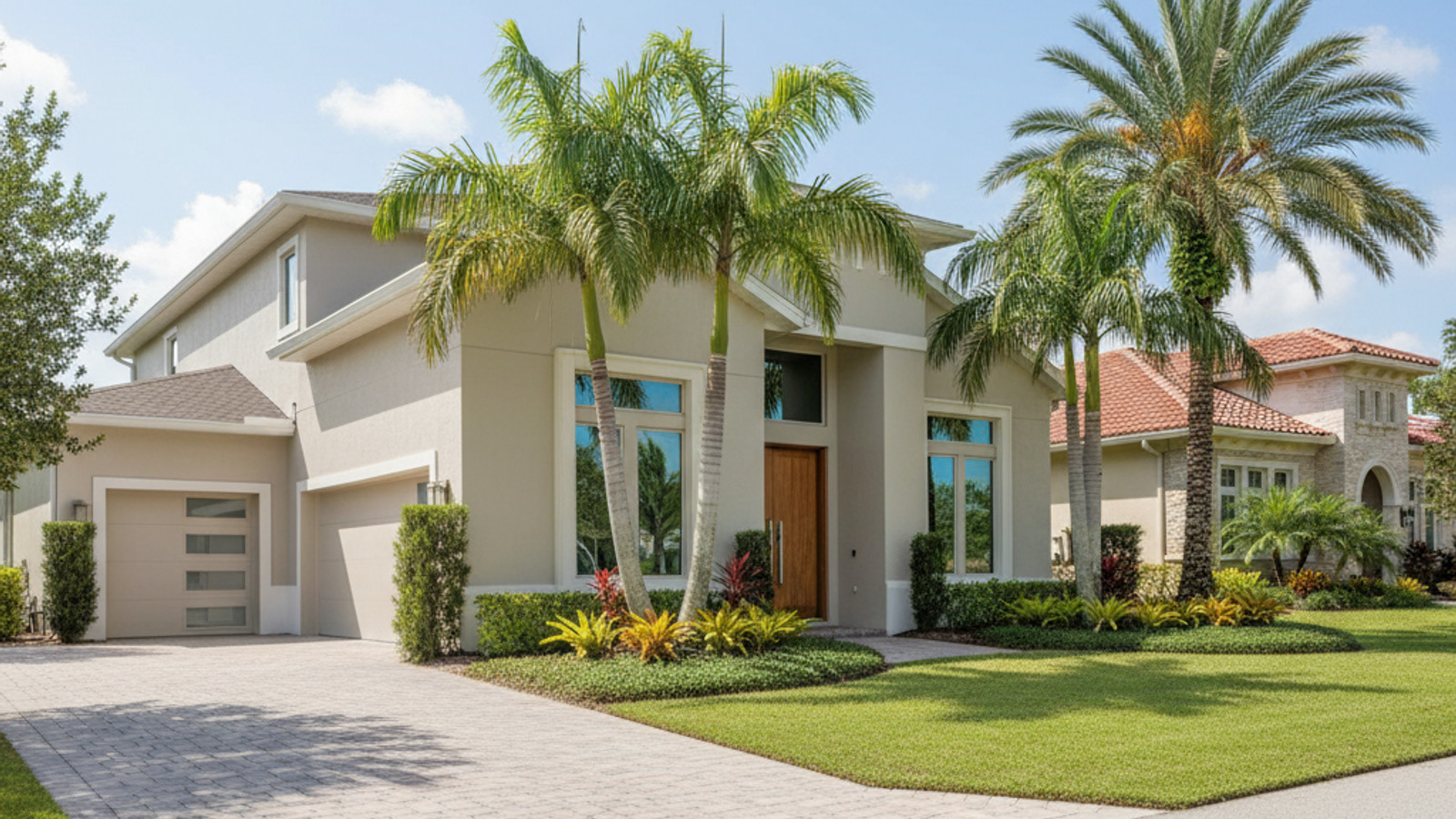
The median listing price for a single-family golf course estate in PGA Village, FL often exceeds $600,000. When preparing to list a property in this Port St. Lucie community, homeowners need a precise accounting of the fees extracted before the final wire hits their bank account.
Sellers typically surrender a percentage of their final sale price to taxes, agent commissions, and title fees. Understanding these line items early prevents unpleasant surprises at the closing table. A well-prepared homeowner can accurately project their net proceeds long before reviewing the final settlement statement.
Average Expenses for Port St. Lucie Sellers
A Florida seller usually pays between 7 percent and 9 percent of the final sale price in closing fees. On a $500,000 home sale, this translates to roughly $35,000 to $45,000 in transaction costs. These figures account for title insurance, government taxes, and real estate commissions.
Your outstanding mortgage payoff is deducted from your net proceeds, but it is entirely separate from your closing costs. The settlement agent will request a payoff statement from your lender to clear the existing debt. Once the mortgage is satisfied and the closing fees are paid, the remaining balance becomes your final profit.
Real Estate Commissions After Recent Industry Changes
The real estate commission remains the largest single expense on a seller's settlement statement. In St. Lucie County, listing agents charge a fee to market the property and place it on the multiple listing service. Since the National Association of Realtors settlement changes went into effect, the way sellers handle buyer's agent fees has shifted.
Sellers are no longer required to offer a pre-set compensation to the buyer's agent directly through the MLS. Instead, commission structures are fully negotiated upfront when you sign your listing agreement. You can still choose to offer buyer agent compensation to attract more offers, but this amount is a discussion you should have with your real estate agent.
State Transfer Taxes and County Property Taxes
Florida imposes a documentary stamp tax on all real estate deed transfers. The state sets this transfer tax at $0.70 per $100 of the sale price. For a $500,000 transaction, the seller must pay $3,500 to the state just to transfer the deed to the new owner.
Florida property taxes are paid in arrears, meaning the bill for 2026 will not be due until the end of the year. Because of this, the seller owes the buyer for the portion of the year they owned the home. The settlement agent calculates these prorated property taxes based on the exact closing date and credits the buyer on the settlement statement.
Local tax rates dictate the exact amount deducted from your proceeds. St. Lucie County total millage rates average around 21 to 22 mills, depending on the specific property location. Your real estate attorney or title company will use the previous year's tax bill to estimate your prorated share.
Homeowner Association Fees and Estoppel Letters
Transferring a property in PGA Village, FL involves specific homeowner association costs. The title company must order an estoppel letter from the HOA to verify your account balance and confirm there are no outstanding violations. Florida law caps standard estoppel letter fees at $299, though the HOA can charge up to $537 if you request a rush order or have delinquent balances.
The seller must provide the required HOA disclosure form to the buyer before closing. This form outlines the community rules and financial obligations for the incoming owner. Your final settlement statement will also account for several other community-specific charges:
- Prorated HOA dues: The amount you owe depends on whether your property is a villa, townhome, or single-family estate.
- Capital contribution fees: While buyers customarily pay this one-time reserve fund fee, sellers sometimes agree to cover it during negotiations.
- Transfer fees: The management company charges an administrative fee to update their records with the new owner's information.
Title Insurance and Settlement Fees
Custom dictates who pays for the owner's title insurance policy, and in St. Lucie County, this expense falls to the seller. Title insurance protects the new buyer against past defects, liens, or claims against the property. Florida title insurance rates are promulgated by the state, meaning the cost is fixed based on the home's purchase price.
Before issuing the policy, the title company conducts a thorough title search and a municipal lien search. These searches ensure there are no unrecorded utility debts or open permits attached to the property. The seller covers the cost of these searches to prove they are transferring a clear title.
You will also pay a settlement fee to the real estate attorney or title company managing the transaction. This fee covers the preparation of the deed, the coordination of the closing table, and the recording fees required to file the new documents with the county. Sellers should budget around $500 to $800 for the settlement agent's services.
How PGA Village, FL Amenities Impact Your Bottom Line
High property values help offset the expenses associated with selling a home. PGA Village, FL maintains strong listing prices due to its immediate proximity to the PGA Golf Club. Buyers are willing to pay a premium for easy access to championship golf courses and local clubhouses.
The community's location provides convenient transit routes for local residents. Drivers can reach West Palm Beach in about 35 minutes via the nearby I-95 interchange at Exit 121. Cleveland Clinic Tradition Hospital is also just a 10-minute drive away, offering excellent local healthcare access.
These neighborhood features justify higher asking prices on the local market. A higher final sale price means the seller absorbs the closing costs more easily while still walking away with substantial equity. Your real estate agent will highlight these local amenities to maximize your return on investment.
Frequently Asked Questions
Who normally pays for title insurance in St. Lucie County?
In St. Lucie County, local custom dictates that the seller covers the cost of the owner's title insurance policy. This differs from other Florida counties where the buyer might pick up the tab. On a half-million-dollar property, this state-regulated expense adds about $2,575 to the seller's side of the ledger.
How are property taxes prorated at closing in Florida?
Florida taxes are billed at the end of the calendar year for the previous twelve months. If you sell your home on June 30, you must credit the buyer for the six months you lived there. The title agent uses your most recent tax bill from the county appraiser to calculate the exact daily rate.
What is the Florida Documentary Stamp Tax?
The documentary stamp tax is a state-mandated fee charged whenever real estate ownership changes hands. The rate is calculated at $0.70 per $100 of the final purchase price. This means a $600,000 home sale generates a $4,200 tax bill that the seller pays at the closing table.