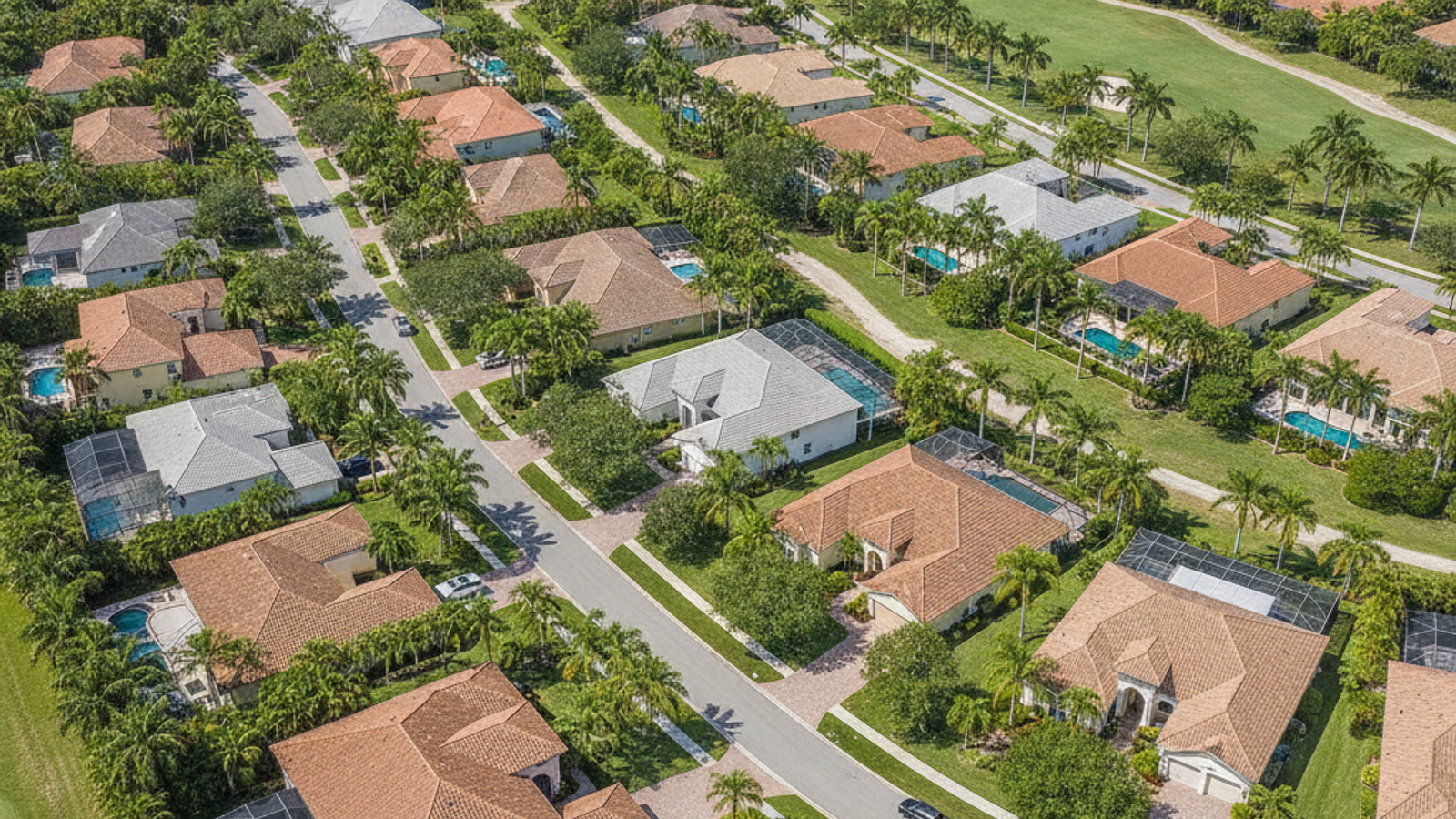
The median sale price in the 34987 zip code, which covers the PGA Village area, sits at roughly $444,899 as of mid-2026. Right now there are about 614 homes available, properties are averaging 88 days on market before going under contract, and with over five months of supply out there, first-time home buyers in PGA Village, FL are not being rushed into anything.
That breathing room is actually useful - because figuring out what you can genuinely spend here takes more than plugging numbers into a national calculator. Local tax rates, specific HOA fees, and Florida's insurance market all change the math in ways most buyers don't see coming until they're already in contract.
Figuring Out Your Home Buying Budget in PGA Village
Lenders look at three things when they decide how much to give you: your total household income, your existing monthly debts, and what it currently costs to borrow money. Those three inputs determine the maximum monthly payment you can be approved for.
As of late July 2026, average mortgage rates in Florida are running around 6.6% to 6.85% on a 30-year fixed loan. If you're looking at a 15-year fixed, rates are roughly 5.7% to 6%. That spread matters more than people realize - a half-percent difference moves your monthly payment by hundreds of dollars.
Looking at Gross Versus Net Income
Mortgage underwriters work off your gross monthly income - what you earn before taxes, health insurance, or retirement contributions come out. That's the number on your pay stub before anyone takes their share.
Your personal comfort level, though, should be anchored to your net income. Take-home pay is what covers the groceries, the utilities, and everything else that doesn't stop when you become a homeowner.
How Current Interest Rates Affect Your Payment
The rate determines how much of every monthly payment goes to the lender versus the principal balance. Higher rates mean more of your budget disappears into interest, which directly shrinks what you can afford to buy.
Once you find a property you want, a rate lock protects you from a spike between contract and closing. Keep an eye on where rates are moving while you're shopping.
Applying the 28/36 Rule to Your Finances
Most lenders use the 28/36 rule as a baseline when they evaluate how much you can borrow. It's designed to keep buyers from getting in over their heads on housing and consumer debt combined.
There are two separate ratios in the formula, and you have to meet both to qualify for most standard loan programs.
Figuring Out Your Front-End Ratio
The front-end ratio caps your total monthly housing payment at 28% of your gross monthly income. That payment includes principal, interest, property taxes, and homeowners insurance - and if there are mandatory association dues, those count too.
On a $10,000 monthly gross income, your maximum housing payment under this ratio is $2,800. That's the ceiling before lenders start getting nervous.
Checking Your Total Debt-to-Income Ratio
The back-end ratio, or debt-to-income (DTI) ratio, sets your total monthly debt obligations - housing plus everything else - at no more than 36% of gross income.
Car loans, minimum credit card payments, student loans: they all go in. If you're already carrying $800 a month in those payments, that's $800 less room you have for a mortgage under the 36% ceiling.
Adding Up Local Carrying Costs in PGA Village
National affordability calculators use nationwide averages for taxes and insurance. In Florida, those averages will mislead you. The carrying costs here are specific enough that you really do need to run the local numbers before you know what you can afford.
Home prices vary considerably depending on which part of the community you're looking at. In the Verano section, prices range from about $371,990 to over $1.1 million. Broader listings across the area run from $268,000 to over $774,000.
St. Lucie County Property Taxes
St. Lucie County has the highest millage rate in Florida - adopted at 21.79 mills for the 2025 tax year. The effective property tax rate here is approximately 1.3% to 1.7% of the home's assessed value.
For context, the national median is about 1.02% and Florida's state median runs roughly 1.10% to 1.14%. You're paying more in tax escrows here than you would in most surrounding counties, and that difference shows up in your monthly payment.
Florida Homeowners Insurance Rates
Florida is the most expensive state in the country for homeowners insurance. In 2026, premiums average roughly $3,240 to $5,838 per year for $300,000 in dwelling coverage. Depending on coverage level, methodology, and proximity to the coast, some analyses put the figure as high as $7,000 to $8,500 annually.
Get a property-specific quote during your inspection period. Don't budget off an average.
HOA Fees Across the Community
Which section you buy into determines what you'll pay in association dues. In the Verano section, fees are commonly reported in the $444 to $587 per month range depending on home type. The Cresswind 55+ section runs about $480 to $545 per month. Those fees typically cover lawn care, gated security, cable and internet, and clubhouse access.
These aren't optional, and lenders count every dollar of them against your front-end ratio.
Planning for Down Payments and Closing Costs
Your monthly payment capacity tells you what you can finance. It doesn't tell you how much cash you need to actually close. That's a separate number, and buyers sometimes don't think about it clearly enough until late in the process.
Keep your down payment and closing cost funds in a liquid, accessible account while you're shopping. Lenders will verify where that money came from during underwriting.
Down Payment Requirements by Loan Type
Conventional loans require a minimum of 3% to 5% down. Put less than 20% down, and you'll carry private mortgage insurance on top of everything else. FHA loans require 3.5% down. Eligible veterans can buy with 0% down using a VA loan.
Talk through the loan structures with a local mortgage broker before you decide which direction makes sense for your cash position.
Estimating Your Closing Costs
Buyer closing costs in Florida typically run 2% to 5% of the purchase price. On a $400,000 home, that's $8,000 to $20,000 due at the closing table - covering appraisal fees, title insurance, loan origination charges, and prepaid property taxes.
Sellers generally pay more: roughly 3% to 10% on their side, depending on whether real estate commissions are included.
Frequently Asked Questions
How much do HOA fees and golf club dues in PGA Village impact the total mortgage amount I can qualify for?
It depends on which neighborhood you choose. Lenders include mandatory HOA fees in your debt-to-income ratio - and in the Verano section, those run about $444 to $587 a month. Higher monthly association dues directly reduce the maximum loan amount you can borrow.
What salary do I realistically need to afford a single-family home versus a condo in PGA Village?
It depends on your down payment and current debts. General listings in the area range from roughly $268,000 for smaller units up to over $1.1 million for larger homes in Verano. You'll need to calculate your specific salary requirements using the 6.6% to 6.85% average Florida interest rate alongside the local carrying costs outlined above.
How do lenders calculate my purchasing power if I am buying a second home or winter residence in PGA Village?
Lenders use the same debt-to-income ratios, but they'll include the housing expenses for your primary residence in the calculation. You have to qualify to carry both mortgages simultaneously - along with Florida's higher property taxes and insurance premiums.
What is the average cost of homeowners insurance and property taxes I need to add to my PGA Village monthly housing budget?
Plan for roughly $3,240 to $5,838 per year for $300,000 in insurance coverage, with some estimates reaching $8,500. For property taxes, St. Lucie County levies an effective rate of approximately 1.3% to 1.7% of the home's assessed value.
Do I need to account for CDD fees or special community assessments when figuring out my maximum purchase price in PGA Village?
Yes. Any mandatory community development district fees or special assessments are factored into your monthly housing expense by the underwriter - calculated right alongside standard HOA fees, which run $480 to $545 in sections like Cresswind.
Are the down payment requirements different for purchasing a golf villa in PGA Village compared to a standard residential neighborhood in Port St. Lucie?
No. Down payment requirements are based on loan type, not home style or neighborhood. Conventional loans still require 3% to 5% down and FHA loans require 3.5%, whether you're buying a villa or a detached house in Port St. Lucie.