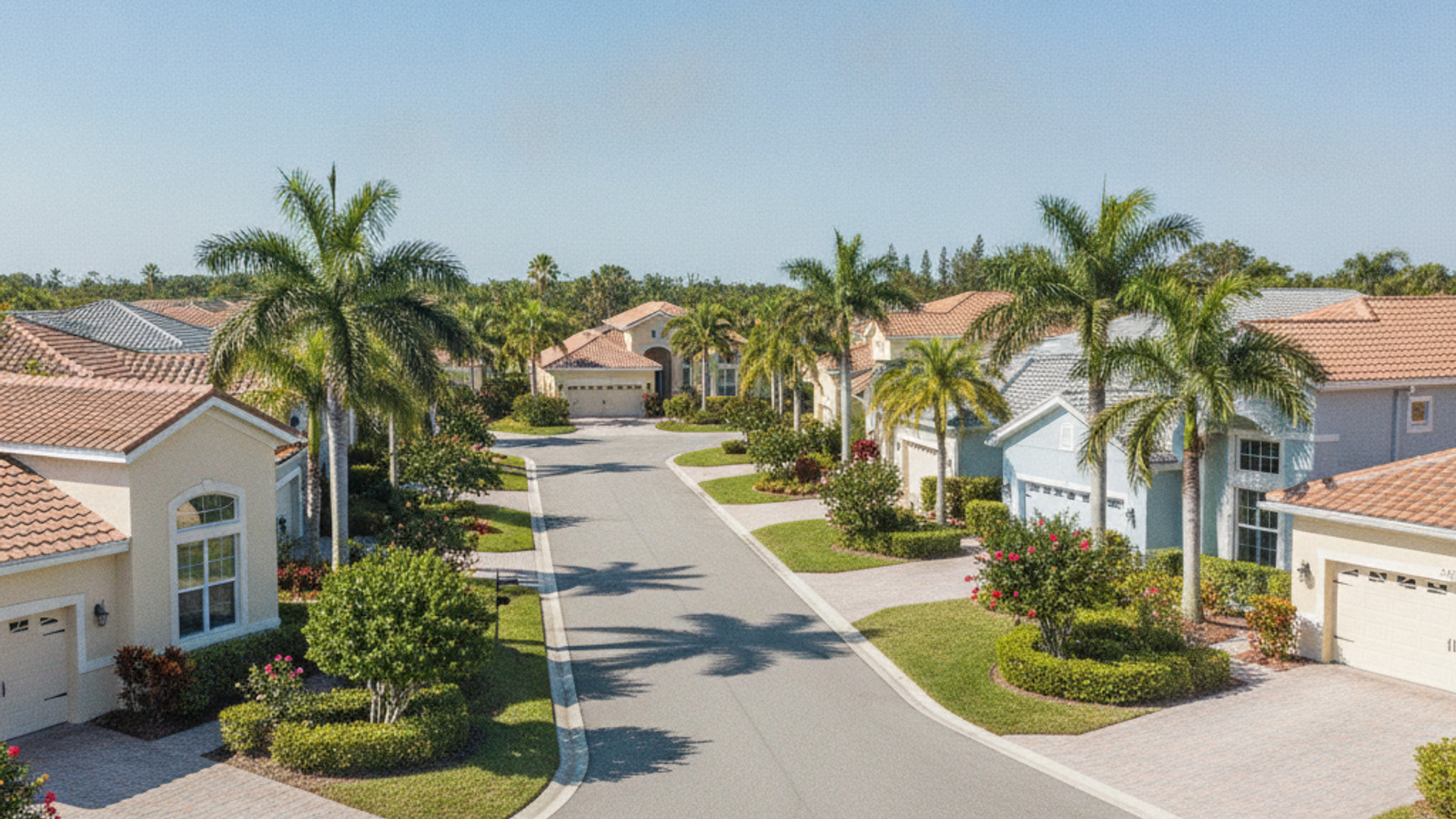
The median sale price for a home in the 34987 zip code sits around $445,000 as of mid-2026. If you're financing a purchase near that price point, you'll need to bring thousands of dollars to the closing table on top of your down payment - funds that cover the administrative, legal, and municipal fees required to transfer the property and secure your mortgage. This extra cash requirement often surprises first-time home buyers in PGA Village, FL.
Most buyers spend months focused on saving for a down payment and don't give closing costs a second thought until the settlement statement lands in their inbox. Knowing exactly what goes into buyer closing costs in PGA Village, FL lets you budget accurately and avoid a scramble before you get your keys.
Understanding Florida Closing Costs
Statewide data from CoreLogic and ClosingCorp shows Florida buyers typically pay roughly 2.3% of their home's purchase price in settlement fees. On a median-priced $445,000 PGA Village home, that works out to just over $10,200 out of pocket. Those charges compensate the lender, the title company, the appraiser, and the local government for processing the transaction.
Closing costs are entirely separate from your down payment. Your down payment goes directly toward equity in your new home, reducing the total amount you borrow. Settlement fees are the transaction costs required to execute the purchase and set up your escrow accounts. They don't offset each other - you're on the hook for both.
Average Buyer Closing Costs in Port St. Lucie and PGA Village
While the statewide average hovers around 2.3%, most real estate professionals advise buyers to budget between 2% and 3% of the purchase price. A broader range of 2% to 5% is sometimes cited, but the higher end generally applies to buyers paying upfront discount points to buy down their mortgage interest rate. Where you land within that range depends on your loan type, the size of your down payment, and the specific property taxes on the home.
Homes in PGA Village often carry homeowner association dues and community assessments that get prorated at settlement. St. Lucie County property taxes and local insurance premiums also have to be prepaid into escrow, which can push your total closer to that 3% mark.
Why Cash Buyers Pay Less
Buyers purchasing without a mortgage skip the most expensive portion of settlement fees entirely. No loan origination charges, no appraisal, no lender's title insurance - and they avoid the Florida documentary stamp tax on the mortgage note, which saves a meaningful amount at the table.
Calculating Fees by Purchase Price
Applying the standard 2% to 3% range gives you a reliable baseline for your house hunt.
On a $300,000 townhome or condo, expect to pay between $6,000 and $9,000 in settlement fees. A $400,000 property puts you in the $8,000 to $12,000 range. Step up to a $500,000 single-family home and those estimates run $10,000 to $15,000. At the $600,000 level, budget roughly $12,000 to $18,000.
Which Fees Buyers Pay at the Closing Table
Florida real estate transactions follow customary splits for who pays which fees. As the buyer, you're responsible for the costs tied to securing your mortgage and setting up your property accounts. Your lender will outline every charge in a Loan Estimate within three days of your application.
The largest piece of your bill typically goes toward loan origination fees - what the lender charges for underwriting and processing the mortgage. You'll also pay for a home appraisal, pest inspections, and your prepaid property taxes and homeowners insurance.
St. Lucie County Transfer and Recording Taxes
Florida levies a documentary stamp tax on both property deeds and mortgages. In St. Lucie County, the tax on the deed runs $0.70 per $100 of the sale price - but customary practice puts that one on the seller.
What you do pay is the documentary stamp tax on the new mortgage note at $0.35 per $100 financed, plus an intangible tax on the mortgage and local recording fees. The St. Lucie County Clerk of Circuit Court charges $10 to record the first page of a deed and $8.50 for each additional page.
Title Insurance Custom
Every financed transaction requires a lender's title insurance policy, and that's the buyer's expense - it protects the bank's investment. There's also an owner's title insurance policy that protects your equity. In St. Lucie County, local custom puts the owner's policy on the seller, which keeps your side of the ledger a bit lighter than in some other states.
Ways to Lower Your Closing Bill
PGA Village inventory currently sits at roughly 614 available homes, with properties spending a median of 88 days on the market. That 5.3-month supply creates a relatively balanced environment - one where you have real room to negotiate.
You can ask the seller to contribute a specific dollar amount toward your settlement charges through seller concessions. Sellers agree to these credits to keep a deal moving, which effectively reduces your out-of-pocket cash requirement without changing the purchase price. You should also compare Loan Estimates from multiple lenders. Origination fees vary more than most buyers expect, and some lenders will offer credits toward your closing bill in exchange for a slightly higher interest rate - worth running the numbers on both options.
Frequently Asked Questions
How much should I expect to pay in buyer closing costs for a home in PGA Village, FL?
Plan on 2% to 3% of the purchase price. On a median-priced $445,000 home in the area, that's roughly $8,900 to $13,350. The exact amount depends on your loan terms and prepaid escrow requirements.
How do buyer closing costs differ if I pay cash versus getting a mortgage for a PGA Village home?
Cash buyers pay significantly less because they avoid all lender-related fees. No loan origination fee, no appraisal, no lender's title insurance, and no Florida documentary stamp tax on a mortgage note - those are the largest line items on most settlement statements.
Is it common to get seller concessions to help cover closing costs in the PGA Village real estate market?
Yes, and the current market supports asking. With homes spending a median of 88 days on the market and a 5.3-month supply of inventory available, sellers are sometimes willing to offer credits to close the deal. Include the request in your initial offer and let your agent structure it.
Are there any specific St. Lucie County taxes or municipal fees buyers must pay at closing?
Yes. Buyers pay the documentary stamp tax on the new mortgage note at $0.35 per $100 financed, plus St. Lucie County recording fees - $10 for the first page of the deed and $8.50 for each additional page. The $0.70 per $100 documentary stamp tax on the deed transfer itself is customarily paid by the seller.